


.jpg)
.jpg)



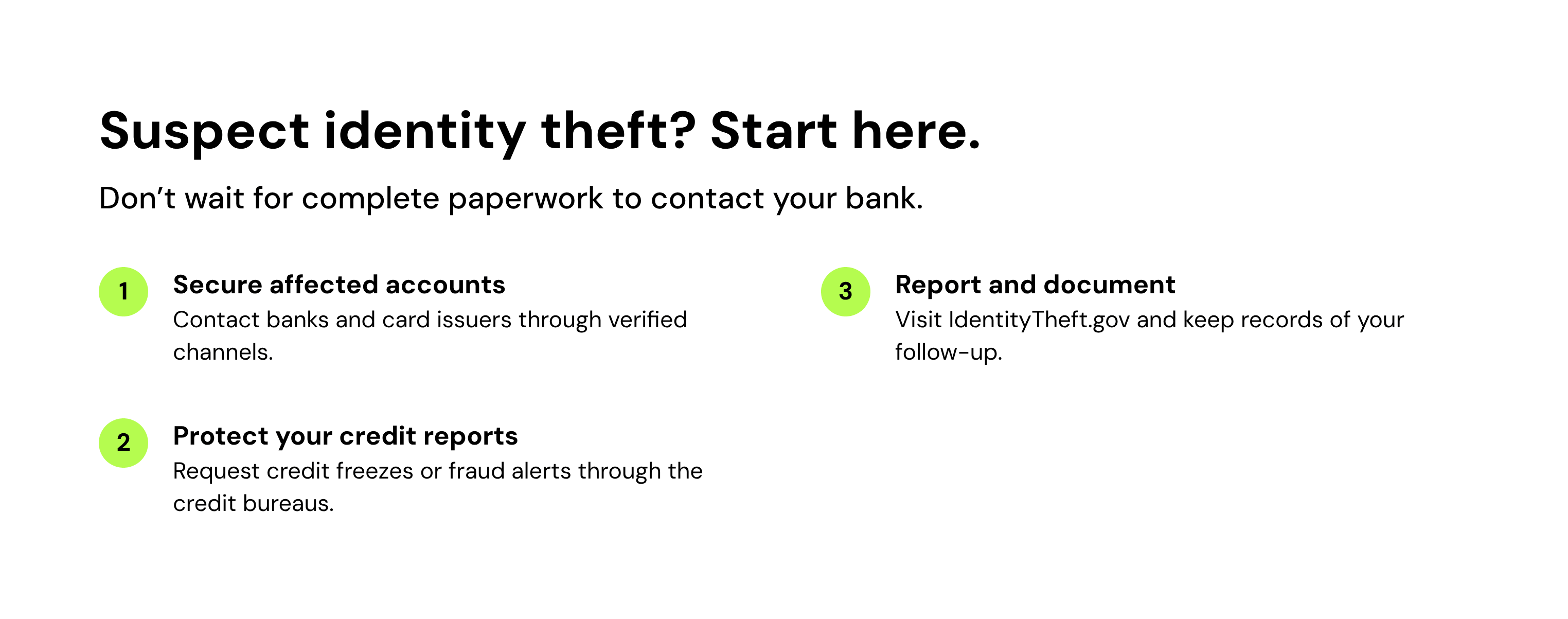
Finding out that someone may be using your identity can be unsettling. Start by contacting affected banks or card issuers, protecting your credit reports, and reporting the theft at IdentityTheft.gov.
You don’t need every document in hand before asking for help. Acting promptly matters, and keeping records as you go can make the follow-up easier.
How to report identity theft
The steps below can help you organize your response. Some can happen at the same time, so don’t wait to finish gathering paperwork before contacting a bank about unauthorized transactions.
Step 1: Contact affected banks and creditors
Call the fraud department at any bank, card issuer, or company where you’ve found unauthorized activity. Use a phone number from your card, statement, or the company’s official website, not a suspicious text or email.
Explain what happened and ask how to secure the account, dispute unauthorized transactions, and replace compromised cards. Reporting deadlines can affect your protections, especially for debit-card transactions, so contact the bank promptly.
Change compromised passwords and secure the email account connected to your finances. Turn on two-factor authentication where available, and keep records of your conversations and case numbers.
Step 2: Place a fraud alert or credit freeze
A bank can restrict an affected card or account, but a credit freeze or credit-report fraud alert goes through the credit bureaus. These are different protections.
A freeze restricts access to your credit report, making it harder to open new credit in your name. A fraud alert tells lenders to take extra steps to verify your identity.
| Protection | What it does | How to request it | How long it lasts |
|---|---|---|---|
| Credit freeze | Restricts access to your credit report, making new-account fraud harder. | Contact Equifax, Experian, and TransUnion separately. | Until you remove it. You can temporarily lift it when needed. |
| Initial fraud alert | Tells lenders to verify your identity before opening new credit. | Contact one of the three bureaus. It must notify the other two. | One year. You can renew it. |
| Extended fraud alert | Requires lenders to contact you before opening new credit. | Contact one bureau and provide an FTC identity theft report or police report. It must notify the other two. | Seven years. |
Both options are free. You can have a freeze and a fraud alert at the same time, and neither affects your credit score. Neither stops unauthorized charges on an existing account, so you still need to contact affected companies. See the FTC’s freeze and fraud-alert guidance.
Step 3: Gather evidence of identity theft
Save documents showing the activity you’re reporting, such as:
- Unfamiliar charges or withdrawals
- Accounts you didn’t open
- Collection notices for debts you don’t recognize
- Credit-report entries you believe are fraudulent
- Letters or account alerts related to the theft
Keep copies of statements, submitted forms, and confirmation messages. Make a simple contact log with the date, company, case number, and next step for each conversation.
Store these records securely. Use the company’s verified submission process when sending documents containing personal information.
Step 4: Report identity theft to the FTC
Go to IdentityTheft.gov to report what happened and get a personalized recovery plan. The site can also help you prepare an FTC Identity Theft Report and letters for companies involved.
Save your report and recovery plan. An identity theft report can support requests to address fraudulent accounts and credit-report information, but filing it does not automatically close accounts or correct your reports.
Follow the instructions for your situation. Tax, medical, and benefits identity theft may require contacting additional agencies or organizations.
Step 5: File a police report when appropriate
You can also report the theft to local police. This is particularly useful if you know who used your identity, have information that could help an investigation, or a company asks for a police report.
Bring identification, your FTC Identity Theft Report, and supporting records. Ask for a copy of the police report or its reference number.
Filing a report documents the incident; it does not guarantee an investigation or criminal charges. Don’t delay contacting your bank or protecting your credit while waiting for a police report.
Step 6: Address fraudulent information on your credit reports
Get your credit reports through AnnualCreditReport.com. Review each bureau’s report because an account may appear on one but not the others.
If information resulted from identity theft, ask the bureau displaying it about an identity-theft block, which prevents qualifying fraudulent information from appearing on your report. This is different from a credit freeze.
You’ll generally need proof of identity, an identity theft report, identification of the fraudulent information, and a statement that the transactions weren’t yours. The CFPB explains your identity-theft reporting rights.
Also contact the company that supplied the information. For other inaccuracies, such as an incorrect balance on your own account, use the regular dispute process with the bureau and the reporting company.
Kikoff’s credit dispute tool can help you prepare letters about credit-report errors. Review any generated letter for accuracy, and don’t assume a standard dispute letter replaces the documents needed for an identity-theft block.
Read more >> How to Read a Credit Report
Signs your identity might have been stolen
Identity theft isn’t always obvious right away. Common warning signs include:
- Charges or withdrawals you didn’t authorize
- Credit accounts you didn’t open
- Collection calls about unfamiliar debts
- Bills or account statements that unexpectedly stop arriving
- Notices about tax returns or benefits claims you didn’t submit
- Alerts about changes to your account credentials or contact information
An unexpected credit-score change or password-reset email alone doesn’t prove identity theft. Check the underlying account activity before drawing a conclusion.
If a message claims to be from your bank, the IRS, or another organization, verify it through an official website or known phone number. Avoid using links or contact details in a message you suspect is fraudulent.
Read more >> How to Handle and Prevent Fraudulent Charges on Your Account
Common mistakes to avoid after identity theft
When you’re dealing with several companies at once, it’s easy to lose track of what’s been reported. Watch out for these common mistakes:
- Waiting for complete records before acting. Contact affected companies promptly and gather supporting documents as you go.
- Assuming one report handles everything. Banks, credit bureaus, and government agencies may need separate notices.
- Relying only on phone conversations. Keep written confirmations and complete any requested follow-up forms.
- Paying an unfamiliar debt without checking it. Ask for information and report suspected identity theft rather than assuming the debt is yours.
- Ignoring small unauthorized charges. Report them even if the amount seems minor.
- Stopping your follow-up too soon. Review statements and credit reports to check that corrections appear and no new activity has surfaced.
If a company won’t address documented identity theft, or you receive a lawsuit over a debt you don’t recognize, consider contacting a consumer-law attorney or legal aid organization. Don’t ignore court papers while a dispute is pending.
Bottom line
Reporting identity theft starts with securing affected accounts and telling the right organizations what happened. Contact your banks, protect your credit reports, and use IdentityTheft.gov to organize your recovery steps.
Keep checking that fraudulent information has been addressed. You don’t need to open a new credit account or build payment history to dispute identity theft.
If you need help preparing a letter about a credit-report error, explore Kikoff’s credit dispute tool. Identity-theft reporting and direct disputes are also available for free without buying a credit-building product.
Frequently Asked Questions
Disclaimer: The information provided in this blog post is meant for informational purposes only and does not constitute financial advice.