







Bills such as rent, utilities, and phone service aren't typically included in your credit reports. Bill reporting apps can change that by verifying eligible payments and sending them to one or more credit bureaus.
The best bill reporting apps vary based on what you pay and which credit bureau they reach. Rent can go to all three, sometimes at no cost. Utility and phone payments usually reach one, which means a lender pulling a different report may not see much.
Top 6 bill reporting apps to build credit
| Service | Eligible payments | Bureaus reported to |
|---|---|---|
| Kikoff | Bill reporting: phone, electricity, natural gas, water | TransUnion for bills |
| Experian Boost | Utilities, phone, internet, streaming, monthly insurance, some online rent | Experian |
| Self | Rent on the free plan; utilities and cell phone on the $6.95 plan | All three for rent; TransUnion for utilities and phone |
| StellarFi | Recurring bills StellarFi pays on your behalf | Experian and Equifax |
| Boom | Rent | All three |
| Extra | Everyday purchases on the Extra debit card | Equifax and Experian |
1. Kikoff
Best for renters and homeowners who pay utilities or a phone bill on time and want more than one credit-building tool in the same app.
Kikoff Bill Reporting adds recurring household payments to your TransUnion credit file. You connect the bank account you pay those bills from and pick which payments get reported.
What Kikoff reports
Eligible phone, electricity, internet, TV, natural gas, and water payments, reported to TransUnion monthly. Kikoff doesn't report late bill payments, so a missed month won't turn into a negative mark. Kikoff also reports up to two years of past bill payments.
Note that Rent Reporting is a separate product and goes to Equifax and TransUnion.
Costs and limits
Bill Reporting comes with Kikoff Premium at $20 a month or Kikoff Ultimate at $35 a month. There's no credit check to sign up.
The limit is bureau coverage: Bills reach TransUnion only, so a lender pulling Equifax or Experian won't see them.
2. Experian Boost
Best for those with an existing Experian credit file who pay bills electronically and want a boost on that score.
What Experian Boost reports
Utilities, phone and internet, streaming, monthly insurance, and certain online rent payments. Each bill needs at least three payments in the last six months, including one in the last three.
Costs and limits
Experian Boost is free. But Boost only touches your Experian file, and not every lender pulls Experian or uses a scoring model Boost affects. Health insurance and anything billed quarterly won't qualify; neither will payments made by check or a peer-to-peer app, which includes rent you pay through Venmo or Zelle. Rent must also go to a participating property manager or platform to be reportable, and it isn't eligible at all if your Experian file already carries a mortgage or a rent account.
3. Self
Best for renters who want rent on all three credit reports, and those who may want to add utilities later.
What Self reports
Rent Reporting is free and goes to Equifax, Experian, and TransUnion. A paid upgrade adds cell phone and utility payments, which go to TransUnion only. Self verifies payments through your linked bank account, which means bills paid by check aren't eligible..
Costs and limits
Rent Reporting costs nothing. The Rent and Bills Reporting upgrade is $6.95 a month and covers up to five payments while including credit monitoring and ID theft insurance. For a one-time $49.95 fee, Self's Lookback reports up to 24 months of past rent and utility payments.
4. StellarFi
Best for those who want bill payments to show up as a credit account, rather than a payment record.
Other services on this list watch your bank account and confirm you paid a bill. StellarFi works by paying the bill for you. You add a recurring bill and swap its payment method to a StellarFi Virtual Bill Pay Card, StellarFi charges that card, and then it pulls the money back from your linked bank account.
What StellarFi reports
Almost any recurring bill you can pay with a card, including utilities, phone, streaming and rent. Because the payment runs through StellarFi, what lands on your credit report is an account with a credit limit, not a record of a utility payment. An account with a limit also affects how much of your available credit you're using, which a plain utility record doesn't touch.
The company doesn't publish current bureau coverage on its main site, though older pages listed Experian and Equifax. Check directly with StellarFi before paying.
Costs and limits
StellarFi charges tiered memberships rather than interest on the bills it pays, starting at $49.99 a month for up to $500 in monthly bills and running up to $269.99 a year for $25,000 or more in monthly bills.
For bill pay, every bill needs money in your linked account on the due date. An unpaid utility bill usually stays off your credit report unless it reaches collections, but a failed pull is reported as a missed payment on your credit account.
The StellarFi card is a different product from bill pay. It can carry interest and late fees, and it requires a refundable security deposit.
5. Boom
Best for renters who pay by Venmo, Zelle, Cash App, or check and want two years of past rent on all three reports.
Boom verifies rent payments through your bank account and reports them without involving your landlord.
What Boom can report
On-time rent payments to Equifax, Experian, and TransUnion. Boom handles ACH, checks, Zelle, Venmo, and Cash App as long as it can trace the payment to your bank account.
Costs and limits
Ongoing reporting through Boom Pay costs $60 a year, billed annually, and there's no credit check to sign up. It includes credit score tracking and a seven-day money-back guarantee.
You can add up to 24 months of eligible past rent history for a one-time $25 fee, but note that it includes past history from your current lease only.
Boom reports rent only, so you'll need another service to report utilities and phone bills.
6. Extra
Best for those who have reliable checking and want credit history from everyday spending without a loan, a deposit, or a credit check.
Rather than find bills in your bank account to report, Extra gives you a debit card connected to a Spend Power line of credit.
What Extra reports
Everyday card purchases, reported to Equifax and Experian. You connect a bank account, Extra sets your spending limit partly from your available balance, covers each purchase, then collects from the linked account.
Costs and limits
Extra offers two credit building plans:
- Credit Building at $20 a month (or $149 if paid annually) — line of credit and standard debit card
- Credit Building + Rewards at $25 a month (or $199 if paid annually) — line of credit and rewards debit card
Two limits worth weighing. Extra skips TransUnion, so a lender pulling that report won't see your payments. And unlike most services here, Extra reports late payments as well as on-time ones. If your linked balance runs close to $0 in a typical month, this model can work against you: a failed pull becomes a missed payment on a credit account.
Read more >> The Importance of On-Time Payments in Building Credit
How to choose a bill reporting app
Start with two questions: which bills are in your name, and which credit report do you need them to reach?
Which bills are eligible
Open last month's bank statement and list the recurring payments you make yourself. Rent, electricity, natural gas, water, and cell phone service are what these apps handle. Insurance is the exception: Only Experian Boost takes it, and only if you're billed monthly.
Every app publishes its own eligible list, so check yours before you pay anything.
Which credit bureaus receive reports
Equifax, Experian, and TransUnion don't hold the same information, and you rarely know which one a lender will pull.
Rent is where you have a real choice: several services here report it to all three. Bureau coverage is usually on the app's pricing page. If it isn't, that's worth calling to confirm.
Fees, cancellation rules, and reporting limits
Compare the monthly or annual price, and check how you're billed. For example, Boom's $5 monthly tier is charged as $60 up front.
Then confirm whether reporting past payments cost extra, how many bills you can report at once, and how long the account stays on your credit report if you cancel. Cancellation policies may not be on the pricing page and are worth confirming before committing.
Read more >> How to Tell if You Have an Insufficient Credit History
Do bill reporting apps actually build credit?
Sometimes. It depends on which bureau got the data and which scoring model the lender uses.
Why payment history matters
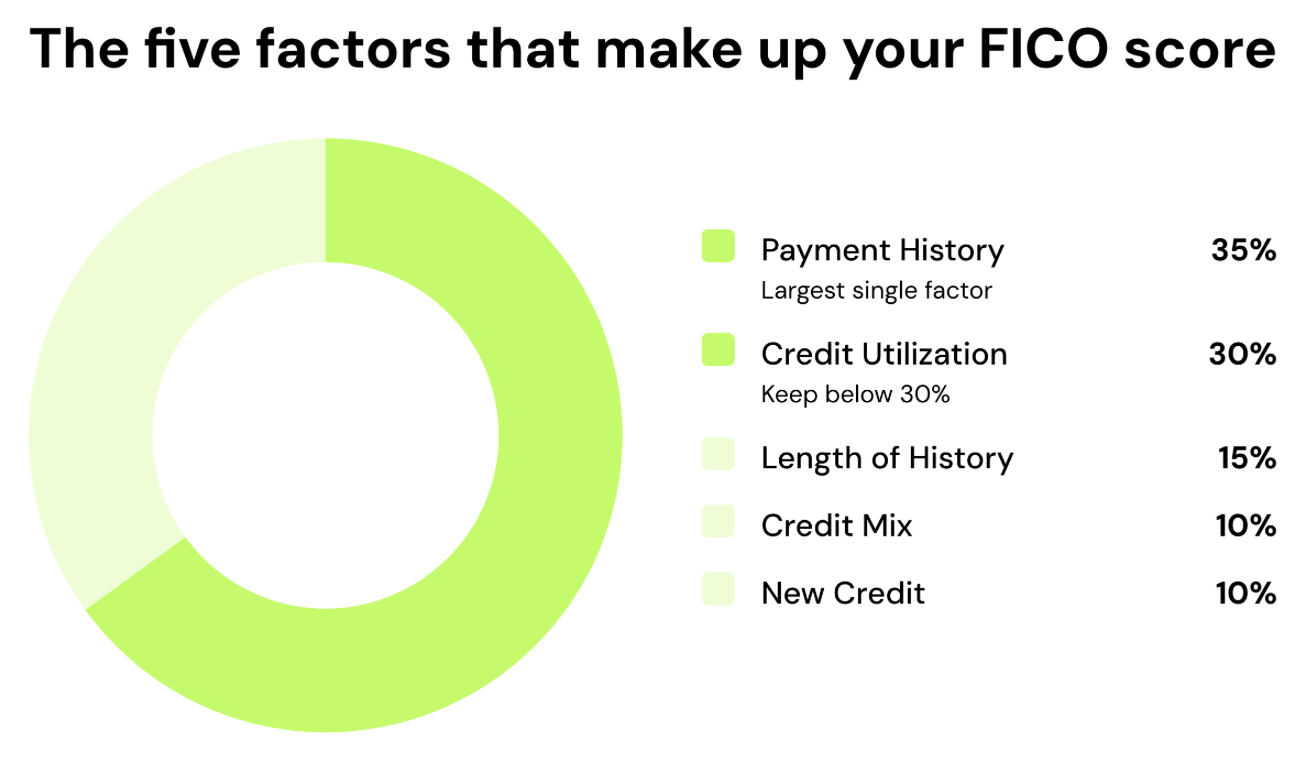
Payment history is the largest piece of a FICO Score at 35%. If your credit file is thin, adding on-time payments gives the scoring model something to see when a credit file is thin.
Why the scoring model decides whether it counts
FICO has counted reported rental data since 2014. Versions built before that don't, so the same rent history can move one score and do nothing for another. FICO doesn't publish which versions count utility and phone data.
Results depend on the rest of your credit file and the exact scoring model used. A person with limited credit history may see different results than someone with several established accounts.
Why results vary by credit file
The rest of your file matters too. Someone with two accounts may see more change than someone with 10, because there's more room for new information to register. And if the app reports to a bureau your lender doesn't pull, nothing shows up at all.
Read more >> How to Add Utility Bills to Your Credit Report
Bottom line
The right bill reporting service depends on which bills are in your name, which bureaus you need to reach, and how far back your bank records go.
But every app here builds one thing: payment history. None of them affects how much of your available credit you're using, which is the second-biggest factor in most scores. That takes a revolving account.
The Kikoff Credit Account reports on-time payments to all three bureaus, with no interest and no credit check, on plans starting at $5 a month, and Bill Reporting adds your utility and phone payments to TransUnion on Kikoff Premium or Kikoff Ultimate starting at $20 a month.
Methodology: How we chose these apps
We started with the services that can actually put a utility or phone payment on a credit report, plus the rent reporting services readers weigh against them and one card-based option for bills that don't qualify anywhere. For each, we checked which bills qualify, which bureaus receive them, the total cost including any backdating fee, and whether a short month can turn into a negative mark. That last one separates the list more than price does: Kikoff and Experian Boost report only successful payments, while Extra reports late payments alongside on-time ones.
Every figure comes from the provider's own pricing, help, or terms pages, confirmed in September 2026. Where something isn't published, we say so: StellarFi no longer lists current bureau coverage on its main site, and FICO doesn't publish which scoring model versions count utility and phone data.
Kikoff publishes this site, and Kikoff products appear in this article. We include them on the same terms as everything else: the same criteria, the same published sources, and the same limitations stated out loud. Where a competitor does something Kikoff doesn't, that's in here too.
Prices, eligibility, and bureau coverage change. Check the provider's current terms before you sign up.
Frequently Asked Questions
Disclaimer: The information provided in this blog post is meant for informational purposes only and does not constitute financial advice.