






Renting an apartment or house comes with a lot more financial responsibility than just cutting a check for rent each month. Every individual who signs a lease for the first time is often surprised by how quickly the smaller costs stack up alongside the big one.
Understanding what you owe before you move in is the single most effective way to avoid budget shock. Let's jump in and cover everything you need to know.
Bills renters typically pay each month
Renters generally pay a mix of fixed and variable costs, and the exact combination depends on the property, the lease terms, and where you live. Here's a breakdown of the most common expenses you should plan for.
Some bills are straightforward and predictable, while others fluctuate with the seasons or your habits. Knowing what falls into each category helps you build a realistic monthly budget.
Lots of first-time renters underestimate the total cost of renting because they focus mainly on the advertised rent price. This means you could be hundreds of dollars short each month if you haven't accounted for everything else.
This said, many landlords do include certain costs in the rent, so it's worth reading your lease carefully before you assume you owe something separately. The goal here is to paint a picture of the full range of what renting can cost so you're never caught off guard.
Rent
Rent is basically the foundation of your monthly housing costs, and it's usually the largest single expense you'll have as a renter. It's the amount you agree to pay your landlord in exchange for occupying the unit, and it's due on a set date each month, most often the first.
Missing a rent payment can trigger late fees and, in serious cases, eviction proceedings, which is primarily why staying on top of this bill matters so much. Setting up autopay or a recurring calendar reminder is a no-brainer move to protect yourself from accidental missed payments.
Rent amounts vary enormously depending on your city, neighborhood, unit size, and current market conditions. Luckily, once you sign a lease, your rent is locked in for the lease term, so you at least know exactly what to expect until renewal time.
Utilities
Utilities are the services that keep your home running day to day, and they're usually billed separately from rent unless your lease states otherwise. Here's a breakdown of what falls under utilities.
Electric
Electric is one of the most common utility bills renters pay on their own. It covers lighting, outlets, appliances, and in many homes, heating and cooling.
Your electric bill fluctuates month to month based on how much energy you use, which is primarily driven by your climate and habits. Running the air conditioner heavily in summer or space heaters in winter can cause noticeable spikes.
Gas
Gas is used for heating, cooking, and hot water in many rental units. Not every apartment uses gas, so check what your unit relies on before assuming this is one of your bills.
Gas bills tend to be higher in colder months when your heating system runs more frequently. If your unit uses electric heat instead, you may not have a gas bill at all.
Water and sewer
Water and sewer costs are sometimes bundled together on a single bill. In some rentals, the landlord covers water and sewer, while in others it's passed on to the tenant.
Your lease should spell out who is responsible for this cost. If you're paying for water, expect the bill to be relatively stable unless you have habits like filling a bathtub frequently or running irrigation systems.
Trash and recycling
Trash pickup is often included in rent or covered by the landlord, especially in apartment buildings. However, in single-family rentals or certain markets, you may be billed directly by the city or a private hauler.
This is generally a smaller monthly cost, but it's worth confirming who handles it before you move in. Just make sure you're not accidentally skipping payments on a bill you didn't realize you owed.
Internet and cable
Internet is effectively a necessity for most renters today, whether you're working from home, streaming, or just staying connected. It's usually not included in rent and needs to be set up as its own account with a provider.
Pricing varies by provider and speed tier, and many areas have limited options which is primarily why rates can feel high without much competition. Cable is largely optional for renters who use streaming services, but some buildings offer bundled deals worth comparing.
Renters insurance
Renters insurance is one of those bills that every individual who rents should have, even if their landlord doesn't require it. It covers your personal belongings in the event of theft, fire, or certain types of damage, and it also includes liability coverage if someone is injured in your home.
Monthly premiums are usually super affordable, often in the range of fifteen to thirty dollars a month depending on your coverage level and location. Lots of renters skip it thinking their landlord's insurance covers them, but that policy only covers the building itself, not your belongings.
Parking
Parking is a bill that mainly affects renters in urban areas or apartment complexes where spaces aren't automatically included with a unit. Some properties charge a flat monthly fee for an assigned spot, while others require you to pay for street permits through the city.
If you have a vehicle, confirm whether parking is included in rent or listed as a separate line item in your lease. This cost can range from a small monthly fee to a significant chunk of your budget in dense cities.
Pet fees and pet rent
Renters with pets often face extra costs that go beyond the initial pet deposit. Many landlords charge a monthly pet rent on top of the base rent, and some charge a one-time non-refundable pet fee as well.
These costs vary widely depending on the property and the type of pet. Just make sure you account for all pet-related charges before signing a lease so the total monthly number is clear.
Laundry
Laundry costs apply mainly to renters who don't have an in-unit washer and dryer. If your building has shared coin-operated or card-operated machines, that expense adds up over the course of a month.
Some renters use off-site laundromats, which is another cost to factor in. Be it a few loads a week or a big laundry day once a week, it's a recurring expense worth tracking.
What's typically included in rent vs. not
What's included in rent varies a lot by property type, landlord, and location. Generally, larger apartment complexes include water, trash, and sometimes heat, while smaller landlords or single-family rentals often pass most utilities to the tenant.
The best way to know exactly what you're on the hook for is to read every line of your lease and ask your landlord directly before you sign. Never assume something is included just because it wasn't mentioned.
Here's a breakdown of what's commonly included versus not:
- Often included: trash pickup, water and sewer, building maintenance
- Often not included: electricity, gas, internet, renters insurance, parking, pet fees
This means your actual monthly housing cost could be significantly higher than the listed rent price depending on your unit. Factor all of these into your calculations when comparing apartments.
How to budget for renter costs
Budgeting as a renter starts with knowing your fixed costs versus your variable ones. Fixed costs like rent, renters insurance, and parking are the same every month, while utilities like electric and gas fluctuate with usage and season.
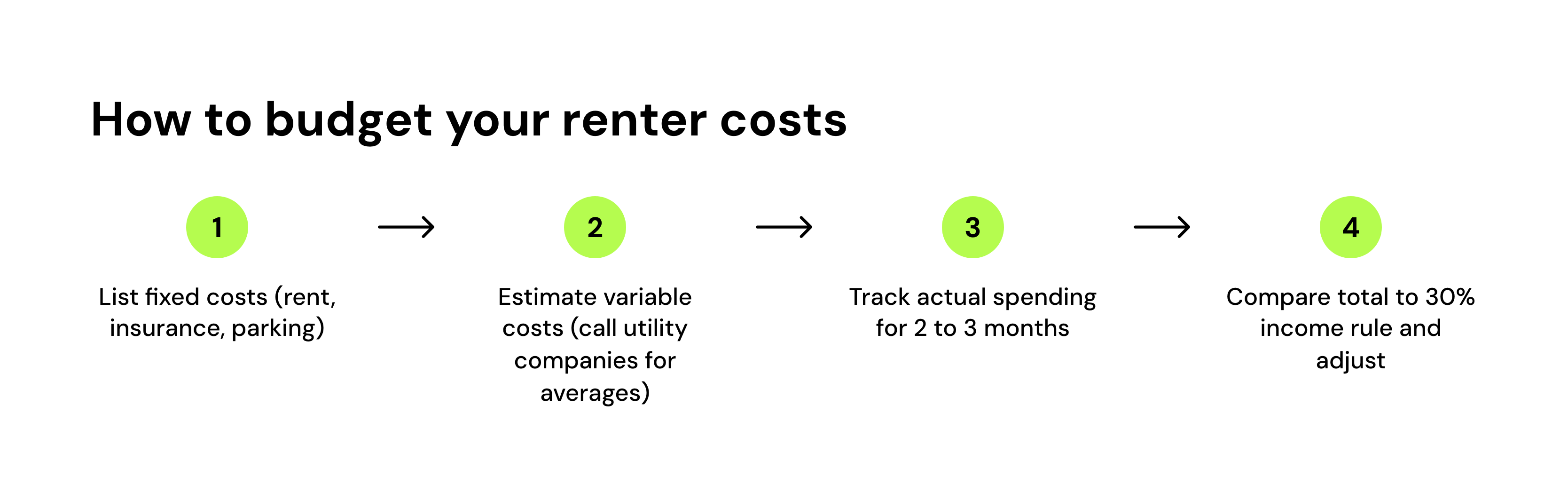
A simple approach is to start with your rent and add a cushion for utilities based on the average cost for your area and unit size. Lots of utilities companies will give you an estimate of average bills for a given property if you call and ask before signing a lease.
It's also worth tracking your spending for the first few months in a new place to see where the real numbers land. This paints a picture of your actual monthly housing total, not just the budgeted estimate, and lets you adjust as needed.
Once you have a realistic number, the general rule of thumb is that housing costs should stay at or below thirty percent of your gross monthly income. If your all-in rental costs are pushing above that, it may be worth exploring ways to reduce variable expenses or reconsidering the rental itself.
Conclusion
Understanding every bill you pay when renting is the first step to managing your finances effectively as a tenant. But there's one more way your rent payments can work harder for you: credit building.
Every individual who pays rent on time is already demonstrating responsible financial behavior, and that should count for something. Kikoff's Rent Reporting feature lets you report your verified rent payments to Equifax monthly, turning a bill you're already paying into a tool for building your credit history.
This is a no-brainer for renters who want to make the most of what they're already doing. You can also access past rent reporting on certain plans, which means you don't have to wait months to start seeing your rental history reflected on your credit report.
Luckily, getting started is super simple. Visit Kikoff to learn more about Rent Reporting and how Kikoff can help you build credit on your own terms.
Frequently Asked Questions
About the editor

Disclaimer: The information provided in this blog post is meant for informational purposes only and does not constitute financial advice.