







Credit mix is the variety of credit accounts on your credit report, such as credit cards, car loans, and student loans. If you have only one kind, or none yet, that’s no reason to go borrow money. FICO puts credit mix at about 10% of its scores. Under both FICO and VantageScore, paying on time counts for much more.
The two types of credit in your mix
Most accounts on a credit report fall into one of two groups.
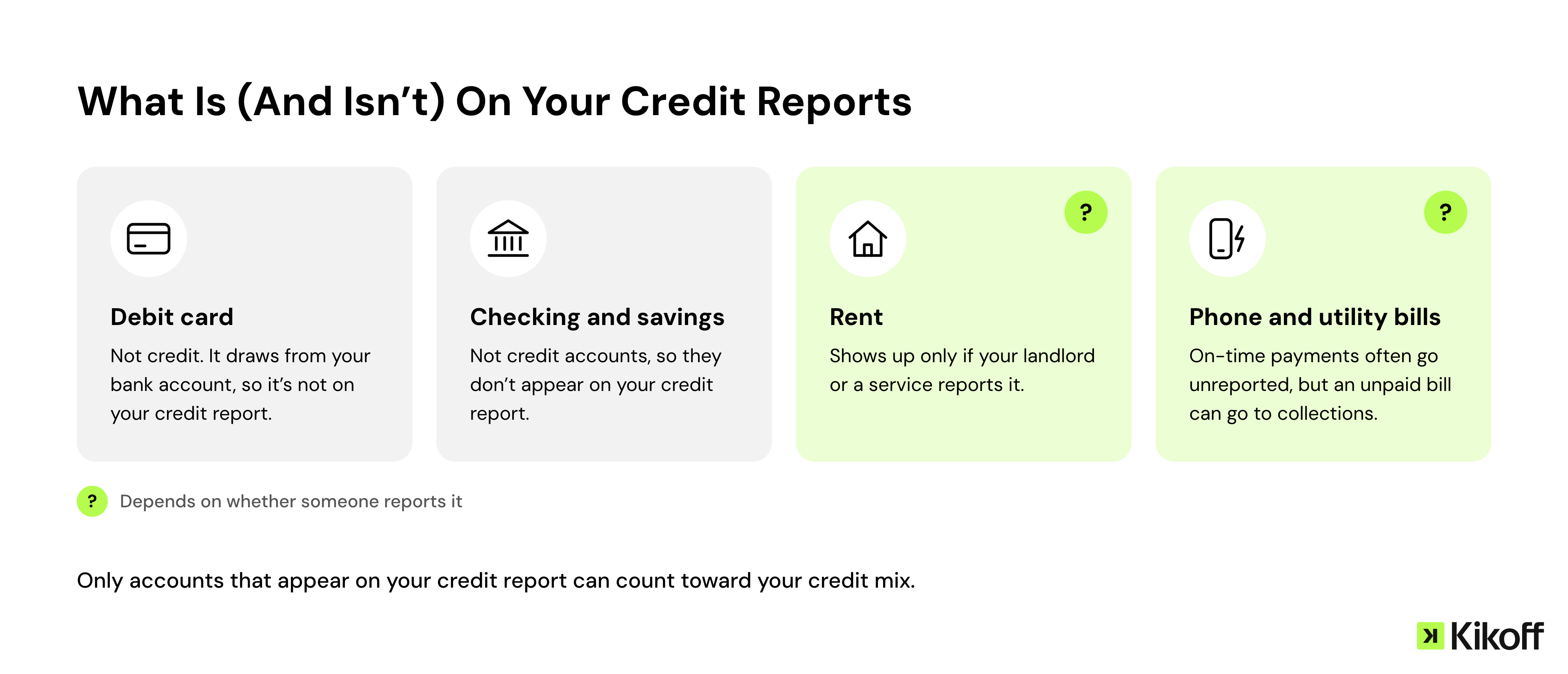
Only accounts on your credit report count. Your checking account and debit card aren’t credit, so they’re not part of your mix. Rent and utility bills only show up on your report if someone reports them, so ask your landlord or utility company whether they do. Many utilities don’t report on-time payments, but an unpaid bill can still go to collections.
Read more >> What Are the 3 Types of Credit?
How FICO and VantageScore weigh credit mix
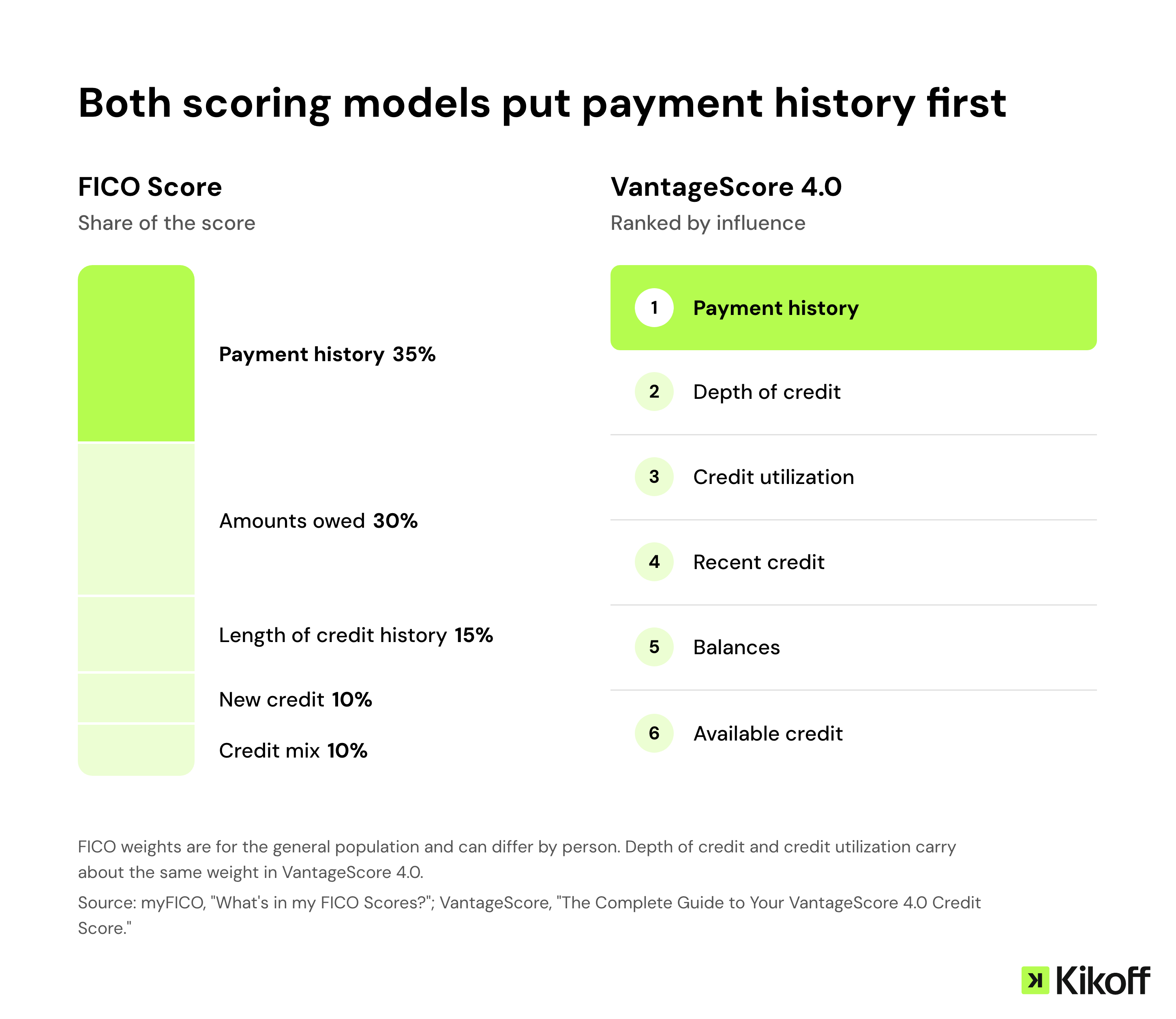
You don’t have just one credit score, and the two main scoring models you’ll see most often treat credit mix a little differently.
Both models put payment history first. So the accounts you already have help most when every one of them is paid on time.
Read more >> What’s the Difference Between FICO and VantageScore?
Should you open an account just for your mix?
Usually not. A new account can cost more than it adds in three key ways:
- Interest. A loan you don’t need still charges interest.
- A hard inquiry. Applying for credit usually means a hard inquiry, which stays on your report for two years. FICO Scores only count it for the first 12 months.
- A younger credit history. A brand-new account lowers the average age of your accounts.
Say you take out a $1,000 personal loan only to add an installment account. At an example 20% APR over 12 months, your payment would be about $93 a month, and you’d pay about $112 in interest for a factor FICO weighs at about 10%.
Let your mix grow as real needs come up. And note that paying off a loan closes the account, but it doesn’t erase it. A loan you paid as agreed can stay on your report, and its on-time history can keep counting for up to 10 years.
Read more >> Does Paying Off a Loan Early Hurt Your Credit Score?
Already paying rent or bills on time? Get credit for them.
Rent: If you rent, Kikoff’s Rent Reporting reports your rent payments to Equifax and TransUnion. Reporting future rent is included with every Kikoff plan. You can add up to two years of past rent for a one-time $50 fee.
Phone and utility bills: On Kikoff Premium and Ultimate plans, Bill Reporting sends your on-time phone, electricity, natural gas and water payments to TransUnion. It reports on-time payments only. It doesn’t change what your utility company does with an unpaid bill, which can still go to collections.
Building a mix when you’re new to credit
If you’re starting out, getting any on-time history on your report matters more than variety. A short report isn’t something you have to solve by borrowing more.
- Check your reports for free. You can get your reports from Equifax, Experian, and TransUnion once a week for free at AnnualCreditReport.com. Look at each entry’s account type to see what you have.
- Start with one account you can pay on time. A single account in good standing gives scoring models something to read.
- Keep card balances low. For example, a $300 balance on a $1,000 limit is 30% of that credit. Paying it down to $100 brings it to 10%.
- Add types only when you need them. A car loan you’d take out anyway adds an installment account.
Read more >> How revolving credit accounts affect credit utilization
What if you see an account you don’t recognize? Some accounts report under a different company name, so check your records first. If it’s not yours, you can dispute it for free with each bureau that shows it. Disputes are for inaccurate information only. If someone opened it in your name, report it at IdentityTheft.gov. If you’d rather not write the dispute yourself, Kikoff’s AI Credit Disputes can help you draft it.
Bottom line
Credit mix is a small part of your score, and you don’t need to borrow just to round it out. Mix only counts what kinds of accounts you have. What both FICO and VantageScore weigh most is how you pay them, month after month. Kikoff’s Credit Account reports your on-time payments to Equifax, Experian and TransUnion, with no credit check to sign up and no deposit. Plans start at $5 a month.
Frequently Asked Questions
Article Sources
Disclaimer: The information provided in this blog post is meant for informational purposes only and does not constitute financial advice.