






Creditworthiness is a lender’s read on how likely you are to pay back what you borrow. But there’s no one number for creditworthiness: each lender makes its own call from your credit reports, the score it picks, and what you earn and owe. It means if one lender says no, that’s one lender’s judgment, not a permanent label. And the record it reads keeps changing as new payments get reported.
What lenders look at
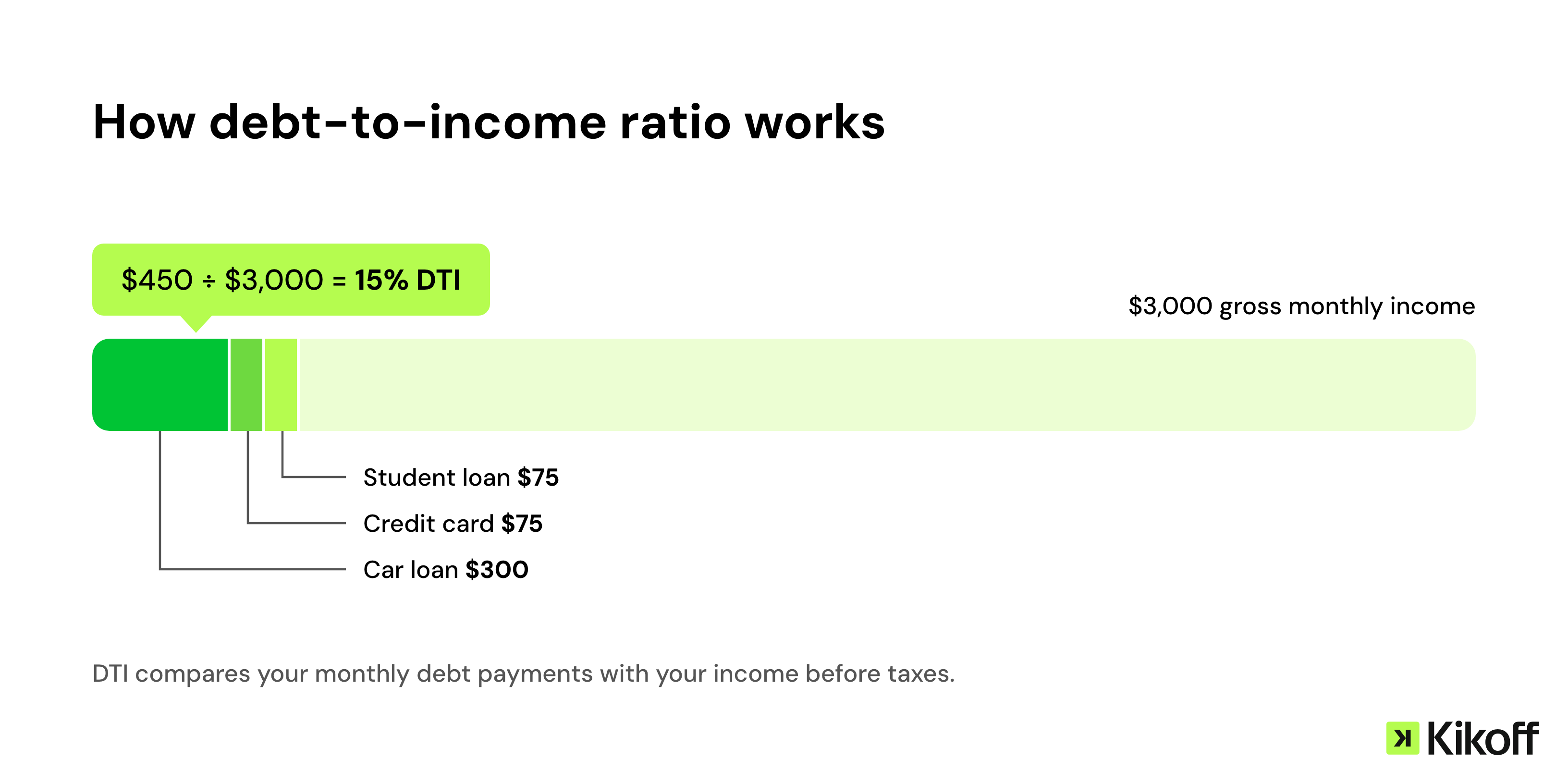
The income piece is often measured as your debt-to-income ratio (DTI). Your DTI shows how much of your monthly income before taxes goes toward debt payments.
Say you earn $3,000 a month before taxes. Each month you pay $300 on a car loan, $75 on a credit card, and $75 on a student loan. That’s $450 in debt payments. Divide $450 by $3,000 and you get 0.15, so your DTI is 15%.
There’s no single cutoff. It varies by lender and by the type of loan, so ask the lender directly what the highest debt-to-income ratio it will accept.
Read more >> How to Read a Credit Report
Why your score depends on who’s asking
You don’t have just one credit score. A score can be different depending on the scoring model, which bureau’s report it’s built from, and even the day it was calculated. Most scores range from 300 to 850.
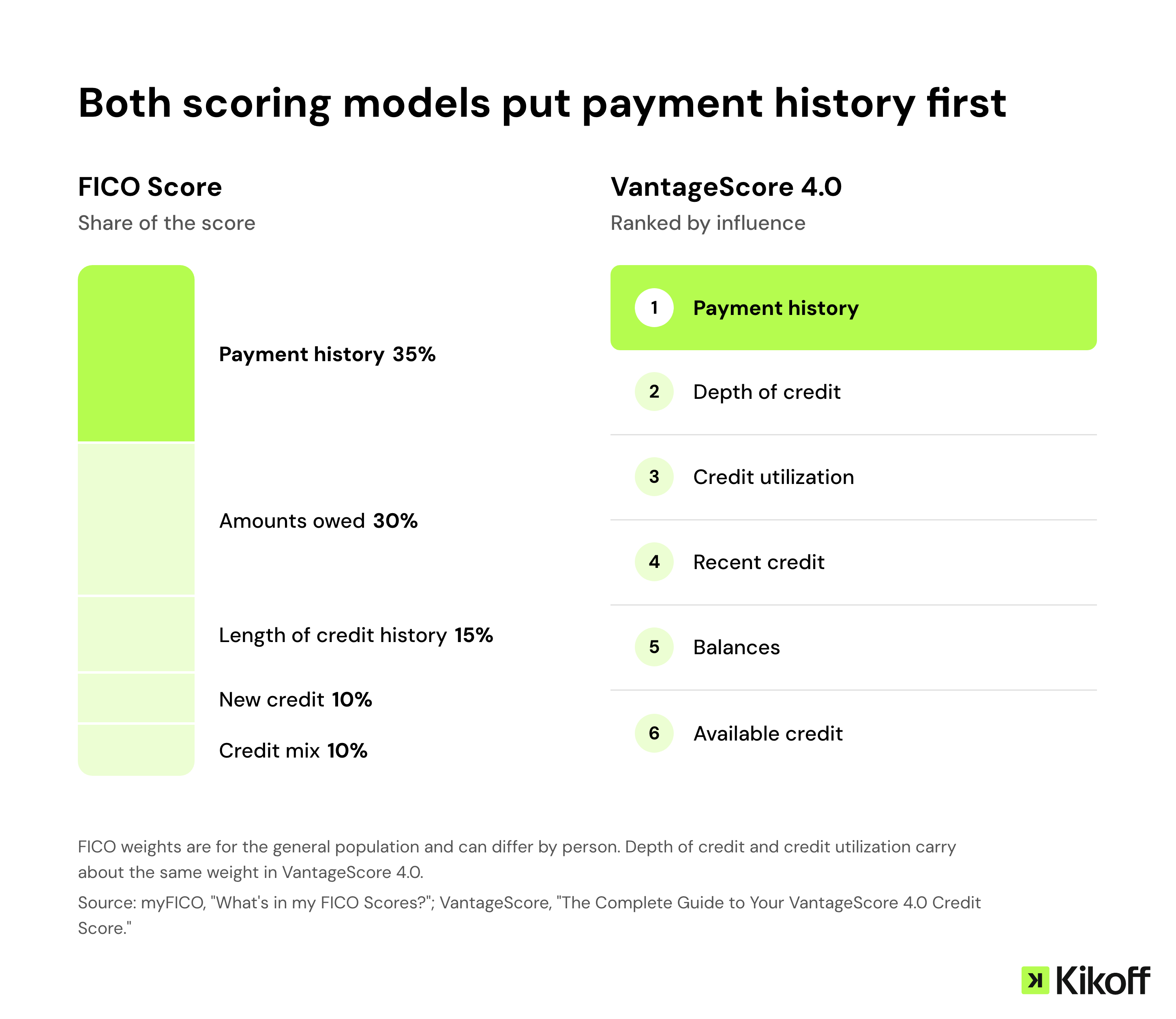
The two scoring companies you’ll see most are FICO and VantageScore. They weigh things differently:
- FICO publishes approximate weights: payment history 35%, amounts owed 30%, length of credit history 15%, new credit 10%, and credit mix 10%. Each category can vary from person to person.
- VantageScore ranks its factors by influence on its own site, instead of using percentages. Payment history is "extremely influential."
The score in a free app may not match the one a lender pulls. Before you apply, ask which score and bureau the lender uses.
Read more >> What Are Credit Scores?
How to check where you stand
You can see your reports from Equifax, Experian, and TransUnion once a week for free at AnnualCreditReport.com. Checking your own report has no effect on your score.
Pull all three, because a lender may see only one. Look for:
- Accounts you don’t recognize
- Late payments you don’t remember
- Balances that look wrong
- Names or addresses that were never yours
Don’t worry if an account you closed is still listed. Closed accounts can stay on your report, and if you paid them on time, that history still counts in your favor.
Read more >> What to Look For in Your Credit Report
What if something’s wrong? You can dispute errors with the credit bureau for free. Disputes are for inaccurate information only, so a late payment that really happened can stay. For help putting together a dispute, Kikoff’s AI Credit Disputes can walk you through it.
If you’ve been turned down
A denial comes with information you’re entitled to. Under Regulation B, the federal rule that carries out the Equal Credit Opportunity Act, a lender that turns you down has to give you the specific reasons, or tell you that you can get them if you ask within 60 days of its notice.
If your credit report was part of the decision, the lender also has to give you the credit score it used, the key factors behind that score, and the name and contact information of the bureau that supplied the report. You can get a free copy of that report from that bureau if you ask within 60 days of the notice.
Put the reasons next to that report. If something is wrong, dispute it. If it’s accurate, the reasons show you where to start.
Read more >> How to Dispute Credit Report Errors
How creditworthiness grows over time
No single step adds a set number of points. What changes depends on what’s already on your report and which model a lender uses.
These habits count under both FICO and VantageScore:
- Pay every bill on time. Payment history tops both models. If money is tight, pay at least the minimum by the due date. A late payment can stay on your report, but the on-time months after it still count.
- Keep balances low compared with your limits. A $300 balance on a $1,000 limit is 30% of that credit. Paying it down to $100 brings it to 10%.
- Give your accounts time. Length of credit history is a factor in your score, and a closed card in good standing keeps counting toward it while it’s on your report. The bigger cost of closing a card is losing its limit, which can raise how much of your remaining credit you’re using.
- Apply only when you need to. Each application can add an inquiry, a record that you applied for credit, to your report.
If you’re just starting out, a scoring model needs something to read. Your checking account doesn’t appear on your credit report, and rent and utility payments usually don’t either unless someone reports them. Ask your landlord or utility company whether they do.
Read more >> How to Build Credit From Scratch
Bottom line
Creditworthiness isn’t a grade you get once. It’s a lender’s assessment of a record that keeps changing. Your reports and DTI show where you stand today. Payment history, the factor both FICO and VantageScore weigh most, only grows on accounts that report, and you can’t pick which bureau the next lender pulls.
Kikoff’s Credit Account reports your on-time payments to Equifax, Experian, and TransUnion, with no credit check to sign up. Plans start at $5 a month.
Frequently Asked Questions
Article Sources
Disclaimer: The information provided in this blog post is meant for informational purposes only and does not constitute financial advice.