





If you've heard the term "subprime" and aren't sure what it means for your finances, you're not alone.
Understanding where your credit score falls on the spectrum is one of the most important steps in taking control of your financial life, be it applying for a loan, renting an apartment, or qualifying for a credit card.
Let's jump in.
What is a subprime credit score?
A subprime credit score is a score that lenders classify as higher "risk," meaning the borrower has a history that suggests they may be less likely to repay debts on time.
Credit scores are generally measured on a scale of 300 to 850, and scores in the subprime range effectively signal to lenders that extending credit comes with elevated risk.
The exact cutoff for subprime varies depending on the lender and the credit scoring model being used, but the most widely accepted threshold places subprime scores below 670 on the FICO scale.
FICO scores break down into the following tiers:
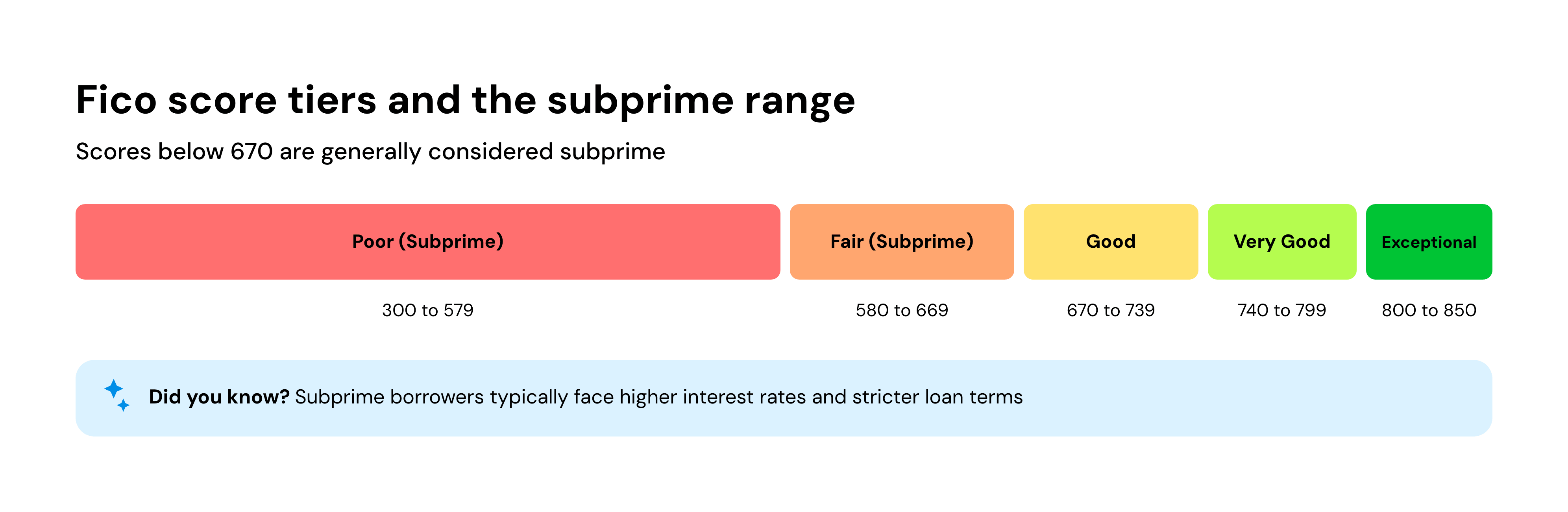
- Exceptional: 800 to 850
- Very good: 740 to 799
- Good: 670 to 739
- Fair: 580 to 669
- Poor: 300 to 579
The "fair" and "poor" tiers together make up what most lenders and financial institutions consider the subprime range, though some lenders draw the line at 620 or even 640 depending on their specific risk policies.
Why your credit score is considered "subprime"
Your credit score is a number between 300 and 850 that paints a picture to lenders of how "risky" it is to loan you money.
Late or missed payments
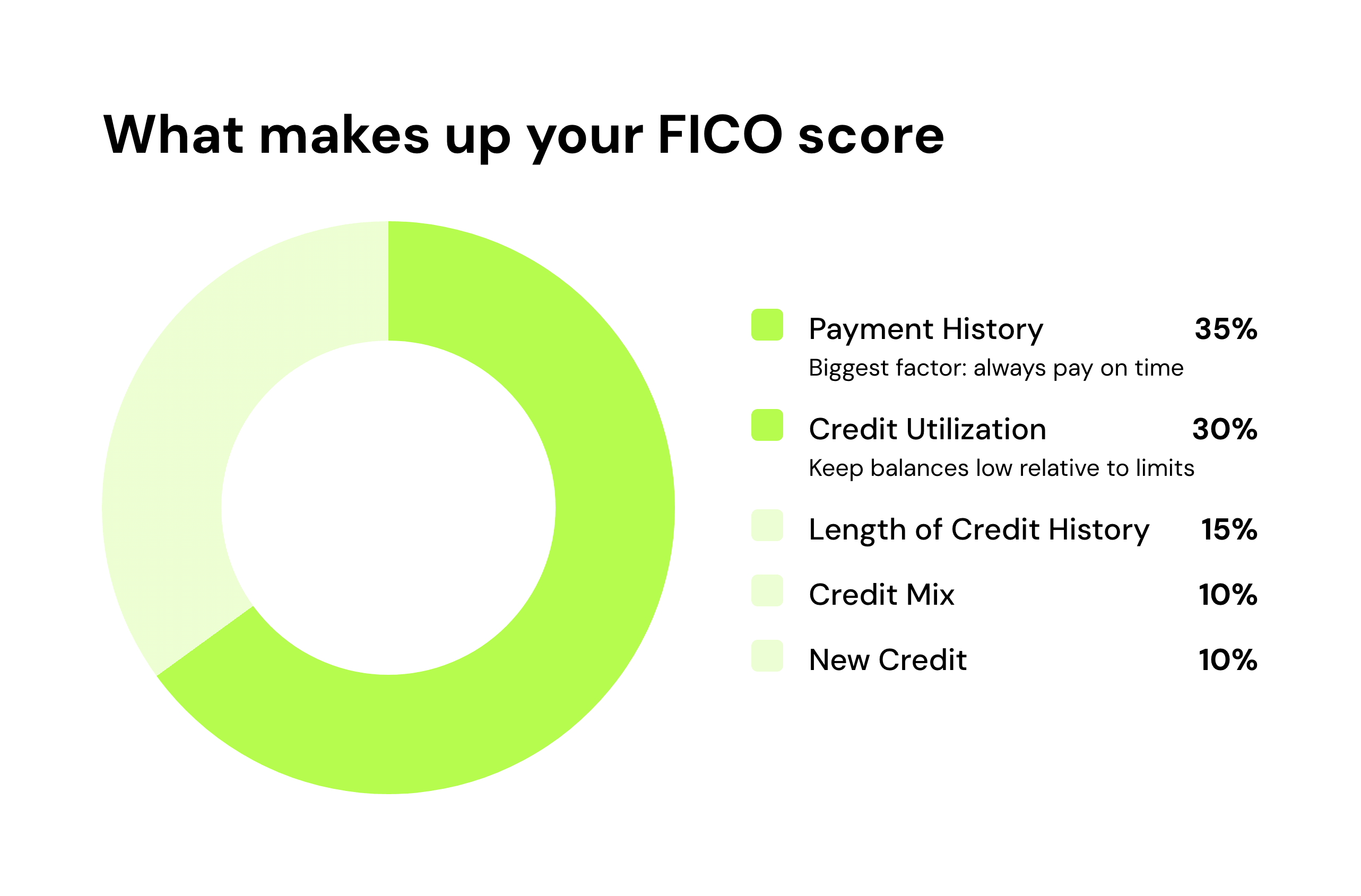
Payment history is the single most important factor in your credit score, making up 35% of your FICO score.
A history of late or missed payments is the most common reason a score falls into subprime territory, and even a single missed payment can have a meaningful negative impact.
High credit utilization
Credit utilization, which is primarily defined as the percentage of your available revolving credit that you're currently using, accounts for 30% of your FICO score.
Keeping that number above 30% can drag your score down significantly, and lots of people with subprime scores are carrying balances that are close to or at their credit limits.
Limited credit history
Every individual who is new to credit, or who has only had one or two accounts, may find themselves with a subprime score simply due to a thin credit file.
Lenders want to see a track record, and without enough history to evaluate, they'll generally treat your profile as higher risk by default.
Derogatory marks
Collections, charge-offs, bankruptcies, and foreclosures are some of the most damaging entries that can appear on a credit report.
These types of marks can push a previously good score deep into subprime territory and typically remain on your credit report for seven to ten years.
What does a subprime credit score mean for borrowers?
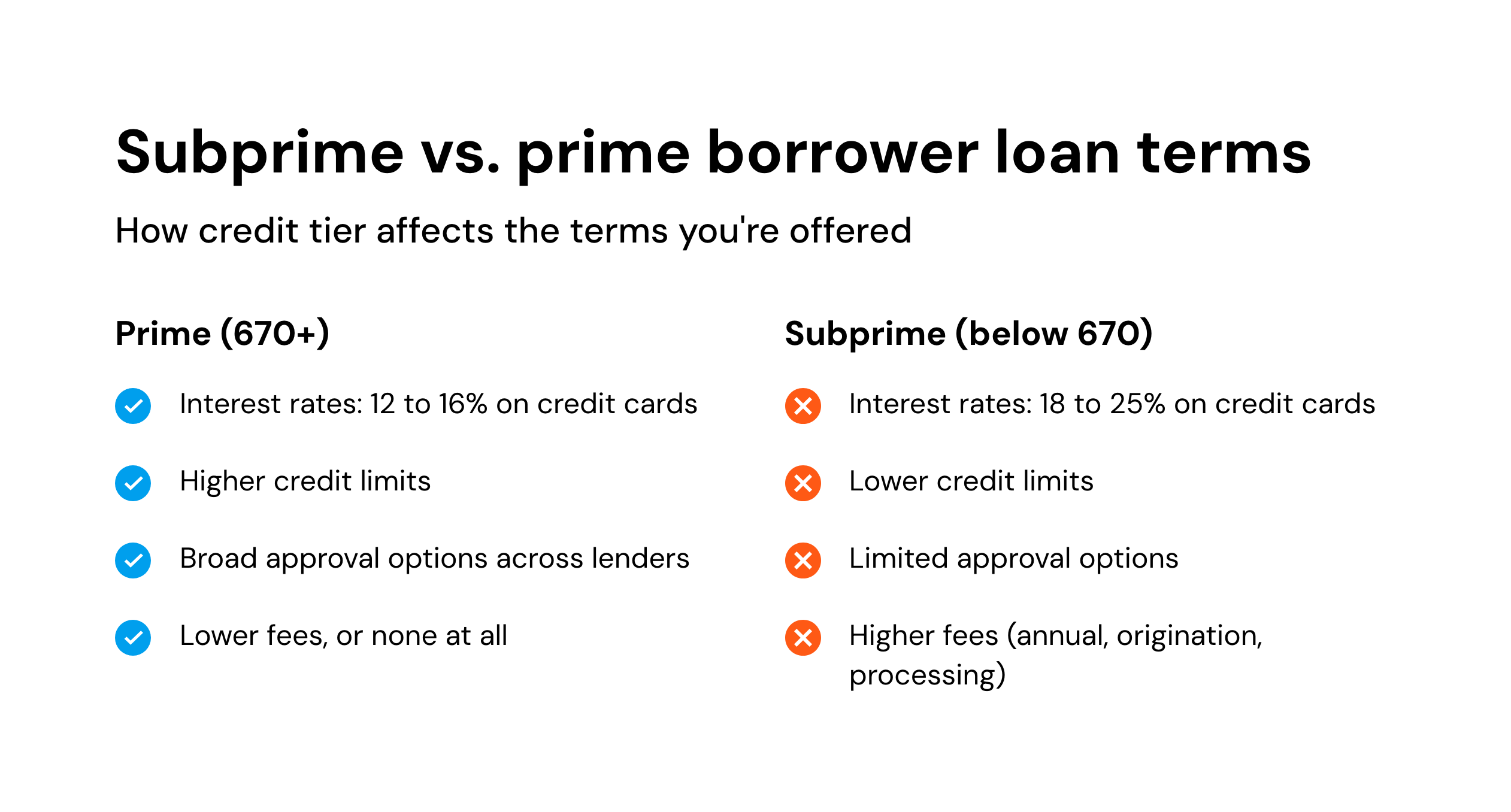
A subprime credit score doesn't mean you can't access credit, but it does mean that the terms will usually be less favorable.
Borrowers in the subprime range can expect higher interest rates, lower credit limits, stricter approval requirements, and in some cases outright denials from lenders who only work with prime or near-prime borrowers.
How to move out of the subprime range
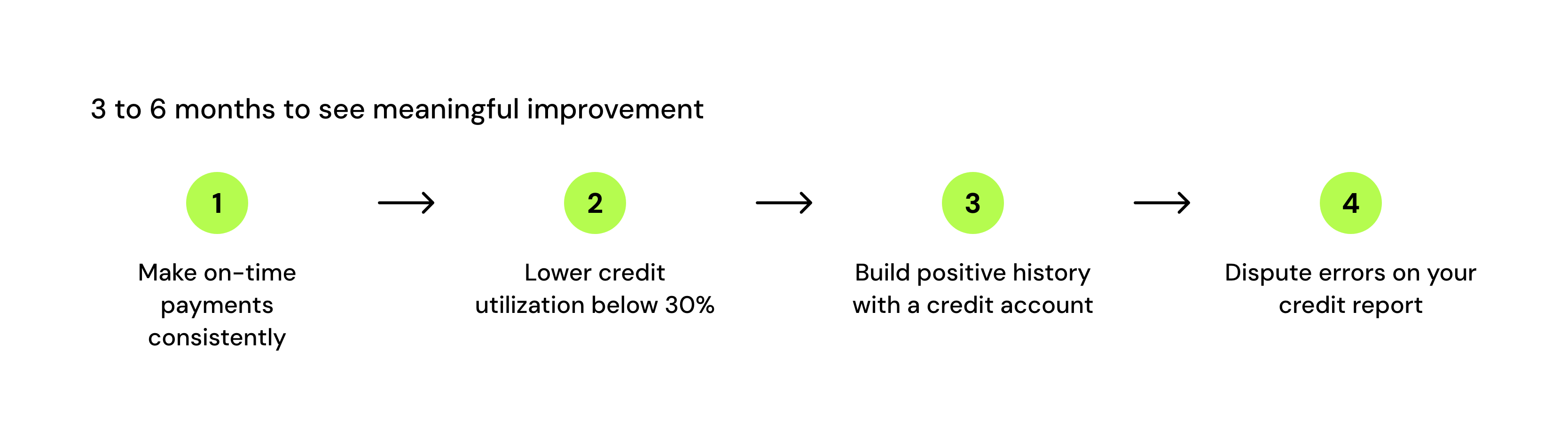
Make on-time payments consistently
Since payment history makes up 35% of your score, this is the single most impactful habit you can build.
Setting up autopay for at least the minimum payment on every account ensures you don't accidentally miss a due date.
Lower your credit utilization
Paying down revolving balances is one of the fastest ways to see a score improvement, since utilization is recalculated every month when your lenders report to the bureaus.
Build positive credit history with a credit account
A credit account is one of the most efficient tools for building credit because it affects both your payment history and your credit utilization simultaneously.
Credit-builder loans, by comparison, only build payment history, lock up your funds for the loan term, and typically charge interest and fees along the way.
Kikoff offers a free Credit Account that reports to all three major credit bureaus, with no hard credit check to sign up, making it a super accessible starting point for anyone looking to add positive credit activity to their profile.
Dispute errors on your credit report
Every individual who has a credit report should review it regularly for inaccuracies. If you find an account you don't recognize or an incorrect payment status, you have the right to dispute it.
How long does it take to move from subprime to prime?
There's no fixed timeline, since your starting point, the types of negative marks on your report, and how consistently you practice positive credit habits all play a role.
Generally, someone who begins making on-time payments and lowering utilization can start to see meaningful movement within three to six months.
Conclusion
A subprime credit score is effectively a signal to lenders that a borrower presents higher risk, and it typically means paying more to access credit or being limited in the options available.
The good news is that subprime status is not permanent. With consistent on-time payments, lower utilization, and tools that help you add positive activity to your credit file, moving into the prime range is achievable for lots of people.
Kikoff is a great place to start, offering a free Credit Account that reports to all three major credit bureaus with no hard credit check required. Build credit with Kikoff and take your first step toward a stronger credit profile today.
Frequently Asked Questions
About the editor

Disclaimer: The information provided in this blog post is meant for informational purposes only and does not constitute financial advice.