
Your car loan’s maturity date is the day your last scheduled payment is due. Pay everything you owe by then, and once the lender releases its lien, the car is fully yours. That date can move, though. Skipped or deferred payments can push it later, and your final bill may not match your usual payment. If you’re behind, call your lender before the maturity date, while you still have the most options.
What a maturity date is and where to find it
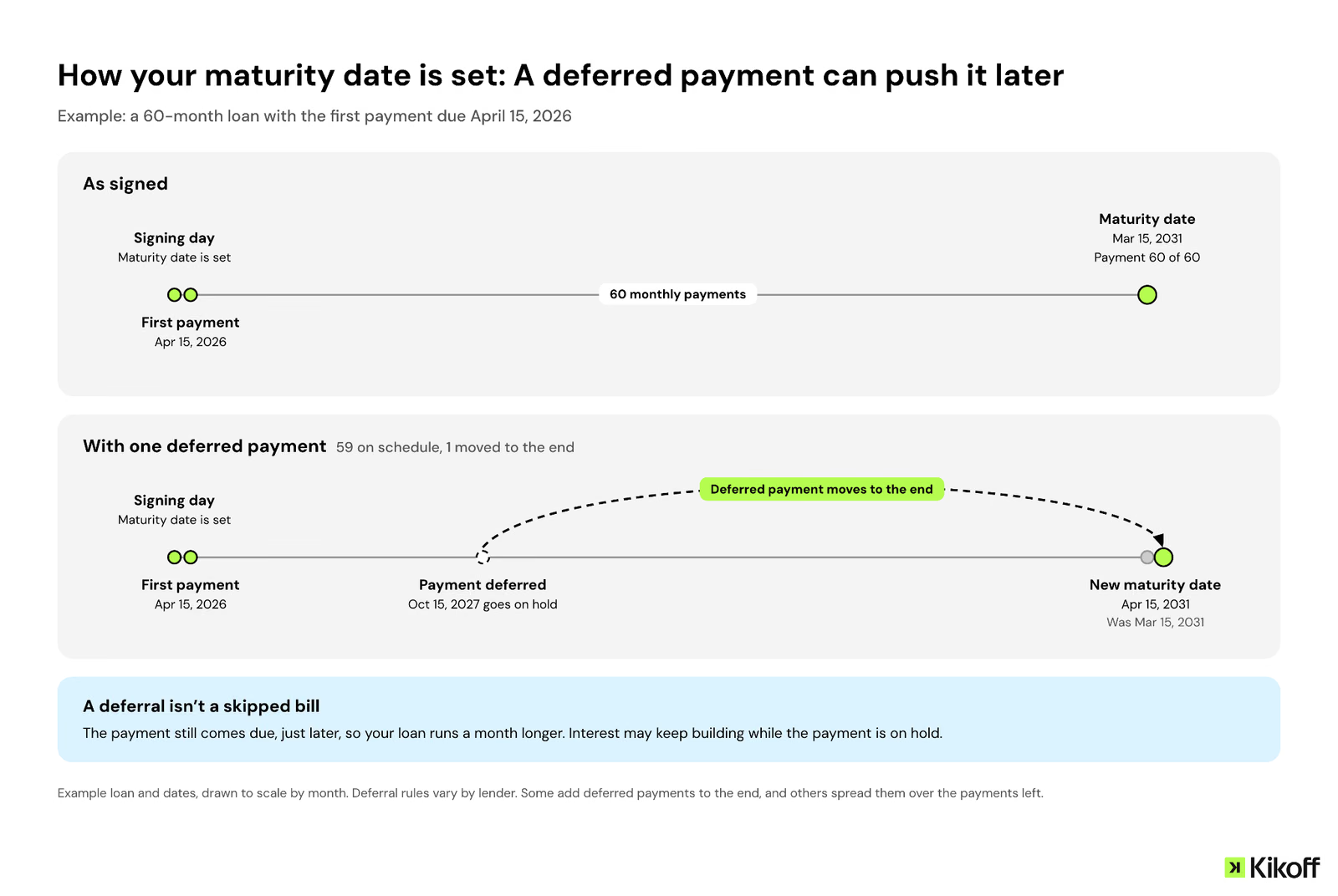
The maturity date is the end of your loan’s payment schedule. It’s set when you sign, based on your first due date and the number of payments. For example, if you sign a 60-month loan with the first payment due April 15, 2026, your 60th and final payment is due March 15, 2031.
To find yours, look at the payment schedule in your loan contract. Your monthly statement or your lender’s app may also show it.
Long loans push that date far out. In the first quarter of 2026, the average new-car loan ran 69.48 months, or almost six years, according to Experian’s auto finance data. About 36% of new-car loans ran longer than six years.
Maturity date vs. payoff date
Your maturity date is when the contract says you’ll be done. Your payoff date is when you actually finish, and it can come sooner.
With a simple-interest loan, interest is charged on the balance you still owe. Pay more than the minimum, and that balance and its interest shrink faster. The contract date stays the same, but you reach payoff earlier.
Before you pay extra, check for a prepayment penalty. Your contract and state law decide whether you can pay early without one, and some states bar these penalties on certain loans. When you’re ready to finish, ask your lender for a payoff quote, the exact amount you owe through a specific date.
Read more >> How to Pay Off a Car Loan Early
What can move your maturity date
Your maturity date stays put unless something changes your loan terms.
If you’re having trouble making payments, contact your lender as soon as you can. The CFPB says lenders may offer options like a payment plan, a new due date, or a pause on payments.
Read more >> How to Refinance a Car Loan
Why your last payment might not match the others
Your final payment can be bigger or smaller than usual. With simple interest, how each payment splits between interest and principal depends on your balance at the time. Late payments, late fees, or a partial payment can leave more to pay at the end. Paying ahead can make the last bill smaller.
Some contracts also include a balloon payment, a large one-time payment due at the end of the loan. If yours has one, it’ll be in the payment schedule.
About two months before your maturity date, ask your lender for your exact final payment amount and whether any fees or unpaid interest are on the account. That gives you time to plan if the number is bigger than expected.
What happens after your final payment
- Your lender releases its lien, its legal claim on the car. Depending on your state, you may get a paper title in the mail, or the lien may come off an electronic record and you’ll request the title from your state’s motor vehicle agency. Timing varies by state and lender, so ask your lender how and when you’ll get it. If it doesn’t arrive, contact the lender, then the agency.
- Your insurance requirements may change. Lenders often require certain coverage while they hold a lien. After payoff, ask your insurer to remove the lender from your policy.
- Your credit report shows the loan as paid and closed. According to TransUnion, accounts closed in good standing can stay on your report for up to 10 years. The account just stops adding new monthly payments.
Selling or trading in the car before the loan matures? The lender has to be paid off before the title can move to the new owner, and title-transfer rules vary by state.
If you can’t pay by the maturity date
If you still owe a balance after the maturity date, the debt doesn’t go away. Your contract defines when the loan is in default, and missing a payment is a common trigger.
Under the FTC’s summary of vehicle repossession rules, in many states a lender can repossess your car as soon as you default, without notice. It can’t “breach the peace” while taking the car. In some states, that includes using or threatening force or taking the car from a closed garage without permission. Some states let you reinstate the loan by paying the past-due amount plus the lender’s repossession costs. In most states, if the car sells for less than you owe, the lender can sue you for the difference.
Take these steps, earliest first:
- Call your lender before the maturity date. Ask for an extension or a payment plan, and get any agreement in writing.
- Ask about your state’s rules. Your state attorney general’s office can tell you about repossession and reinstatement rights where you live.
- Get help if it goes further. If the lender has started repossession or you get court papers, contact a local legal aid office or a licensed attorney. For help with a budget, the National Foundation for Credit Counseling (NFCC) can connect you with free or low-cost debt counseling at 800-388-2227.
Bottom line
Your car loan’s maturity date is when your last scheduled payment is due. Once you’ve paid in full, the lien comes off and the car is yours. Your report keeps that payment record, but a closed loan adds nothing new, and if it was your main open account, you may have nothing left reporting monthly payments. Kikoff’s Credit Account reports your on-time payments to Equifax, Experian, and TransUnion, with no credit check to sign up. Plans start at $5 a month.
Frequently Asked Questions
Article Sources
Disclaimer: The information provided in this blog post is meant for informational purposes only and does not constitute financial advice.