



Renting an apartment can feel like jumping through hoops, especially when your credit history is thin or you're just starting out. Let's jump in on one of the most common hurdles renters face: the guarantor requirement.
A guarantor on a lease is a third party who signs the rental agreement alongside you and promises to cover your rent or any damages if you default. This means the landlord has a financial backup in case things go sideways.
What is a guarantor on a lease?
A guarantor is essentially a co-signer who takes on legal responsibility for your lease obligations if you fail to meet them. Every individual who signs on as a guarantor is putting their own finances and credit on the line for your benefit. This is not a casual favor — it is a legally binding commitment that can last the entire length of the lease. Landlords request guarantors mainly when a prospective tenant does not meet their financial or credit requirements on their own. The arrangement basically gives the landlord a safety net, which is primarily why it is so common in competitive rental markets. Think of it as a financial voucher: someone with strong credit and income says "I've got them," and that paints a picture of lower risk for the landlord.
What a guarantor does
A guarantor guarantees your lease by agreeing to step in and pay if you miss rent or cause damages you cannot cover. This means their name appears on the lease and they are legally obligated from the moment they sign. Generally, the guarantor is not expected to live in the unit — their role is purely financial. Usually the guarantor's obligation kicks in only after you have failed to pay, but some leases hold them jointly liable from day one, so it is important to read the fine print. Landlords can pursue a guarantor for unpaid rent, late fees, and even legal costs in some cases. The single most important thing a guarantor provides is credibility — their financial standing effectively transfers some trust to you as a renter.
When you need a guarantor on a lease
Landlords typically require a guarantor when a renter's application raises financial concerns. Here's a breakdown of the most common situations:
- You have no credit history or a low credit score
- Your income does not meet the landlord's threshold (often 2.5 to 3 times monthly rent)
- You are a student or recent graduate with limited income
- You have a prior eviction on your record
- You are relocating from another country without a U.S. credit profile
Lots of first-time renters find themselves in this position simply because they have not had enough time to build a financial track record. Even a solid income can be dismissed if the credit side of your application is weak, which is primarily why credit building matters so much before apartment hunting.
What landlords require from guarantors
Landlords do not accept just anyone as a guarantor — they generally apply even stricter standards to guarantors than to the tenants themselves. Every individual who wants to serve as a guarantor will usually need to demonstrate strong credit, often a score above 700, along with a stable income that is significantly higher than the renter's. Here's a breakdown of what landlords typically ask for:
- Proof of income (pay stubs, tax returns, or bank statements)
- A credit report showing a strong payment history
- Government-issued photo ID
- A completed guarantor application
- Signed lease addendum outlining their obligations
Some landlords require the guarantor to earn at least 80 to 100 times the monthly rent annually, which is super common in cities like New York. This said, requirements vary widely by landlord and market, so always ask upfront what the bar looks like before bringing someone into the process.
Alternatives to a guarantor
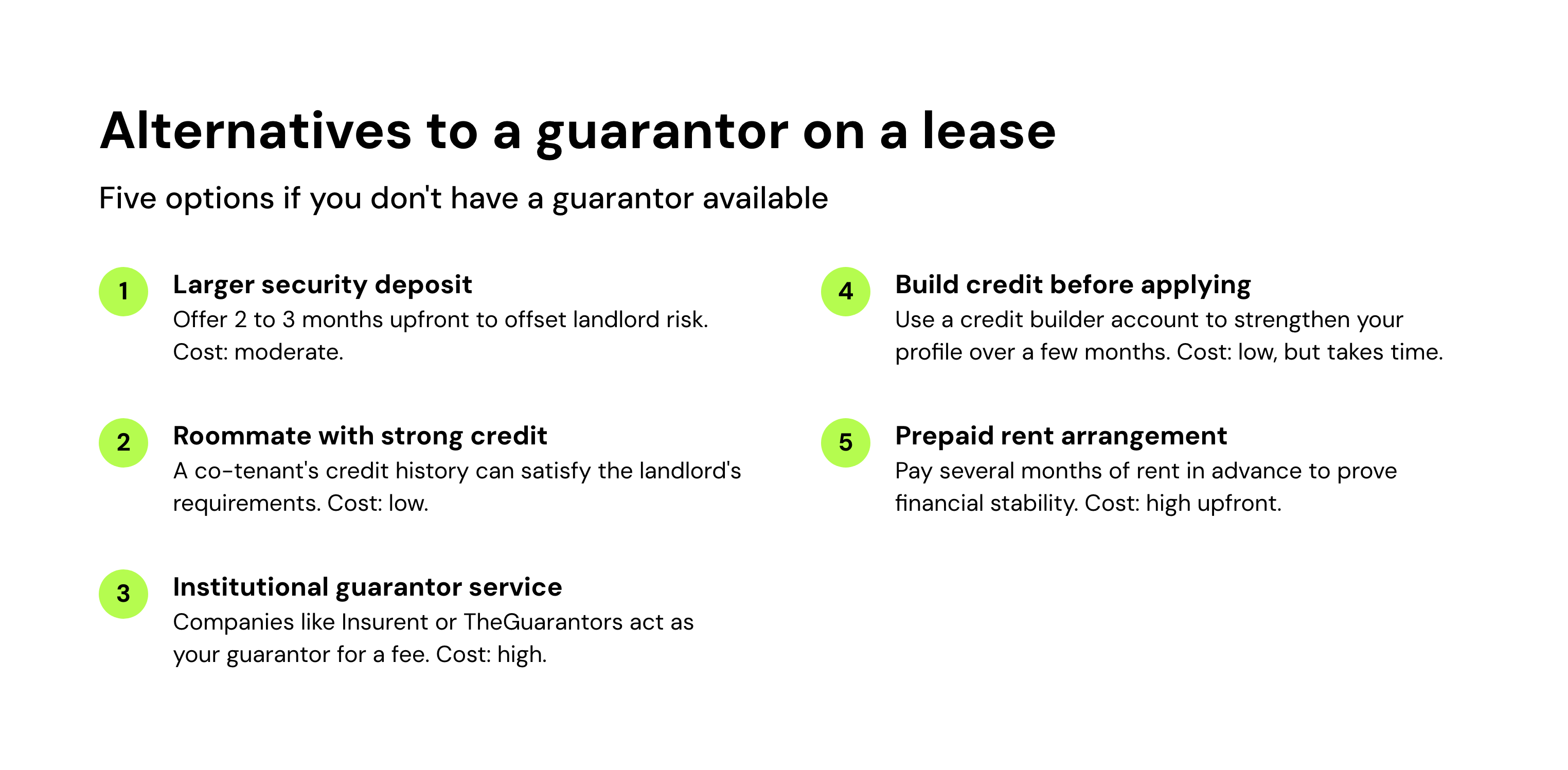
Luckily, a guarantor is not the only path forward if your application comes up short. Some landlords will accept a larger security deposit — be it a few extra months of rent — in lieu of a guarantor. Roommate arrangements can also help, since a co-tenant with strong credit shares the lease equally rather than simply backing you up. Institutional guarantor services like Insurent or TheGuarantor act as professional co-signers for a fee, which is a no-brainer option for renters who do not have a willing family member or friend. Building your credit before you apply is another approach that can make the guarantor conversation unnecessary altogether. Some landlords will also consider a prepaid rent arrangement, where you pay several months in advance to offset their perceived risk.
Risks for the guarantor
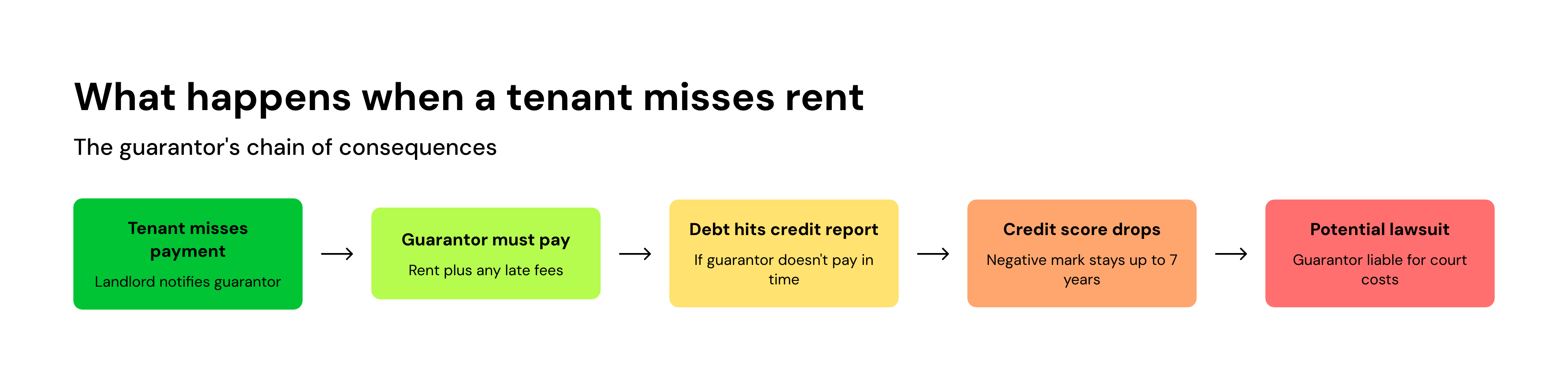
Being a guarantor is a big ask, and every individual who agrees to it should understand what they are signing up for. The guarantor's credit score can take a hit if you miss payments, since the debt can appear on their credit report once it goes unpaid long enough. This means their ability to qualify for their own loans, mortgages, or leases could be affected by your financial choices. If the landlord pursues legal action, the guarantor can be named in the lawsuit and held responsible for court costs. The relationship can also become strained — lots of friendships and family bonds have been tested when money becomes part of the equation. Just make sure anyone considering this role reads the lease carefully and understands the full scope of what they are agreeing to.
Conclusion
Understanding what a guarantor is and when you need one is useful, but the longer-term goal is to build the kind of credit profile that makes the conversation unnecessary. Needing a guarantor is usually a signal that your credit history needs attention, and that is something you can actively work on. Kikoff is a credit-building platform designed to help people establish and grow their credit over time, without debt traps or confusing products. Every individual who takes steps to build credit today is investing in easier approvals, better lease terms, and more financial freedom down the road. If you are ready to start working on your credit, Kikoff is a straightforward place to begin.
Frequently Asked Questions
About the editor

Disclaimer: The information provided in this blog post is meant for informational purposes only and does not constitute financial advice.