






Open-end credit is credit you can use, pay down, and use again, up to a limit. If you have a credit card, you already have it. It doesn’t mean “no limit,” however. It means your available credit comes back as you pay, so you don’t have to apply again each time you borrow.
Who’s on the account matters too. Cosigning or opening a joint account can make you owe the balance. Being added as an authorized user generally doesn’t, even though the roles can look alike.
What makes credit “open end”
Regulation Z, the federal rule that carries out the Truth in Lending Act, defines open-end credit as credit under a plan that meets three tests:
- You can borrow again and again. The account is set up for repeat use, not a single loan.
- Interest can build on what you haven’t paid. The lender can add interest to any balance you carry.
- Paying it down frees up credit. What you repay generally becomes available to use again, up to your limit.
Credit that doesn’t meet those tests is closed-end credit.
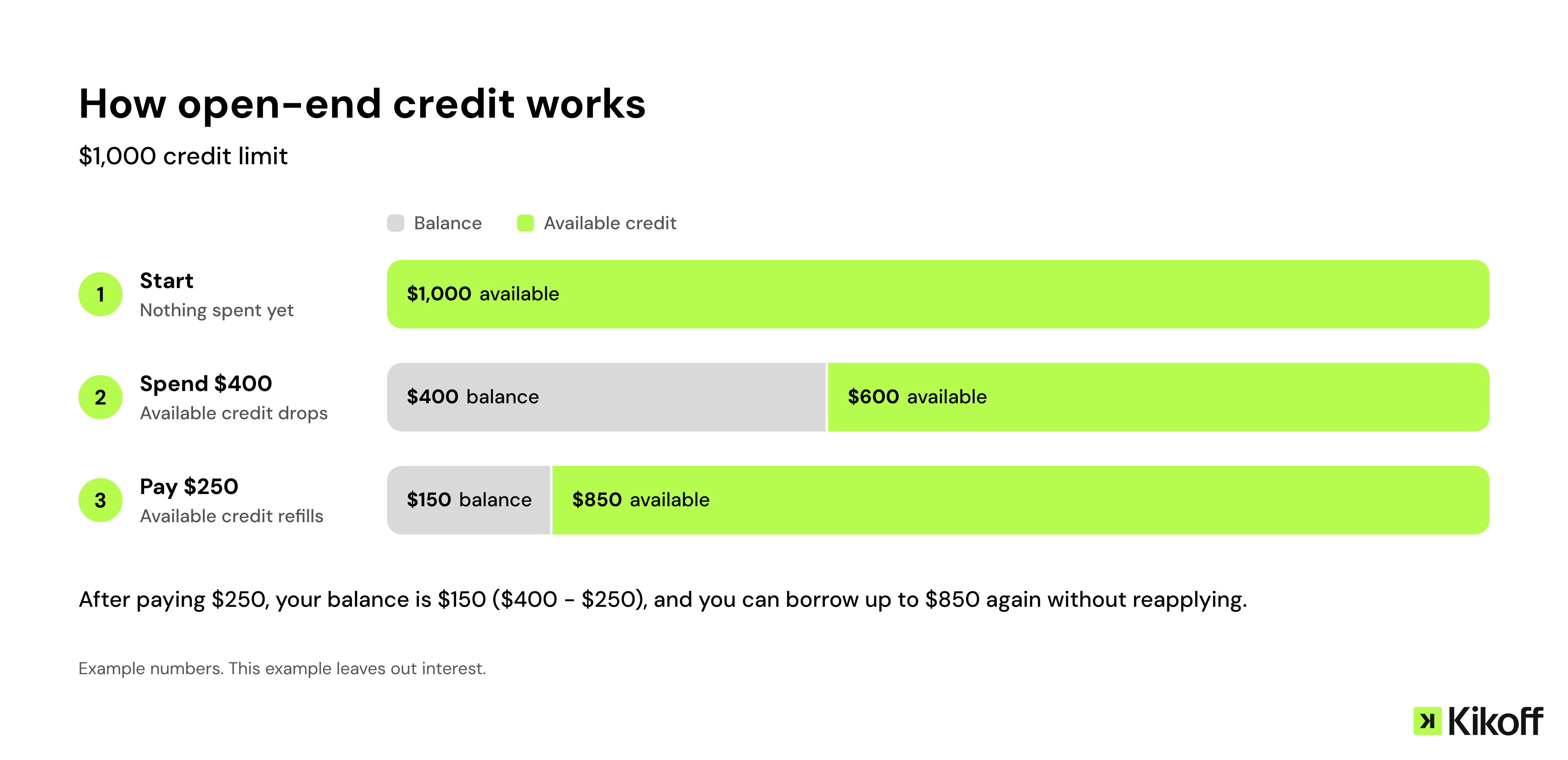
Say you have a $1,000 limit and spend $400. You have $600 left to use. Pay back $250, and your available credit goes back up to $850.
Open-end vs. closed-end credit
The main difference is whether you can borrow again after you pay.
People often get this next part wrong. Paying a credit card down to $0 doesn’t close it, and the account stays open for you to use. Paying off a loan does close it, but the loan’s history stays on your report.
Common types of open-end credit
- Credit cards. These are the best-known kind of open-end credit. Federal rules require card companies to mail or deliver you a statement at least 21 days before the payment due date. When the statement arrives, set a reminder for the due date.
- Personal lines of credit. You draw money when you need it and pay interest on what you use. Before you sign, ask about any fees and whether the rate is variable.
- Home equity lines of credit (HELOCs). A HELOC is an open-end line of credit that lets you borrow against your home equity. Your home secures it, so if you can’t repay, you risk losing your home to foreclosure.
Before you borrow against your home to pay off debt
Credit card debt isn’t tied to anything you own. Pay it off with a HELOC, and that same debt is now secured by your home, so falling behind could put your home at risk. The cards you paid off also stay open and can be used again.
If the numbers are hard to weigh against each other, consider talking with a financial advisor, licensed attorney, or nonprofit credit counselor for personalized guidance. The National Foundation for Credit Counseling (NFCC) can connect you to free or low-cost counseling at 800-388-2227.
How open-end credit shows up on your credit
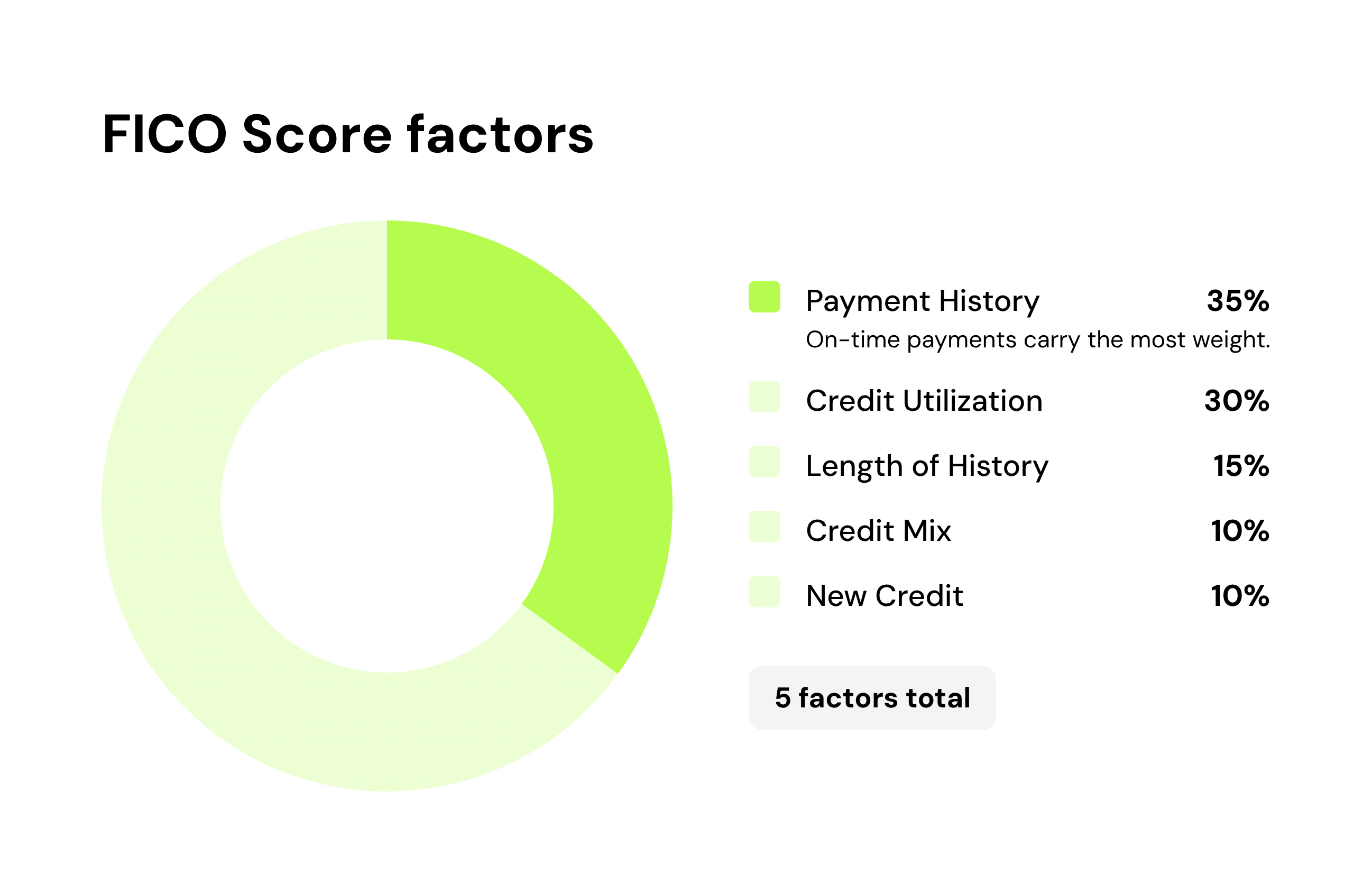
An open-end account usually tells the credit bureaus two things: whether you paid on time and how much you owe. Payment history makes up 35% of your FICO Score, and amounts owed make up 30%.
Part of amounts owed is credit utilization, meaning how much of your available credit you’re using. A $300 balance on a $1,000 limit means you’re using 30% of that card’s limit. Paying it down to $100 brings it to 10%. Your overall utilization depends on all your revolving accounts, not just one.
A missed payment can hurt your credit, but the on-time payments before and after it still count.
To see what your accounts report, you can get your reports from Equifax, Experian, and TransUnion free once a week at AnnualCreditReport.com. Checking your own report doesn’t hurt your credit.
Read more >> How revolving credit accounts affect credit utilization
Who owes the balance on a shared account
Before your name goes on someone else’s account, find out which role you’re taking. The roles can look alike, but what you owe is very different.
- If someone asks you to cosign or open a joint account, their missed payments can become your problem. The FTC says a default "may become a part of your credit record." Read the agreement, and ask how they plan to pay.
- If you’re under 21, a card company can open a credit card account for you only if you show you can make the minimum payments yourself, or if a cosigner, guarantor or joint applicant who’s at least 21 signs on. Under Regulation Z, that person agrees to be liable for debt on the account and has to show they can make the payments too.
- If you’re an authorized user, the account belongs to the main cardholder. Whether it helps you depends on how they pay and how much of the limit they use. Ask them both questions before you’re added.
If you’re married, state law can change who owes what. Because these rules vary by state, a licensed attorney can tell you how they apply where you live.
Bottom line
Open-end credit is credit you can reuse as you pay it down, and how you handle it shows up in your payment history and balances. Being an authorized user can put someone else’s account on your report, but they control how it’s paid and whether you stay on it. An account in your own name can’t be taken away by someone else. Kikoff’s Credit Account reports your payments to Equifax, Experian and TransUnion, with no credit check to sign up. Plans start at $5 a month.
Frequently Asked Questions
Article Sources
Disclaimer: The information provided in this blog post is meant for informational purposes only and does not constitute financial advice.