






In most states, your credit history can affect what you pay for car insurance, and sometimes whether an insurer will cover you at all. Insurers don’t use the score a lender sees. They use a credit-based insurance score, built from the same credit report, and four states ban it for auto policies entirely.
Can car insurance companies check your credit score?
Most states let insurance companies consider your credit when determining your eligibility for coverage and your premium. About 95% percent of car insurers include credit-based insurance scores in pricing calculations, where it’s allowed, according to FICO data cited by the National Association of Insurance Commissioners.
But laws don’t typically let providers make eligibility and pricing decisions based only on your credit. Insurance companies use many criteria, including your driving record, age, car, location and more. As a result, two people with similar credit profiles could have different premiums.
Read more >> How Your Credit Score Impacts Your Car Insurance Rates
What is a credit-based insurance score?
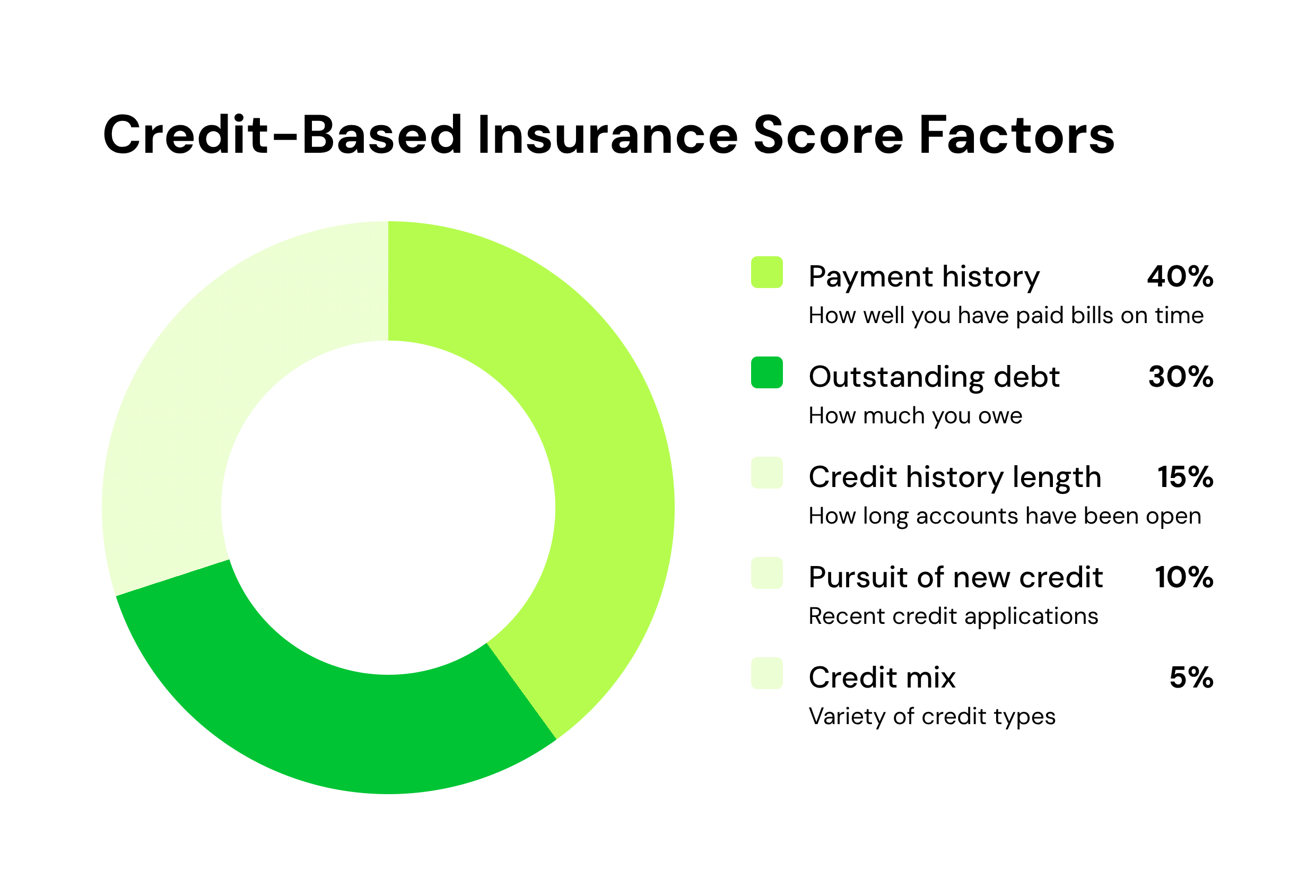
Credit-based insurance scores use five factors from your credit reports to predict the likelihood that you’ll file a claim:
- Payment history (40%) — how well you’ve paid your bills on time
- Outstanding debt (30%) — how much you owe
- Credit history length (15%) — how long your accounts have been open
- Pursuit of new credit (10%) — whether you’ve applied for new credit recently
- Credit mix (5%) — whether you have different kinds of credit, like credit cards, a car loan, or a mortgage
The exact information insurers can use varies by state, and your credit-based insurance score isn’t necessarily the same as your FICO or VantageScore.
Creditors use traditional credit scores to measure the likelihood you’ll repay a debt on time, while insurers use credit-based insurance scores to weigh the risk of you filing a claim.
How your credit affects your car insurance rates
Having good credit may help you qualify for coverage and get a lower rate, while lower scores could make it tougher to get a policy or get a lower premium. But it depends on the insurance company and where you live. In some states, insurers are banned from reviewing your credit when making eligibility and pricing decisions.
Read more >> How to Lower Your Car Insurance
What states limit or prohibit the use of credit scores in insurance rate calculations?
As of September 2026, California, Hawaii, Massachusetts and Michigan ban insurers from using credit to price car insurance. A few others limit it:
- In Maryland, an insurer can use your credit to price a new policy but can’t use it to turn you down, cancel or not renew your policy, or raise your premium at renewal.
- In Oregon, credit can’t be the reason a policy is canceled or not renewed. It can count toward declining you for coverage, but only alongside other factors. You can also ask your insurer to rerate your policy once a year.
- In Utah, auto insurers can use credit only to lower your rate or alongside other factors.
Rules change, so check with your state’s insurance department to learn how it works where you live.
Your insurance score isn't your credit score. A traditional credit score predicts whether you'll repay a loan. A credit-based insurance score predicts whether you'll file a claim.
Insurers weigh the factors differently, and the score is just one input alongside your driving record, claims history, and location. If credit contributed to a rate increase or denial, you have the right to be told, to see your report, and to dispute what's wrong.
How to improve your credit-based insurance score
The same factors that affect your traditional credit scores can affect your credit-based insurance scores. Over time, improving your credit may help you qualify for a lower rate. Here are some tips to get started.
- Pay on time. Payment history is the largest piece of a typical insurance score, 40% by NAIC’s breakdown.
- Keep card balances low compared with your limits. Your balances make up the next-largest share.
- Check your credit reports regularly. You can request free weekly reports at AnnualCreditReport.com. Look for common reporting errors, and dispute them directly with the bureau that shows them.
- Reach out to your insurer. If a serious illness, job loss, divorce, or other hardship hurt your credit, ask your insurer in writing whether it can make an exception. Many states require insurers to consider one.
Read more >> How to Dispute Credit Report Errors
Bottom line
Outside California, Hawaii, Massachusetts and Michigan, your credit report likely affects what you pay for car insurance, even though insurers don’t use your regular credit score. Asking for a rerate only helps if something on that report has changed.
Payment history is the biggest part of that report, and it builds one on-time payment at a time. A Kikoff Credit Account reports your payments to Equifax, Experian and TransUnion. Plans start at $5 a month, and there’s no credit check to sign up.
Frequently Asked Questions
Article Sources
Disclaimer: The information provided in this blog post is meant for informational purposes only and does not constitute financial advice.