

Credit card swipe fees are what a store pays every time a customer pays with a card. The store pays them, not you, so they won’t appear on your card statement or your credit reports. They can still reach your wallet, though. A store may build the cost into its prices, and some add a separate surcharge when you pay with a credit card. On a credit card sale, the store’s total card fees typically take 1.5% to 3.5% of the purchase before it sees its money.
Who gets paid when you swipe
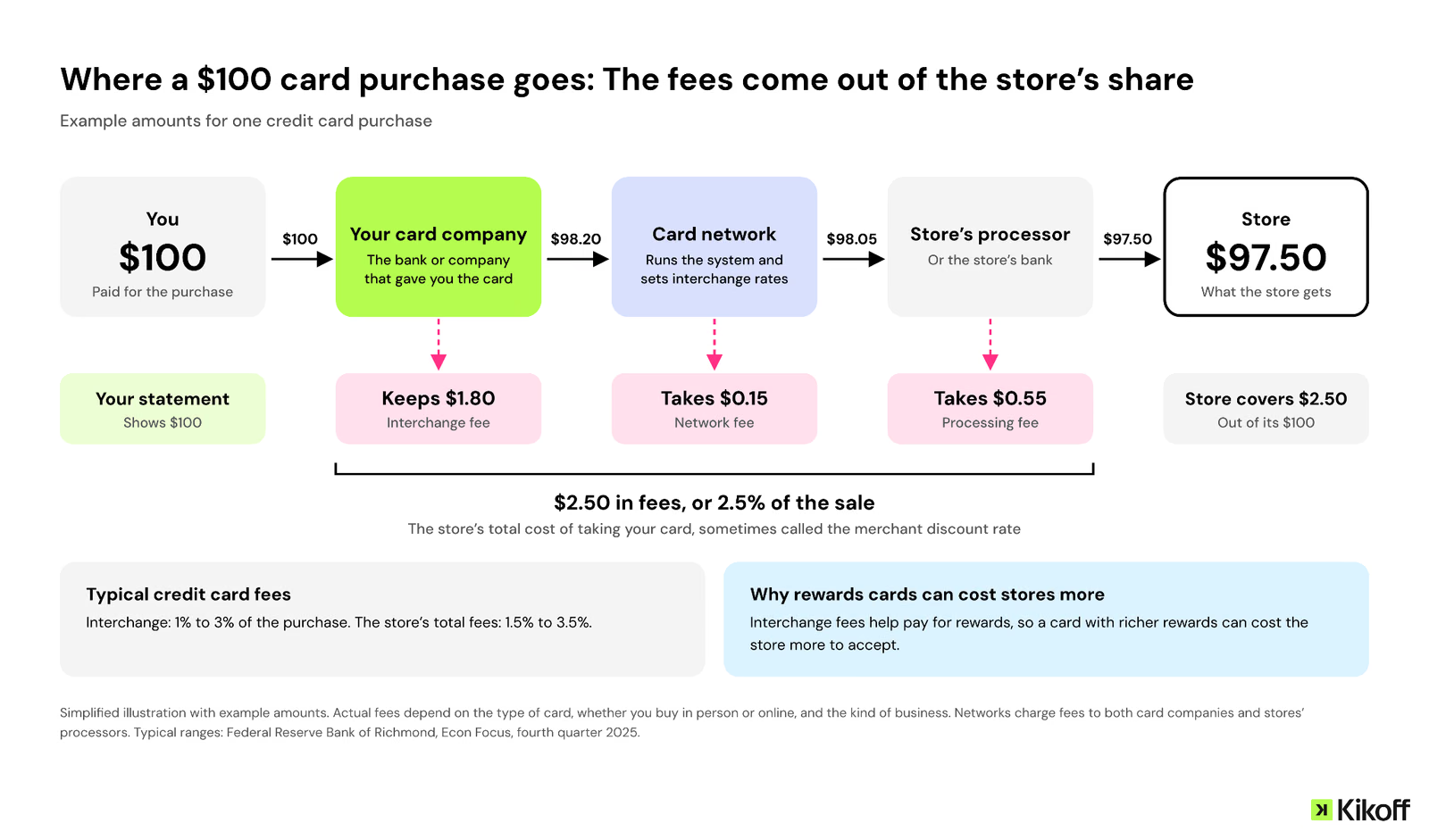
A card purchase feels instant, but a few companies take a cut along the way. Together, their fees make up the store’s total cost of taking your card, sometimes called the merchant discount rate.
- Your card company (the bank or company that gave you the card) gets the biggest piece, called the interchange fee.
- The store’s bank or payment processor takes its own fee before passing the rest to the store.
- The card network, such as Visa or Mastercard, sets the interchange rates and charges its own fees for running the system.
For credit cards, interchange fees typically run 1% to 3% of the purchase, and the store’s total fees typically run 1.5% to 3.5%, according to the Richmond Fed. The rate depends on the type of card, whether you buy in person or online, and the kind of business. Rewards programs are partly paid for by interchange fees, so a card with richer rewards can cost the store more to accept.
How debit card swipe fees are different
Debit cards have a federal fee cap that credit cards don’t, though it may not be around much longer. It comes from the Federal Reserve’s Regulation II. It covers only banks and credit unions with $10 billion or more in assets. Smaller ones are exempt.
For a big bank, the most it can collect in interchange on a debit purchase is:
- $0.21 per purchase
- Plus 0.05% of the purchase amount
- plus $0.01 if the bank meets the Fed’s fraud-prevention standards
On a $40 purchase, that comes to about $0.24. At an example credit card rate of 2%, the same purchase would cost the store $0.80. That gap is one reason a store may steer you toward debit or cash.
The cap holds actual fees down. In the Fed’s 2024 data, debit purchases covered by the cap averaged $0.23 in interchange, or 0.47% of the purchase. Purchases on cards from exempt banks averaged $0.51, or 1.21%.
A court ruling could end the debit cap
In October 2026, a federal appeals court ruled that the Fed set the cap using costs the law doesn’t let it count. It upheld a lower court’s decision to throw the cap out. As of November 2026, the cap is still in effect while the Fed decides whether to appeal or write a new rule.
You don’t pay interchange yourself, so the ruling won’t change your price at the register. It changes what stores pay to take your debit card.
How swipe fees can reach your wallet
You’ll never get a bill for a swipe fee, but it can still affect what you pay in four ways.
- Higher prices. Many stores fold card costs into their prices, and everyone pays them, including people who pay with cash.
- Credit card surcharges. Some stores add a fee when you pay with a credit card. Visa’s rules cap a credit card surcharge at the store’s own cost of taking the card or 3%, whichever is lower. The store has to post a notice at the entrance and the register, and the surcharge has to appear as its own line on your receipt. State law can be stricter. Connecticut, for example, bans surcharges outright. Visa and Mastercard both bar surcharges on debit and prepaid cards, so if you see a sign, ask whether paying with debit avoids it.
- Cash or debit discounts. Federal law bars card networks from stopping stores that offer a discount for paying with cash, a check, a debit card, or a credit card. That’s why a gas station can post a lower cash price.
- Card minimums. The same law lets stores set a minimum of up to $10 for credit card purchases, as long as it’s the same for every card company and network. That permission covers credit cards only.
Read more >> What Are the Fees and Costs of Using a Credit Card?
Charged a surcharge nobody told you about? Look for a separate surcharge line on your receipt. Ask the store to take it off if it was added to a debit or prepaid card, if there was no sign, if it’s more than 3% on a Visa credit card, or if your state bans surcharges. If the store won’t, call the number on the back of your card and ask about your options. If your state bans surcharges, you can also file a complaint with your state attorney general’s consumer protection office.
Do swipe fees affect your credit?
No. Swipe fees are between the store and the companies that process your payment, so they never touch your credit reports.
A surcharge is different, because it becomes part of your purchase. It adds to your card balance, so if you don’t pay your full statement balance by the due date, you’ll pay interest on it like everything else you bought.
How you pay can still affect your credit. Paying your credit card bill on time adds to your payment history when your card company reports to the credit bureaus. Debit and cash purchases don’t show up on your credit reports.
Bottom line
Swipe fees come out of the store’s side of the sale, not your bill, but you can still feel them in prices and credit card surcharges. Paying with debit or cash is often the simplest way to skip a surcharge.
The trade-off is that debit and cash leave nothing on your credit reports. Kikoff’s Credit Account reports your on-time payments to Equifax, Experian, and TransUnion, with no credit check to sign up. Plans start at $5 a month.
Frequently Asked Questions
Article Sources
Disclaimer: The information provided in this blog post is meant for informational purposes only and does not constitute financial advice.