%20(1).png)



Losing your home is one of the most stressful financial events you can go through. Afterward, you may start thinking about what to do to rebuild your credit since a foreclosure can cause your credit score to drop by 100 points or more.1
In 2025, there were 367,460 foreclosure filings, according to ATTOM, a property data and real estate analytics company.2 If you're among that number, a foreclosure doesn't mean you're stuck with poor credit. Rebuilding your credit takes time and consistency, but it's possible.
Key Takeaways
- A foreclosure can cause your credit score to drop by 100 points or more.
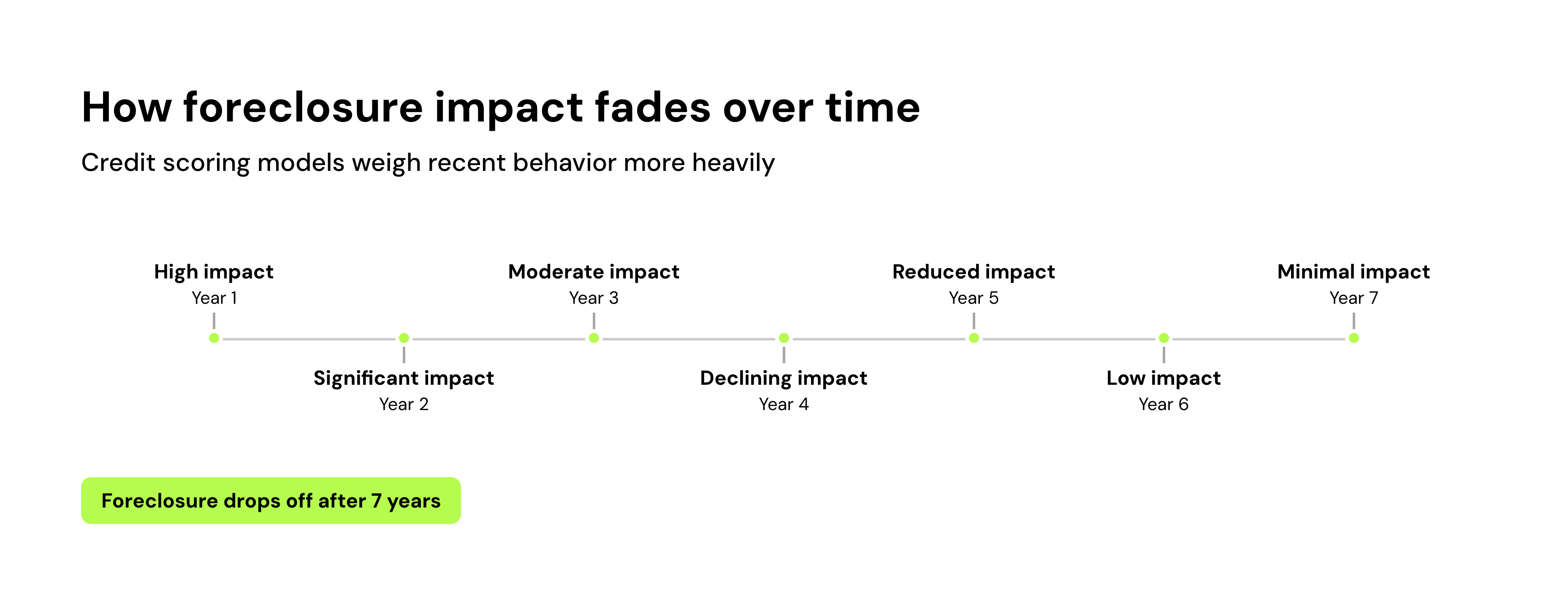
- The foreclosure will stay on your credit report for seven years, but its impact will decrease over time.3
- Checking your credit reports, making payments on time, and keeping your balances low will help strengthen your credit.
How does a foreclosure affect your credit?
A foreclosure is a legal process that lenders take when you default on a home mortgage. The lender seizes the property and sells it to recoup their money, and you're forced to vacate the home. Besides the immediate impact of needing to find an alternative living arrangement, a foreclosure can significantly damage your credit.
Depending on your pre-foreclosure credit score and the length of your credit history, you could see your credit score decrease by 100 points or more. Other factors that usually accompany a foreclosure, such as missed mortgage payments leading up to it, can worsen the damage.
How long does a foreclosure stay on your credit report?
A foreclosure stays on your credit report for seven years. Although seven years is a long time, the impact of the foreclosure on your credit score declines over time. Credit scoring models weigh recent behavior more heavily than older events, so the foreclosure will have a smaller effect on your credit over time.4
7 Steps to take to build your credit after foreclosure
A foreclosure can significantly damage your credit, but there are steps you can take to rebuild your credit over time:
1. Check your credit reports
Request free copies of your credit reports from each of the three main credit bureaus: Equifax, Experian, and TransUnion. You can view free weekly credit reports from each bureau for free at AnnualCreditReport.com.5
Review your report for errors, such as accounts that don't belong to you or balances that don't match your records. Disputing those issues can help you protect your credit.
2. Pay your bills on time
For both FICO scores and VantageScore scoring models, your payment history is the single biggest factor affecting your credit score.6,7 After a foreclosure, prioritize making all of your recurring payments on time. Set up automatic payments or create digital reminders for the minimum payment amount so you don’t miss any due dates in the future
3. Keep your credit utilization low
Your credit utilization ratio, a measure of how much of your available credit you use, is another major factor in calculating your credit score. Keeping your credit card balances low can help rebuild your credit. In general, it's a good idea to aim for a credit utilization under 30%, but the lower, the better.8
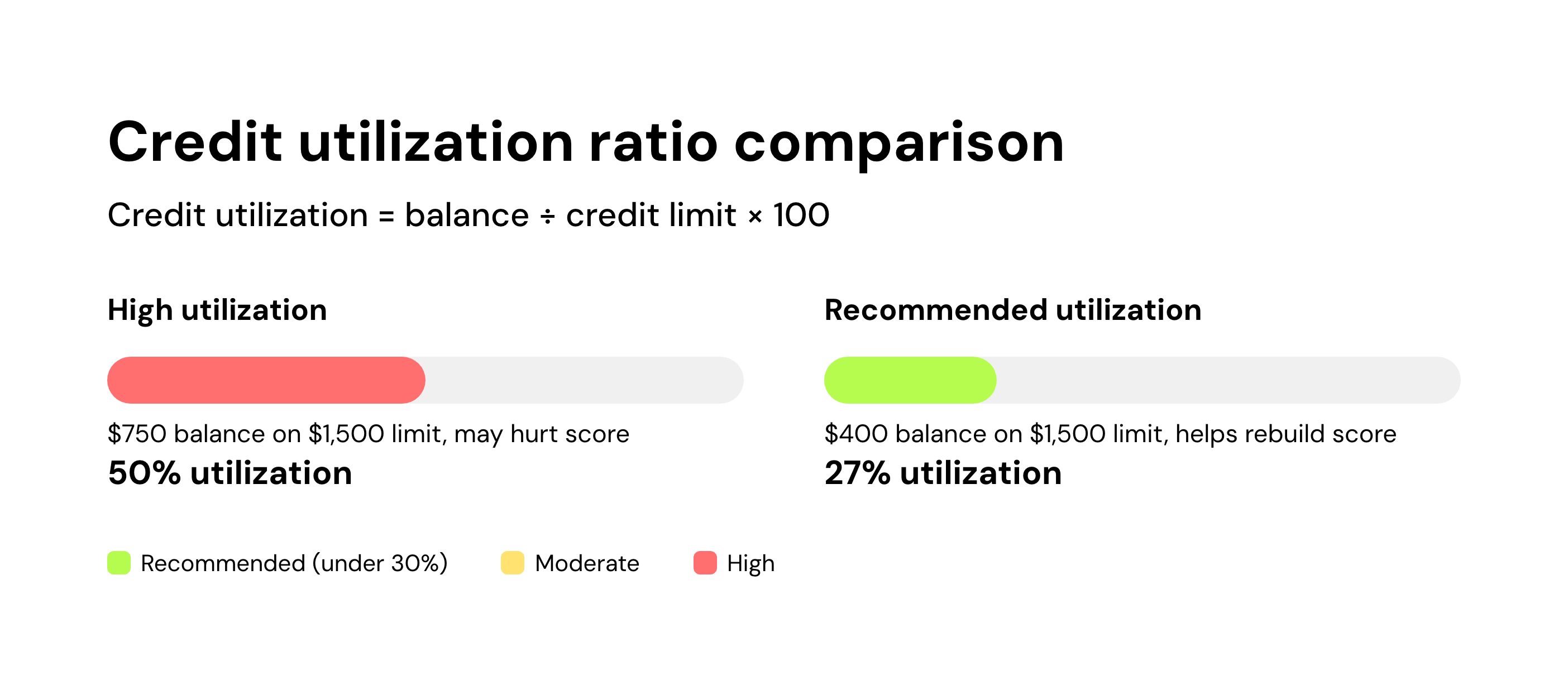
For example, say you had a $1,500 credit card limit, and you have a $750 balance. Your credit utilization would be 50%, which is on the higher end, and your credit score may dip. Paying down the balance can help increase your score over time.
4. Meet with a non-profit credit counselor
If you're struggling to manage your debt and improve your finances, meet with a non-profit credit counselor. A counselor will work to review your finances with you and help you create a budget and debt repayment strategy. Counseling sessions are often free or low-cost. You can find a non-profit credit counselor through the National Foundation for Credit Counseling.9
5. Open a credit-building account
Qualifying for new credit after a foreclosure can be difficult, which is why a secured credit card or credit-builder loan can be useful tools as you work on building credit:

- Secured credit card: A secured credit card requires a security deposit that typically acts like your credit limit, and it's often available to those with poor credit or no credit. As you use the card and make payments, the credit card issuer reports your activity to the credit bureaus, so on-time payments and keeping your balance low can improve your credit history.
- Credit-builder loan: When you take out a credit-builder loan, the loan amount is held for you in a separate account. You repay the loan in installments, usually over a period between six and 24 months, and the lender reports the loan and payments to the credit bureaus. At the end of the loan term, you receive the loan funds.10
6. Take advantage of rent reporting
Rent payments usually don't affect your credit, but with services like Kikoff's Rent Reporting feature, you can get credit for on-time rental payments. The service reports the payments to the major credit bureaus, and you can even get credit for past on-time payments.
7. Avoid applying for multiple types of new credit
When you apply for a new type of credit, such as a new credit card or loan, the creditor will perform a hard credit check, which can cause your score to drop. Applying for several new credit accounts within a short timeframe, such as a few months, can make lenders wary.
Instead, apply for credit carefully and space out new credit applications. For example, open a secured credit card in January, then apply for a credit-builder loan in June.
Patience is Key After a Foreclosure
A foreclosure is a setback, not a permanent sentence. Over time, foreclosure's impact on your credit will decrease. As you take steps to rebuild your credit by making payments on time and keeping your credit card balances low, your score will likely recover.
Keep in mind that it can take time to rebuild your credit, and your score will fluctuate from month to month. But over time, such as two to three years of focused effort, you will typically see your score increase.
Looking to establish credit? Kikoff can help you get started.
Frequently Asked Questions
About the editor

Article Sources
Disclaimer: The information provided in this blog post is meant for informational purposes only and does not constitute financial advice.