

.jpg)



Finding a home you like is just the beginning of the homebuying process. Next, you need to submit a competitive offer. Your offer should be based on the list price, the home’s condition, your local market, and several other factors.
Here’s how to make an offer for a house.
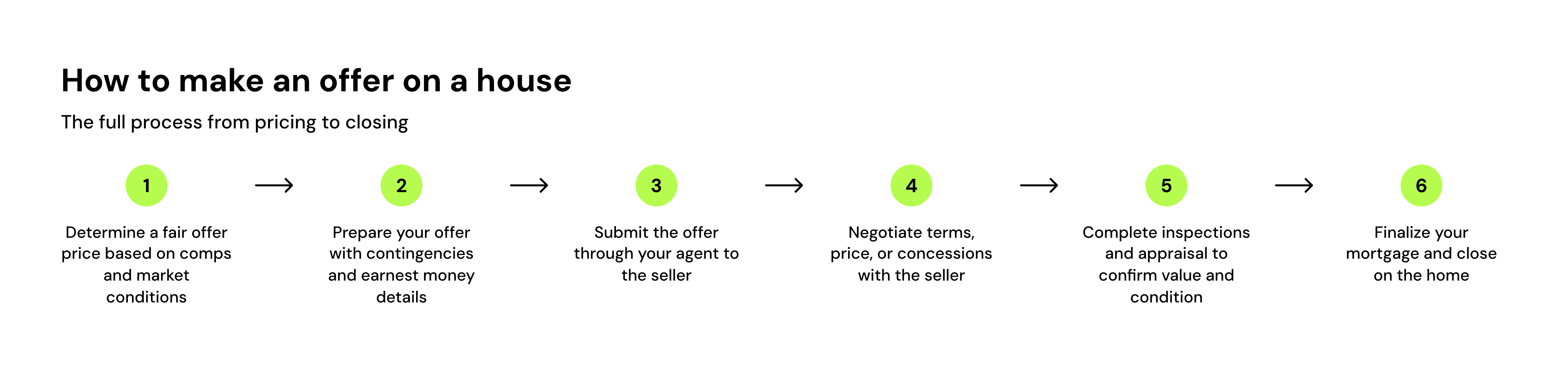
Determine a fair offer price
The first thing that the seller will look at is the amount you are offering. If your offer is drastically lower than the list price, they might not give you a second glance. To determine a fair price, you must know market trends in your area.
Understand the local market
If houses are sitting longer than usual, buyers tend to have more negotiating power. This means you may be able to offer less than the list price or ask for additional concessions. For example, you may make an offer at the list price but request concessions to buy down your interest rate.
Your agent can help you structure your offer depending on what is most important to you.
Preparing your offer
After you’ve determined how much to bid on a home, you will need to prepare your offer.
Include contingencies
Certain contingencies are standard in residential real estate transactions. For example, most contracts include an appraisal contingency, which means the home must appraise for the purchase price. If it doesn’t, financing can fall through.
You can include additional contingencies based on the condition of the property. For instance, you may ask the seller to make certain repairs before closing day.
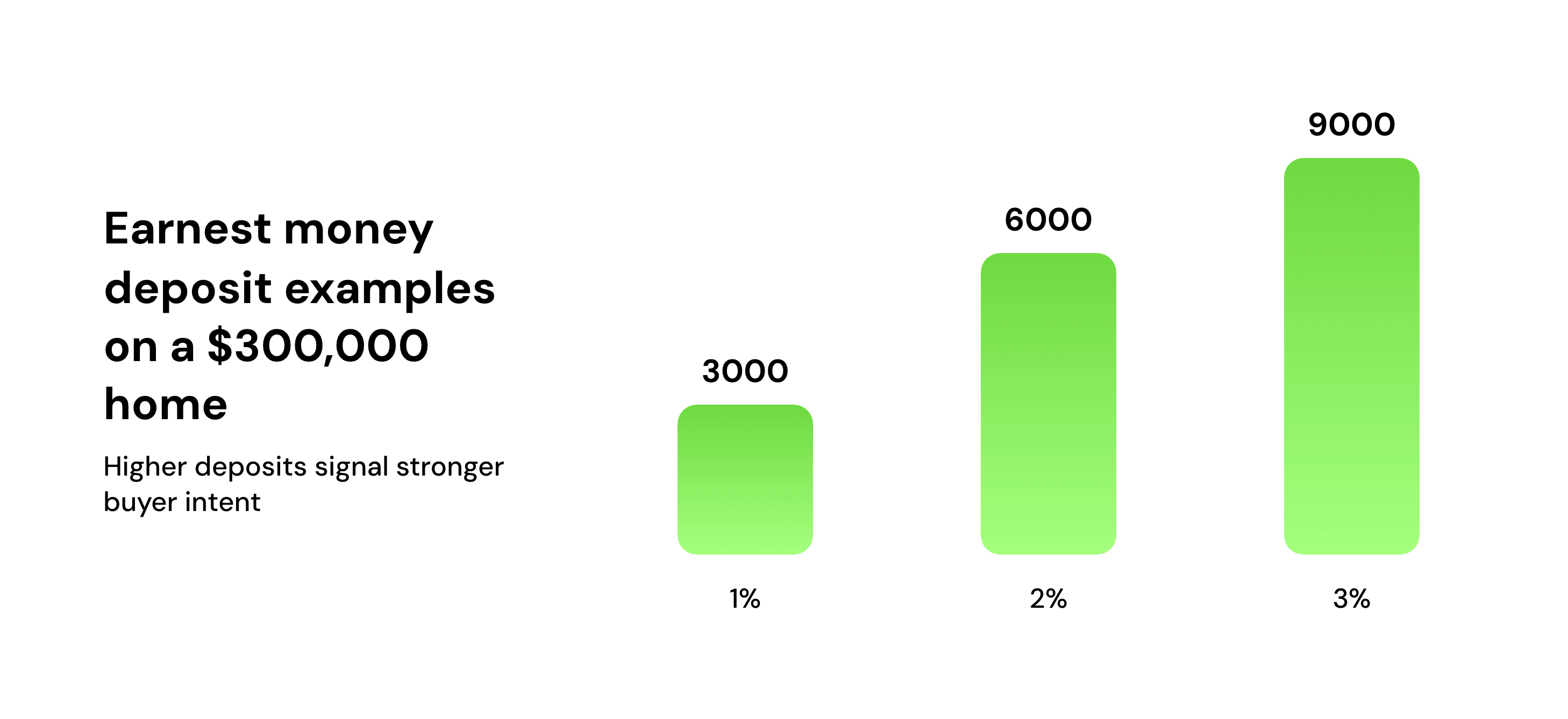
Decide on your earnest money deposit
When deciding how to make an offer for a house, the amount of earnest money can show a seller that you’re serious. That’s because you’ll forfeit this money if you back out of the deal without a valid reason.
Let’s say the seller receives two very similar offers. They may go with the one that includes a higher earnest money deposit.
Submit the offer
Now, it’s time to submit the offer to the seller and their real estate agent.
Work with your real estate agent
Your real estate agent will write up a contract and send it to you to sign. Carefully review all important details of the contract, including the following:
- Property address and description
- Purchase price
- Money down
- Contingencies
- Closing date
- Type of loan
If you have any questions or concerns, don’t hesitate to reach out to your real estate agent. It’s very important for the contract to accurately reflect the offer you want to submit.
Deliver the offer to the seller
Once you electronically sign the contract, your real estate agent will deliver it to the seller and their agent. They will review the offer and decide whether to accept, reject, or counter.
Negotiate the offer
The sellers might accept your offer as-is. However, a counter is more likely. Here’s what to do when negotiating the offer.
Respond to counteroffers
If your offer is drastically different from the list price or includes concessions that would significantly lower how much money the seller nets on the deal, they will probably counter.
Some sellers will counter small conditions, too, such as a request for a specific closing date. If you receive a counter, review it with your agent and decide whether the terms are acceptable.
Know when to walk away
Sometimes, two sides are just too far apart on a deal. If you have some nonnegotiables and the seller is unwilling to budge, it may be best to walk away. It’s better to continue your search than to accept a deal that does not fit your financial needs.
Some buyers get the first house they bid on. Others need to submit offers on multiple homes before they get to the closing table.
What to do after the offer is accepted
If your offer gets accepted, the homebuying process is not yet over. You have time to inspect the home and decide whether you want the deal to go through.
Complete inspections and appraisals
After your offer is accepted, you will enter an inspection period. During this window, you can schedule one or more inspections and review the reports. If an issue is discovered, you can ask the seller to make repairs. Alternatively, you can back out of the deal, often without any penalties.
Toward the end of the contracted period, the lender will ask an appraiser to assess the home’s value. If the value is greater than or equal to the purchase price, finalizing the deal will be easier. Otherwise, you will have to negotiate a lower price or bring cash to cover the difference.
Finalize mortgage and prepare for closing
Work with your lender to complete the underwriting process. This means submitting additional financial documents and signing any forms or disclosures that they send to you.
You will also need to wire a deposit to set up an escrow account. This account is used to pay your homeowner’s insurance, property taxes, and, if necessary, private mortgage insurance.
Conclusion
Making an offer is part pricing and part structure, and the second half is where buyers often lose deals.
Base your number on local market conditions, then use contingencies and earnest money to show the seller you're both serious and protected. Review the contract carefully before signing, since it needs to reflect exactly what you intend to offer.
Expect a counter rather than a straight acceptance, and know in advance which terms you're willing to walk away over.
Kikoff gives eligible users rent reporting and access to a Kikoff Credit Account with no hard credit check to sign up, with monthly payments reported to all three credit bureaus.
Build credit with Kikoff and build credit responsibly with Kikoff's plans.
Frequently Asked Questions
About the editor

Disclaimer: The information provided in this blog post is meant for informational purposes only and does not constitute financial advice.