.jpg)



“How long to buy a house” is a highly individual question based on your credit score, how much money you have saved, and a variety of other factors. Here’s a complete breakdown of what you can expect along the way so you have a realistic timeline.
How long does it take to buy a house?
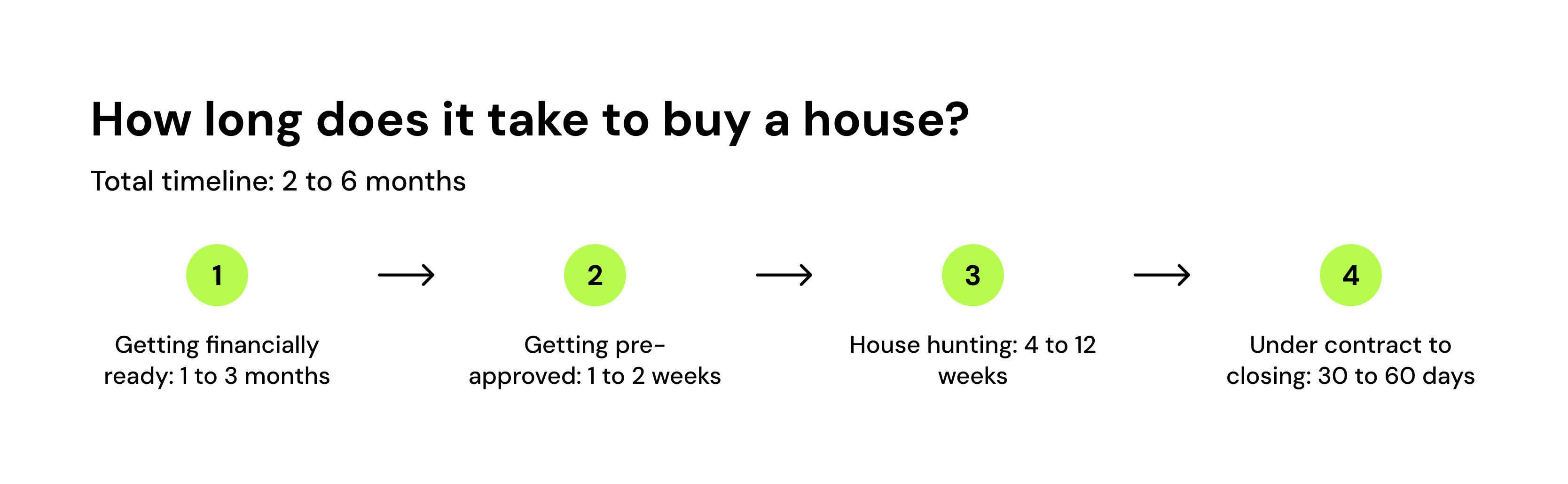
Learning how long to buy a house means considering several distinct phases, including getting pre-approved by a lender, finding a house you like, and making it to the closing table.
How long it takes to get pre-approved
The timeline depends entirely on how long it takes to get your credit score to where you need it.
Want to give yourself the best odds of approval? Make sure your credit score meets or exceeds the minimum threshold for the type of loan you want.
Conventional and VA loans typically require a 620+, USDA requires a 640+, and FHA requires a 580+. However, the higher you can get your score, the better, as it may help you qualify for better interest rates.
Are you unsure if your score makes the cut? Use Kikoff to build credit and improve your pre-approval odds. Creating a Kikoff account is free and doesn’t require any hard credit inquiry. You can report verified rent payments for free and access a variety of other free and paid resources.
How long it takes to find a home
Finding a home is a completely individualized process. Some home-buying hopefuls immediately find a property they like, put in a bid, and close in around 30 days after their offer is accepted. Others may search for weeks or months before they make a purchase.
There are no right or wrong options. It’s about what’s right for you. However, there are a few things you can do to increase your odds of finding a home quickly:
- Make a list of neighborhoods you like
- Do your research
- Find an experienced, local real estate agent
- Identify must-haves and nice-to-haves
When you find a home that suits your needs, work with your agent to put in a competitive offer.
How long underwriting and mortgage approval take
Once your offer is accepted, the lender will move your loan into underwriting. They will request a lot more documents. You can keep the process moving along by turning in any additional information as quickly as possible.
Toward the end of the contract period, the lender will schedule an appraisal. After the lender receives an appraisal report and confirms that the home is worth as much or more than it is being bought for, they can finish underwriting.
A few days before closing day, you should receive a “clear to close” email, which means you are all set to sign your documents and take possession of the house.
How to speed up the home-buying process
There are a few ways you can reduce the risk of delays and clear the path to homeownership.
Get pre-approved early
Don’t wait until you find a home you like to get pre-approved. Many listing agents require buyers to provide a pre-approval letter before they will authorize a showing.
Even if you are allowed to see the house without the letter, you won’t be able to put in an offer. While you gather documents and find a lender, someone else may bid on the house.
Getting pre-approved and finding an agent need to be at the top of your list if you want to become a homeowner. That way, when you find a home you like, you can put in an offer on your terms. Additionally, getting pre-approved will give you a realistic look at how much house you can afford.
Avoid new debt
In the lead-up to home shopping, don’t take on any new debts. That includes credit cards, auto loans, and personal loans. Any new debt can negatively impact your debt-to-income ratio and decrease your credit score. Instead, focus on saving money, paying down existing debt, and becoming a stronger applicant for lenders.
Have documents ready
The lender is going to request a wide range of documents to process your mortgage. Some will be required to obtain your pre-approval letter, and others will be needed during underwriting. Start gathering these items early so you have them ready to go. Examples include:
- 30 days of pay stubs
- The last two years of tax returns
- Bank statements
- Photo ID
- A list of assets
Your lender may require additional documents throughout the pre-approval and underwriting processes. However, the items listed above should give you a head start so you can reduce the risk of delays and get to the closing table.
How having good credit improves your timeline
How long to buy a house largely depends on your credit score. Improving your score by exhibiting consistent positive financial behavior will increase your approval odds. Building your score is the most time-consuming part of the home-buying process, as there are no shortcuts.
Tools like Kikoff make building your score a bit easier by reporting verified rent payments. If you want to prepare for home-ownership by strengthening your credit profile, check out Kikoff.
Conclusion
Buying a house generally takes 30 to 60 days once your offer is accepted, but the part before that is where your timeline really gets decided.
Getting pre-approved early lets you move on a listing the moment you find one, so gather your documents and find a lender before you start touring homes. Avoid taking on new debt during this window, since it affects both your debt-to-income ratio and your credit profile.
Strengthening your credit is the slowest piece of the process, which makes it the one worth starting first.
Kikoff gives eligible users free rent reporting, free dispute tools, and access to a Kikoff Credit Account with no hard credit check to sign up, with monthly payments reported to all three credit bureaus.
Build credit with Kikoff and get your profile ready before you apply.
Frequently Asked Questions
About the editor

Disclaimer: The information provided in this blog post is meant for informational purposes only and does not constitute financial advice.