



A credit check is a standard part of the process when you apply for a loan or credit card. Prime borrowers, or those with high credit scores, generally have an easier time qualifying and receive better rates. Subprime borrowers, or those with lower scores, may struggle to qualify, have fewer loan options available and pay higher rates.
Understanding where your credit stands can help you gauge how likely you are to be approved. Read on to learn how to tell if you’re a subprime borrower, how it may affect your ability to obtain credit and what you can to do to improve your credit.
What is a subprime borrower?
The term subprime borrower typically refers to someone with poor or limited credit. Subprime borrowers often have a history of negative marks on their credit reports, such as late payments, collection accounts, charge-offs or foreclosures.
Having a single late payment doesn’t necessarily make you a subprime borrower, but having multiple derogatory marks over time is an indication to lenders that you’re at risk of not fulfilling your financial obligations.
Credit score ranges that qualify as subprime
While there’s no universal cutoff that qualifies someone as a subprime borrower, lenders typically classify people with a FICO® score 8 below 620 and a VantageScore below 601 as subprime. Here’s a breakdown of how different credit score bands may be viewed by creditors.
Other factors that can make you a subprime borrower
When a lender reviews your application for credit, the following factors may put you in the subprime category:
- High debt-to-income ratio (DTI): Your debt-to-income ratio is the amount of debt you have compared to your income. A high DTI indicates that your budget is stretched to the max, and you may not be able to handle adding another financial obligation.
- History of late payments or defaults: Your payment history helps lenders predict how likely you are to repay your debts on time. Having multiple late payments or loans in default tells lenders you’re unlikely to repay what you owe on time.
- Collection accounts and charge-offs: After several months of missed payments, creditors may refer your account to collections and write off the debt as a loss.
- High credit utilization: Credit utilization is the amount of revolving credit you use compared to the amount you have available. Getting too close to the limit on your credit cards or other revolving lines of credit increases your utilization and negatively affects your credit.
- Recent repossession, foreclosure or bankruptcy: These marks indicate you’re having significant financial challenges that are preventing you from repaying your debts as agreed.
- Limited credit history: Without a robust credit history, it’s difficult for creditors to assess the likelihood you’ll pay your bills on time. Borrowers in this category are often considered subprime.
What being a subprime borrower means for you
Subprime borrowers are likely to face challenges when applying for credit. Without a strong credit profile, lenders may be unwilling to approve you for a loan or credit card or require you to add a co-signer to your application. If you are approved, you’ll likely pay higher interest rates, and may need to come up with a larger down payment, depending on the loan type.
How to move out of subprime status
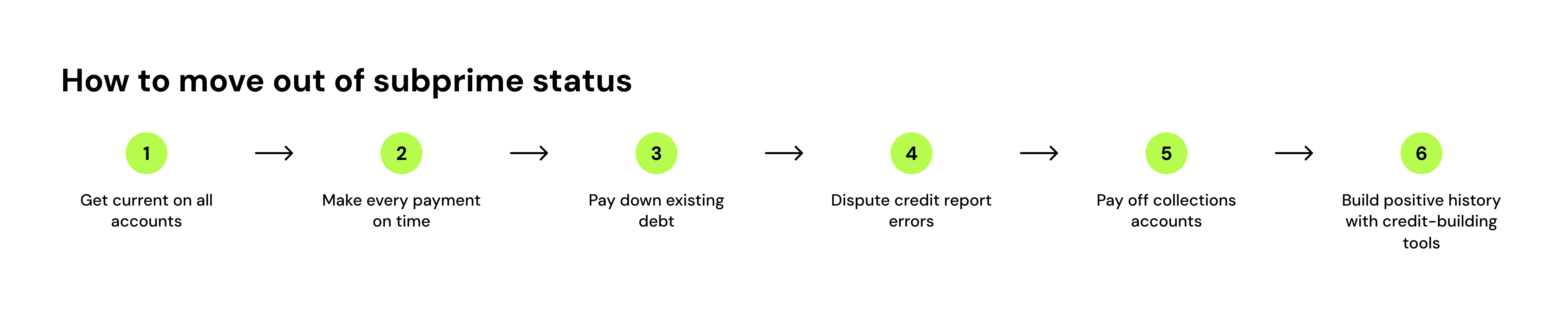
You’re not stuck with the credit score you have today. If you’re currently a subprime borrower and want to improve your credit, here are some tips to get started.
- Get current on all your accounts. If you have accounts that are past due, bring them up to date.
- Make all payments on time. Moving forward, make the minimum payments on all your accounts on time each month.
- Pay down existing debt. Whether you have installment loans or credit card balances, reducing your debt generally has a positive impact on your credit.
- Dispute errors on your credit report. If you have negative marks on your credit reports for things you didn’t do, dispute them with the credit bureaus. Kikoff disputes credit reporting errors for free.
- Pay off collection accounts. If you can afford to pay off accounts your creditors sent to collections, doing so may minimize the impact they have on your credit.
- Build positive credit history with credit-building tools. Kikoff’s free Credit Account reports your on-time payments to the three major credit bureaus, to help you build a positive payment history.
The bottom line
Being a subprime borrower can make obtaining credit more difficult and expensive. But your credit history isn’t static. You can improve your credit profile by bringing past-due accounts current, paying down debt and making consistent on-time payments.
Take a step toward stronger credit habits with Kikoff.
Frequently Asked Questions
About the editor

Article Sources
Disclaimer: The information provided in this blog post is meant for informational purposes only and does not constitute financial advice.