


.jpeg)
Credit touches almost every part of your financial life, from renting an apartment to getting a car loan to applying for a job. But if you're new to all of it, understanding how credit reports work and what they cost can feel overwhelming.
One common question that comes up is: what does it actually cost to get a credit report? Let's get you up to speed.
Your credit report is free: here's how to get it
Under federal law, every consumer in the United States can access one free credit report every 12 months from each of the three major credit bureaus: Equifax, Experian, and TransUnion. The only authorized website to do this is AnnualCreditReport.com.
So in most cases, getting your credit report costs nothing. You don't need to pay a service or sign up for a subscription to see where you stand.
That said, there are situations where you might want more frequent access than once a year — and that's where paid credit monitoring tools come in. We'll cover those below.
How much does a credit report cost: the basics
Let's clear up what a credit report actually is. A credit report, compiled and maintained by a credit reporting agency, is a comprehensive record of your overall credit history. It includes information like:
Personal identifying details (name, address, social security number), credit accounts (credit cards, loans, mortgages), payment history (whether you make payments on time), credit inquiries (who has requested a copy of your credit report), and public records (bankruptcies, liens, judgments).
These reports are compiled by credit bureaus. The three major credit bureaus are Equifax, Experian, and TransUnion.
Why your credit report matters
Lenders, landlords, and employers alike will all use a credit report to see if you are "creditworthy," aka if you can be trusted with a loan or lease.
Your credit report also directly influences your credit score, a number that represents your creditworthiness. The higher your credit score, the better your chances of qualifying for loans and getting favorable interest rates.
What about paying for your credit report and credit score?
There are some reasons you might want to check your credit more often than the one time a year you get for free. If you know your credit has recently taken a hit, checking in on your score often is an easy way to see how far you've come, and how far you still need to go.
There are certain credit monitoring tools out there to help you keep tabs on your credit score and credit report, like free weekly credit reports. A credit monitoring service is an important tool to take advantage of in between free annual credit reports.
Kikoff is the #1 way to build credit safely, quickly, and easily. Designed to be affordable and accessible, Kikoff can help you grow your credit — starting at just $5 a month.
"You can pay Kikoff a few dollars a month to build your credit. It's for our future. It's for our kids' futures."
Looking at your score six or more months before you make a major purchase can help you know that you'll get the best available interest rates on car loans or mortgages.
Understanding free credit reports
The only authorized website, according to federal law, where you can check your free credit report is AnnualCreditReport.com.
In addition to free credit reports, you can also look at your free credit score through certain services. The bottom line is that monitoring both your credit report and credit score is important when managing finances effectively and protecting against identity theft.
How to obtain your free credit reports
To obtain your free credit reports, follow these steps:
Visit AnnualCreditReport.com — this official website allows you to request your credit reports online. Provide your personal details, including your name, address, social security number, and date of birth. Select which credit reports you'd like to access. You can choose from Equifax and Experian, and you can also request a free TransUnion credit report. Answer security questions to confirm your identity. Once confirmed, you can view and download your credit reports instantly.
The value of regularly checking your credit reports
The major credit bureaus provide these reports, and it's crucial to regularly check your reports from all three to ensure accuracy and detect fraudulent activity. Credit monitoring is important for several reasons:
Spotting errors: reviewing your credit report helps you identify errors or inaccuracies that could hurt your credit score. Detecting fraudulent activity: monitoring your credit reports can alert you to unauthorized purchases or identity theft. Tracking your progress: by regularly checking your credit reports, you can monitor your credit-building efforts. Kikoff's credit monitoring reports can help you stay on track and see how much progress you've made on your credit journey.
Understanding credit scores
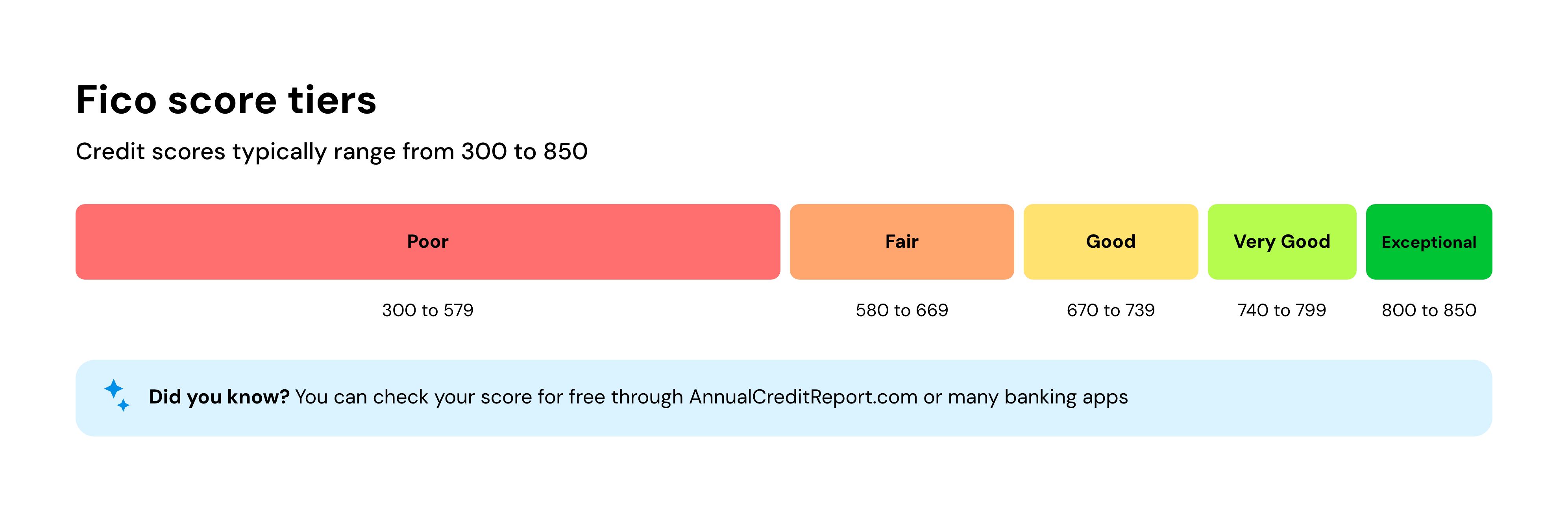
In addition to accessing your credit reports, understanding your credit scores is crucial. While your credit report provides detailed information, your credit score takes all that info and turns it into a number. Credit scores typically range from 300 to 850, with higher scores indicating better creditworthiness. There are two main types, a FICO score and a VantageScore.
Conclusion: knowledge is power
Accessing your credit report and credit information is often free, or costs a minimal amount of money. If you have low or no credit, getting a free report is a great first step to financial confidence and improving your creditworthiness.
In addition to getting free reports, many low-cost paid services can help you take charge of your financial future, especially if you want to build credit. A Credit Account from Kikoff is designed to address the 3 key factors of your credit score: payment history, credit utilization, and age of accounts.
Frequently Asked Questions
About the editor

Disclaimer: The information provided in this blog post is meant for informational purposes only and does not constitute financial advice.