.jpg)




Most balance transfers take about five to seven days, though some card issuers ask you to allow up to six weeks. Until the transfer goes through, you still owe your old card, so keep making at least the minimum payment there.
A balance transfer can help you pay off credit card debt faster, especially if the new card has a 0% intro APR. Most issuers charge a fee of 3% or 5% of the amount you transfer, so moving $5,000 typically costs $150 to $250 up front.
How long does a balance transfer take?
Timing depends mostly on the card you’re transferring to.
Here’s what each issuer says as of October 2026:
Read more >> How Long Do Pending Transactions Take to Post?
Why balance transfers take time to process
A balance transfer is a payment from your new card issuer to your old one. Several things can slow it down:
- Business days only. Many issuers process transfers only on business days, so weekends and bank holidays add time.
- Waiting periods for new accounts. Some issuers hold transfers on newly opened cards. Discover, for example, waits 14 days before it starts processing.
- Fraud flags. Your old bank may flag the incoming payment as suspicious activity. A manual review can add a few days or more.
- Wrong details. A mistyped account number or billing address can stall the transfer.
- A transfer bigger than your credit limit. If the new card’s limit can’t cover the full amount, the issuer may move only part of the balance or hold the request.
Read more >> How to Manage and Pay Off Credit Card Debt
What to do while you wait
- Keep paying the old card. Make at least the minimum payment until you see the transfer posted. Late fees and interest from a missed due date stay on the old account, even after the transfer goes through.
- Check both accounts. Log in to both cards. The transfer is done when the new card shows the transferred amount and the old card shows the payment.
- Hold off on new charges to the old card. The transfer covers the amount you requested. Anything you charge after that is a new balance on the old card.
Read more >> The Importance of On-Time Payments in Building Credit
Does a balance transfer hurt your credit score?
Opening a balance transfer card usually causes a small, temporary dip. Over time, it can help your credit, as long as you pay on time and don’t charge the old balance back up.
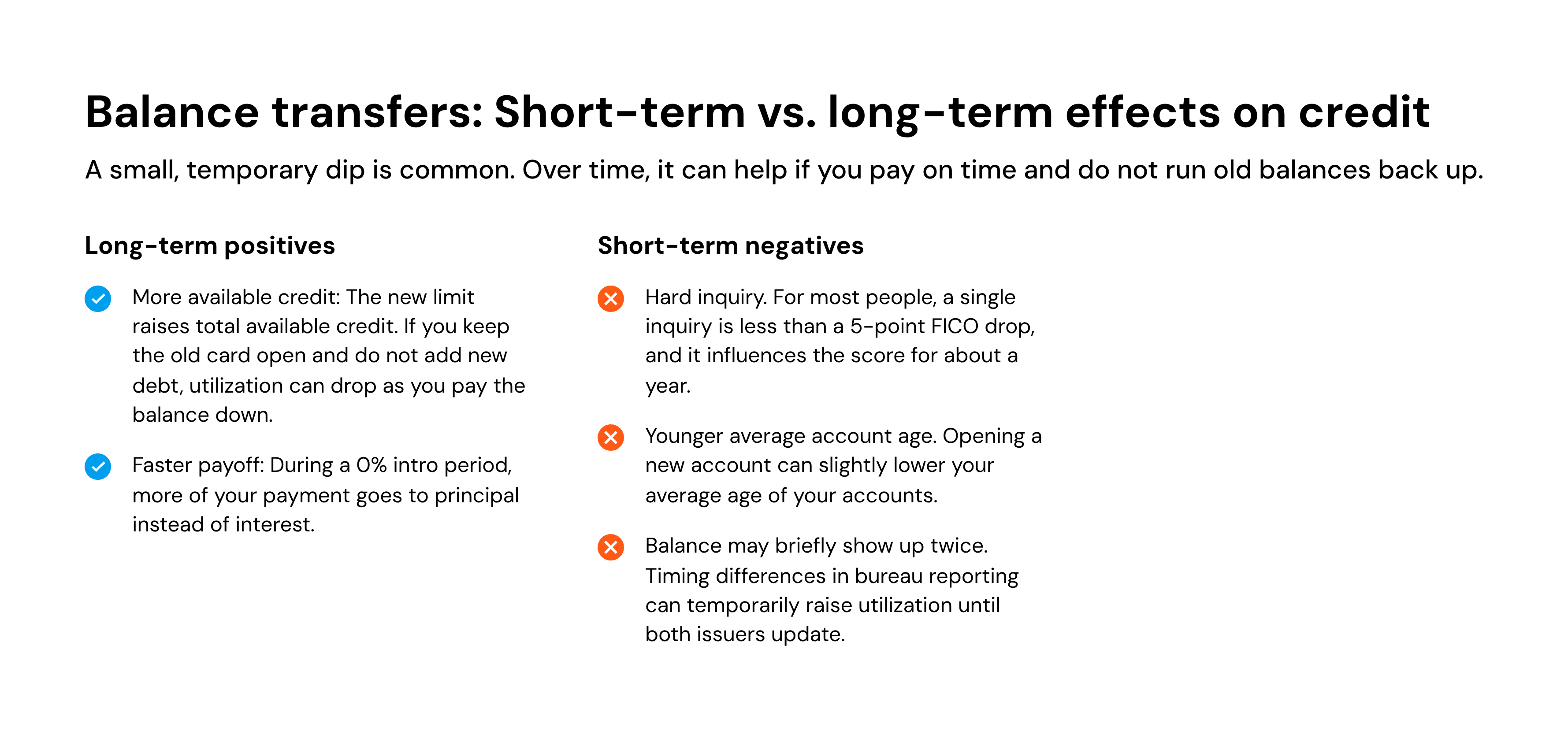
Short-term effects
- A hard inquiry. Applying for the card adds a hard inquiry to your credit report. For most people, one inquiry takes less than five points off their FICO score, and it only affects the score for a year.
- A younger average account age. A new account lowers the average age of your accounts, which can have a minor effect.
- A balance that briefly shows up twice. Depending on when each issuer reports to the credit bureaus, the same balance can appear on both cards for a cycle. That pushes up your credit utilization (how much of your available credit you’re using) until the old card reports a lower balance. It should correct itself once both issuers report again.
Long-term effects
- More available credit. The new card’s limit adds to your total available credit. If you keep the old card open and don’t charge it back up, your overall utilization drops as you pay the balance down.
- Faster payoff. During a 0% intro period, your whole payment goes toward the balance instead of interest.
A balance transfer moves debt to a new card. It doesn’t reduce what you owe. If the old card fills back up, you’ll owe more than you started with, plus the transfer fee. Pay on time on the new card, too: if you’re more than 60 days late, the issuer can raise the interest rate on all your balances, including the one you transferred.
Read more >> Does a Balance Transfer Hurt Your Credit Score?
If you’re comparing a balance transfer with other ways to consolidate, talk with a nonprofit credit counselor first. The National Foundation for Credit Counseling can connect you to free or low-cost counseling at 800-388-2227.
Looking for new ways to build credit?
Plan on about a week for most balance transfers, and up to six weeks in some cases. Keep paying your old card until the transfer posts.
Your credit does more than decide whether you’re approved for a balance transfer card. It also sets your credit limit, which caps how much debt you can move. The Kikoff Credit Account reports your on-time payments to Equifax, Experian, and TransUnion, so each month adds to your payment history before you apply. There’s no credit check to sign up, and plans start at $5 a month.
Frequently Asked Questions
Disclaimer: The information provided in this blog post is meant for informational purposes only and does not constitute financial advice.