.jpg)



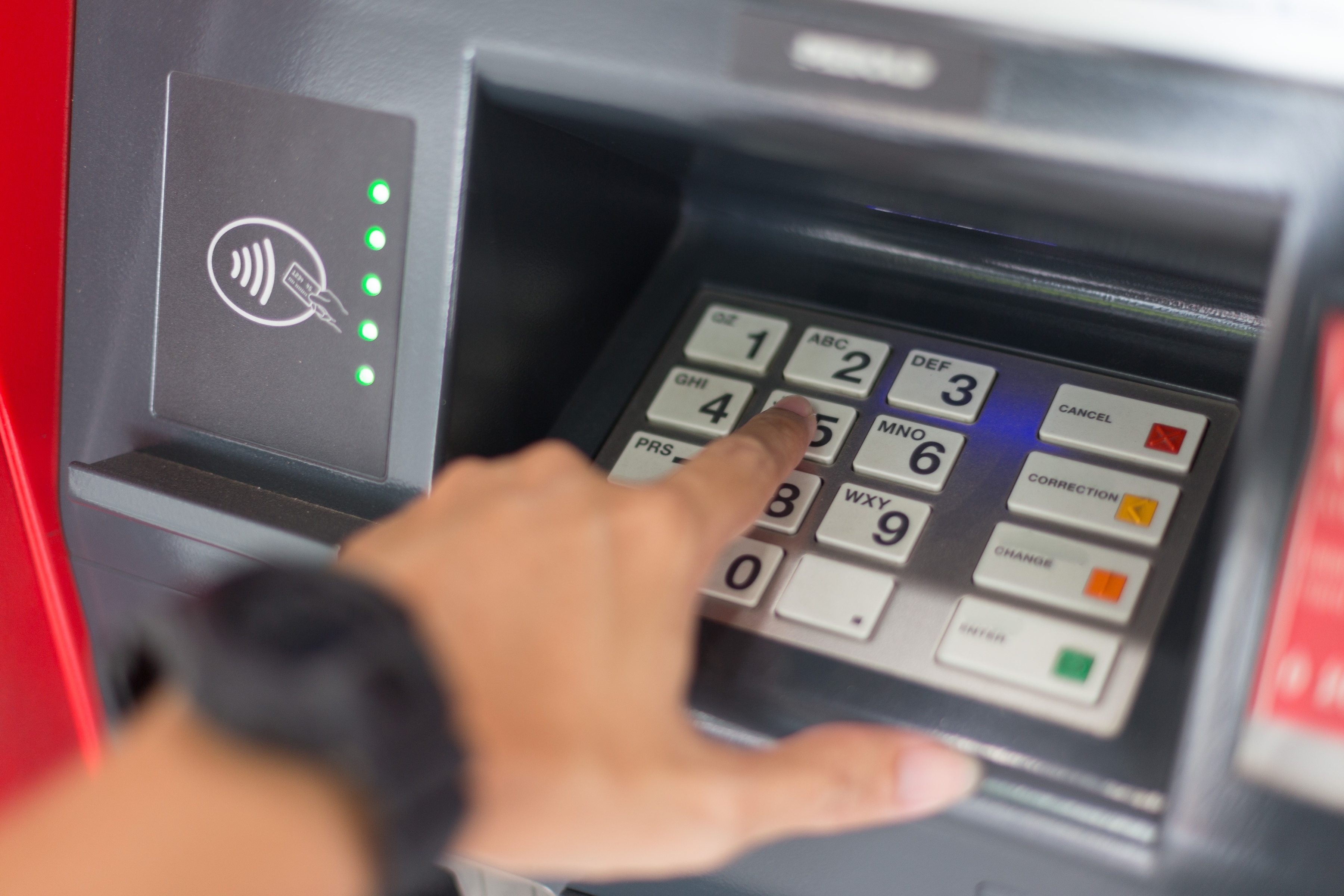
Most credit cards have a PIN, but you’ll rarely use it. You can tap or insert your card for most purchases, sometimes with a ZIP code at the gas pump.
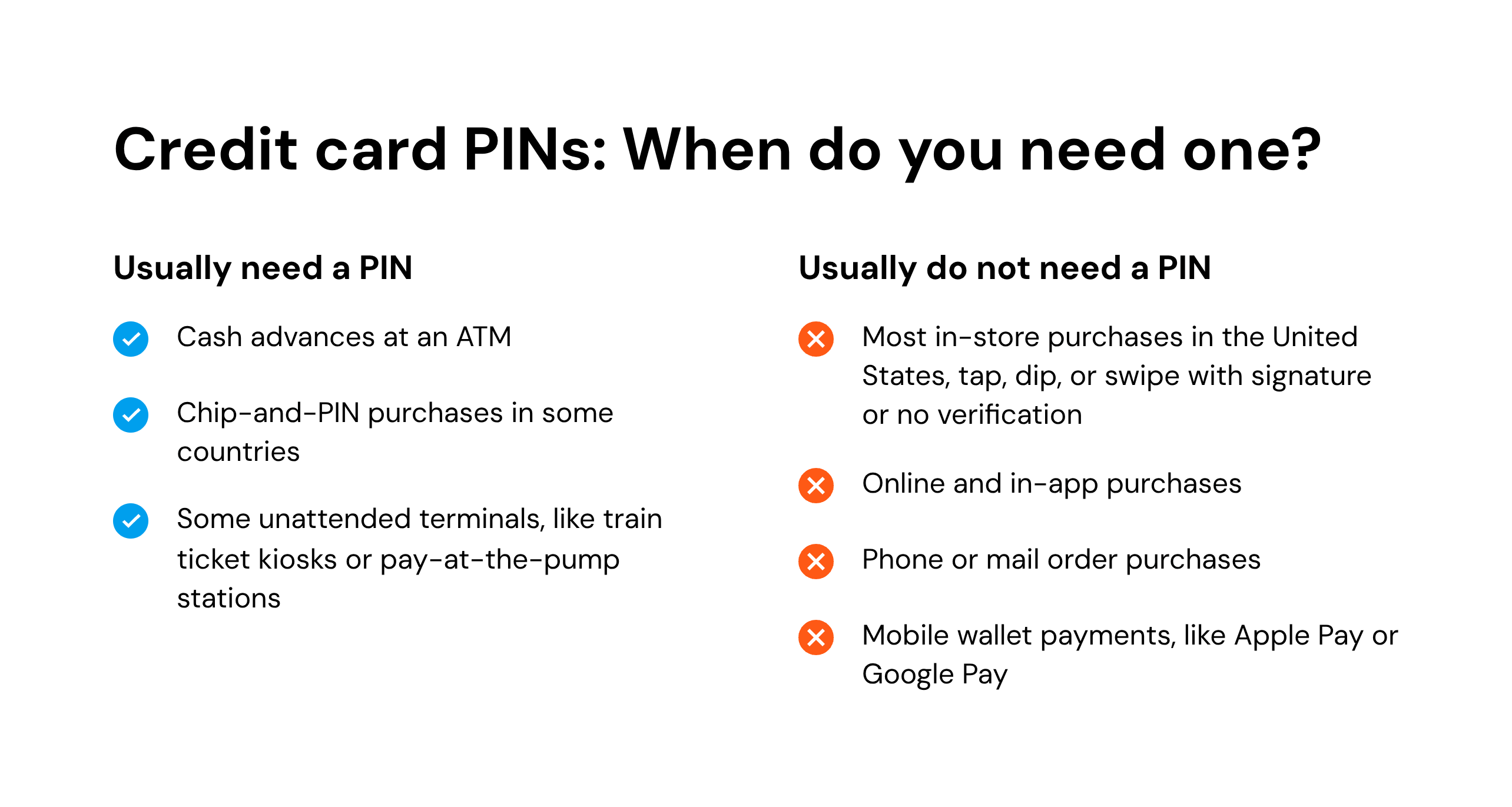
The PIN matters in two places: taking a cash advance at an ATM and paying at terminals abroad. If you’ve never set one, you may not find out until you’re standing in that situation.
When you might need a credit card PIN
Cash advances
To withdraw cash against your credit limit at an ATM, you’ll need to enter a PIN. In the U.S., this is among the rare times you’ll need it.
A cash advance is the most expensive way to use your card. You’ll typically pay a fee and a higher interest rate than on purchases, and interest starts accruing as soon as you withdraw. money. No grace period.
Paying abroad
Many countries outside the U.S., especially in Europe, rely on chip-and-PIN technology for in-person purchases. A merchant may ask for your PIN where a U.S. terminal would take just a tap or chip.
PINs are required at most unattended machines abroad, such as train ticket kiosks, fuel pumps, and toll booths. Without a PIN, the machine may decline your card, even if a staffed counter might accept it.
Set your PIN, and make sure you remember it, before you travel.
Read more >> Fees and Costs of Using a Credit Card
How to set or change your credit card PIN
Depending on your card issuer, you can usually:
- Set or change it in your issuer’s app or online account.
- Call the number on the back of your card.
- Change it at one of your issuer’s ATMs, if your issuer supports it.
- Request one by mail, which a few issuers still send.
Credit card PINs vs. debit card PINs
Both are usually 4 digits. The difference is how often you’ll use them. You’ll enter your debit card PIN at ATMs and often at store checkouts and gas stations. You’ll typically need your credit card PIN for cash advances and some purchases abroad.
Read more >> What's the Difference Between Debit and Credit Cards?
What to do if you forget your credit card PIN
If you can’t remember your PIN, call your card issuer through the app or the number on the back of your card. They can reset it or send you a new one.
Pick a PIN you’ll remember but that no one can guess, which means avoiding birthdays, your address, or a sequence like 1234.
Picking a PIN that actually protects you
Avoid sequences like 1234, repeats like 1111, any year, your birthday, your address, and the last four of your phone number. Anything in your wallet is compromised along with it.
Better: four digits from something not written down anywhere — an old phone number, a street address from decades ago. If it comes instantly to anyone who knows you, it's too easy.
Never write it on the card, keep it on a sticky note in your wallet, or store it in your phone's notes.
Bottom line
Your PIN doesn't touch your credit score. It never shows up on your credit report. What does show up is your balance, including any cash advance, and whether you pay on time. That payment record is the part of your credit report you can add to each month.
The Kikoff Credit Account reports your on-time payments to Equifax, Experian, and TransUnion. There's no credit check to sign up, and plans start at $5 a month.
Frequently Asked Questions
Disclaimer: The information provided in this blog post is meant for informational purposes only and does not constitute financial advice.