


.jpg)




Pulling cash from an ATM is quick, simple, and allows you to use money you’ve already earned. It’s a different world from applying for a loan or opening a new credit card. It’s your own money, after all.
A debit card pulls money already in your checking account, so there’s no borrowing and nothing for your bank to report to Equifax, Experian, or TransUnion. The one exception is an overdraft that goes unpaid long enough to end up in collections. Then, all those everyday debit transactions aren’t going to build your credit either.
Why debit cards aren’t reported to credit bureaus
Credit bureaus track how you borrow money and how you repay it: credit cards, loans, and other accounts where you owe somebody. A debit card just moves your own money, so there’s nothing to report..
Credit cards work differently. Your issuer typically sends a monthly update to one or more of the credit bureaus with your balance, your credit limit, and whether you paid on time.
At a glance: Debit card vs. credit card
A debit card spends money you have. A credit card borrows money you pay back. Only the credit card shows up on your credit report.
The exception: An overdraft that goes to collections
If an ATM withdrawal or debit takes your account to $0, you owe the overdrawn amount plus an overdraft fee, if your bank charges one.
For ATM withdrawals and one-time debit purchases, your bank can’t charge an overdraft fee unless you’ve opted into overdraft coverage. If you haven’t opted in, the transaction is usually just declined. You can check your status or opt out by calling your bank or looking in your account settings.
An overdraft that’s repaid won’t hurt your credit. But if the balance stays negative, the bank may close the account and send the debt to collections. In that case, a collection account can show up on your credit report.
An unpaid overdraft can also be reported to ChexSystems, a separate database banks check when you open an account. It won’t affect your credit score, but it can make it harder for you to open a new checking account.
Read more >> What Happens When Your Bank Account Goes Negative?
Call the bank before it becomes a collection. A debit withdrawal can't affect your credit. An overdrawn balance left unpaid can, once the bank sends it to a collector, and the bank is far more flexible before that handoff than after. So while it’s still the bank’s debt, ask about a repayment plan or a fee waiver. If the balance is beyond what you can arrange yourself, the National Foundation for Credit Counseling can connect you to free or low-cost counseling at 800-388-2227.
Don’t confuse debit with a credit card cash advance
Taking cash from an ATM with a credit card is a cash advance, which is borrowing money. It usually comes with a fee and a higher interest rate than purchases, and there’s no grace period, which typically means interest starts on the day you take the cash.
The advance also adds to your card balance. That raises your credit utilization, meaning how much of your available credit you’re using. And it shows up on your credit report like any other balance.
Read more >> The Fees and Costs of Using a Credit Card
What actually affects your credit score
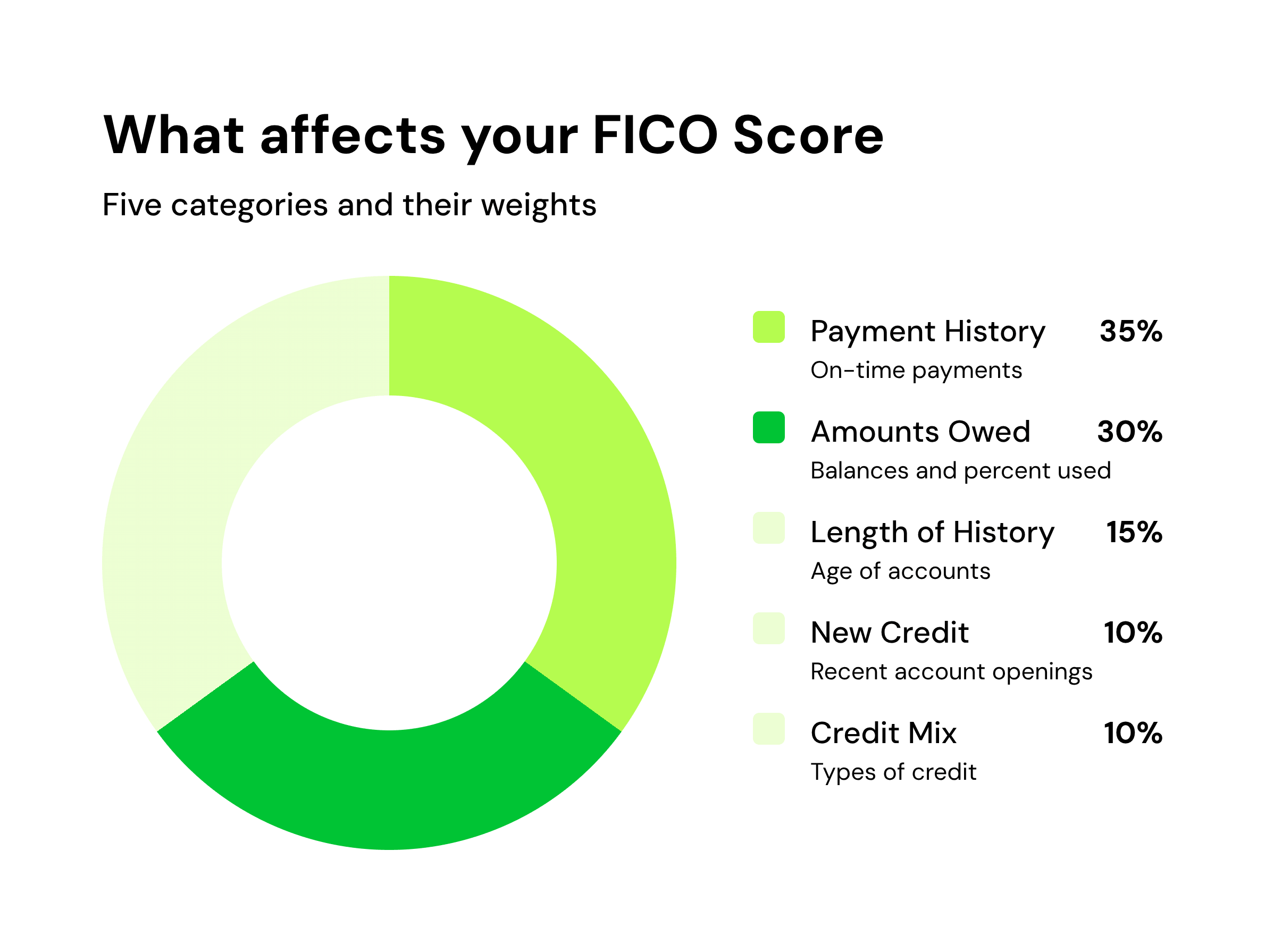
FICO calculates your score using five categories:
- Payment history (35%) — whether you’ve paid your accounts on time
- Amounts owed (30%) — your balances, including how much of your available credit you're using
- Length of credit history (15%) — how long your accounts have been open
- New credit (10%) — how many accounts you’ve opened recently
- Credit mix (10%) — the types of credit you have, like cards and installment loans
Checking accounts and debit cards don’t factor into any of these categories. Your payment history carries the most weight, which is why a single missed payment reported 30 or more days late can hurt your score.
Read more >> The Importance of On-Time Payments in Building Credit
Bottom line
Withdrawing cash with your debit card won't hurt your credit score. But it won't help it either. Paying with your own money keeps you out of debt, and still leaves nothing on your credit report for a lender to see. What builds a score is on-time payments on an account that reports to the bureaus.
The Kikoff Credit Account reports your on-time payments to Equifax, Experian, and TransUnion. There's no credit check to sign up, and plans start at $5 a month.
Frequently Asked Questions
Article Sources
Disclaimer: The information provided in this blog post is meant for informational purposes only and does not constitute financial advice.