.jpg)



If you are in the very early stages of buying a home or just want to learn more about what's realistic based on your financial situation, getting pre-approved may seem like a good idea. However, you don't want to take any steps backward by harming your score, so you're probably wondering, "Does pre-approval affect credit score?" Usually, yes.
If a lender runs a hard inquiry as part of pre-approval, it could lower your score by a few points. Here's a closer look at this important question so you can decide whether now is the right time to get pre-approved.
Does pre-approval affect your credit score?
Getting pre-approved for a mortgage may impact your credit score. It largely depends on what a lender requires before issuing your pre-approval letter. In general, lenders will want some proof of income, such as 30 days of recent pay stubs. They may also run a soft or a hard credit inquiry.
Soft inquiries are not reported to the credit bureaus or added to your report, which means they have no impact on your score.
Before requesting pre-approval, find out which route your lender uses. There is nothing wrong with having a hard inquiry performed. In fact, it can make your pre-approval letter more legitimate when you start the home-buying process. But you want to know what you are agreeing to.
When pre-approval affects your credit score
Pre-approval only affects your score if you authorize a hard credit check. Soft inquiries don't negatively impact your score. Typically, hard credit checks remain on your report for 24 months and negatively impact your score for 12 months.
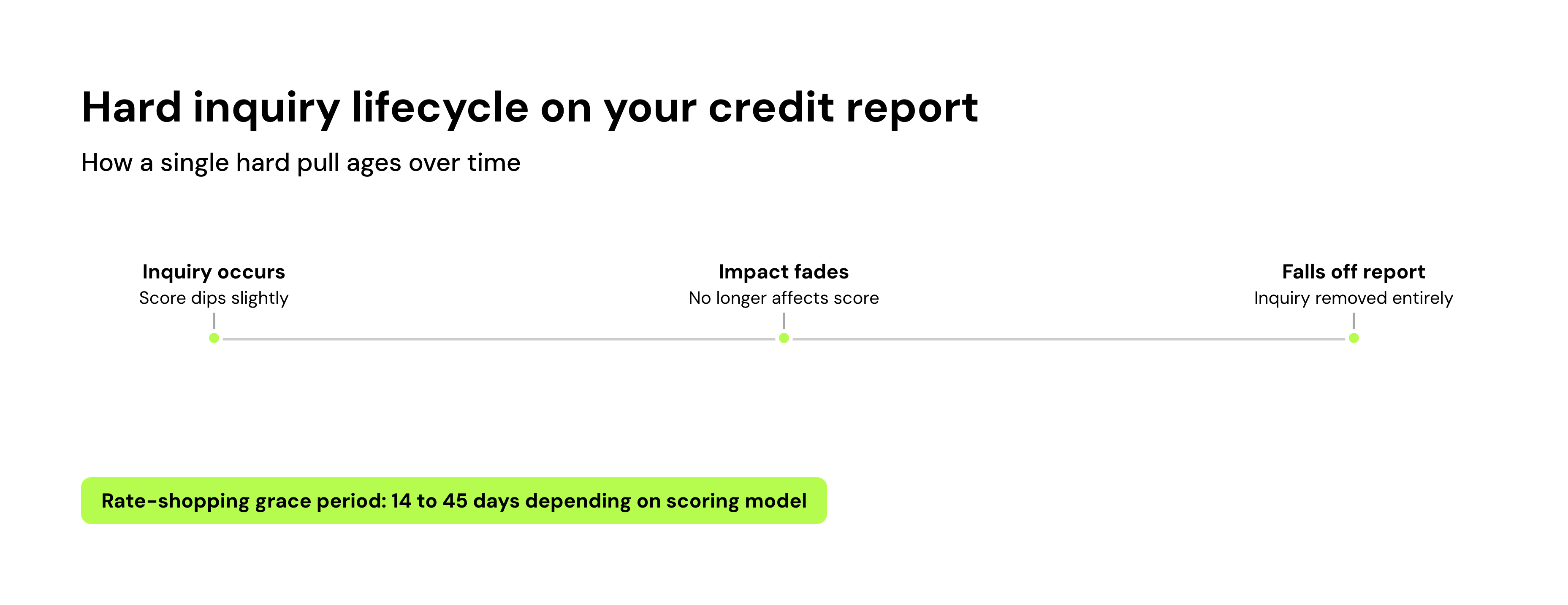
You can conduct multiple hard inquiries during the grace period, as long as it's for the same type of financial product. This allows you to compare lenders and rates.
What is pre-approval?
A pre-approval is a more thorough financial evaluation to determine your strength as a loan applicant. Lenders may review the following:
- Your credit report and score
- Income and employment verification
- Debt obligations
- Assets and savings
You'll either receive a pre-approval letter stating the loan amount you may qualify for or be told that you do not qualify.
How lenders decide you're pre-approved
Lenders will assess the following to decide whether to pre-approve you:
- Credit score and history
- Debt-to-income ratio
- Income stability
- Assets and reserves
Your credit score and history play important roles in the pre-approval process. Improving your payment history before applying can sway the odds in your favor. If you're working to establish or rebuild credit, tools that report consistent on-time payments can help you add positive activity to your profile.
For example, Kikoff allows you to report verified rent payments, with no hard credit check required to sign up.
Pre-approval vs. pre-qualification
A pre-qualification is the least invasive financial evaluation a lender offers. It's usually based on information you report, such as your estimated gross income. Some lenders run a soft credit inquiry, which does not affect your score. However, it's less reliable than a pre-approval.
Getting pre-approved requires you to submit several documents to the lender. You will also have to submit to a hard or soft credit inquiry. If you are ready to partner with a real estate agent and start house shopping, you should consider a pre-approval instead of a pre-qualification.
How to minimize credit score impact when applying for loan/mortgage
Does pre-approval affect credit score? It can, but there are steps you can take to minimize these impacts. Here are some tips to protect your financial reputation:
- Obtain your free credit report to look for errors
- Gather all of your documents ahead of time
- Take advantage of the grace period to compare rates
- Lower your credit utilization
- Don't take on any new debt
The stronger your credit profile is before you apply, the less a hard inquiry will matter.
Conclusion
If you have a strong credit history and a high score that's well above the mortgage threshold, you won't have to stress about potential score impacts during the pre-approval process. Sign up for Kikoff free to start strengthening your credit history with verified rent reporting and dispute letter generation.
Frequently Asked Questions
About the editor

Disclaimer: The information provided in this blog post is meant for informational purposes only and does not constitute financial advice.