






If you're starting your credit journey, you've probably come across two main tools: credit builder apps and credit builder loans (CBLs). Both promise to help you establish a positive credit history, but they work in very different ways, and one is generally a more efficient use of your time and money.
Let's jump in.
Credit builder apps vs. credit builder loans: which is better?
Credit builder apps are generally the better option for most people looking to build credit efficiently.
The main reason comes down to how credit scores are calculated. Credit builder apps, be it a credit account, a secured card, or a rent reporting tool, typically address multiple scoring factors at once, while credit builder loans are limited to just one.
This means your money goes further with a credit builder app, and you're not locking up funds in a savings account for months just to build payment history you could have built through other means.
That said, there are specific situations where a credit builder loan makes sense, which we'll cover in detail below.
What is a credit builder app?
A credit builder app is effectively a platform that gives you access to credit-building tools designed to generate positive, reportable credit activity.
These apps are built for people with thin, no, or rebuilding credit histories, and they generally don't require a hard credit check to sign up. The core function is to give you access to tradelines, secured cards, rent reporting, or some combination of all three, so you can build credit without taking on high-interest debt.
Here's a breakdown of the most common features you'll find in a credit builder app:
- Credit accounts or revolving tradelines
- Secured credit cards
- Rent reporting
- Credit score monitoring
- Dispute tools
Apps like Kikoff are designed with all of this in mind, offering a credit account, secured card, and rent reporting in one place without requiring a hard inquiry to get started.
How credit accounts work
A credit account is effectively a revolving line of credit that you can use to finance a small purchase, typically something within the app's ecosystem, and make monthly payments on.
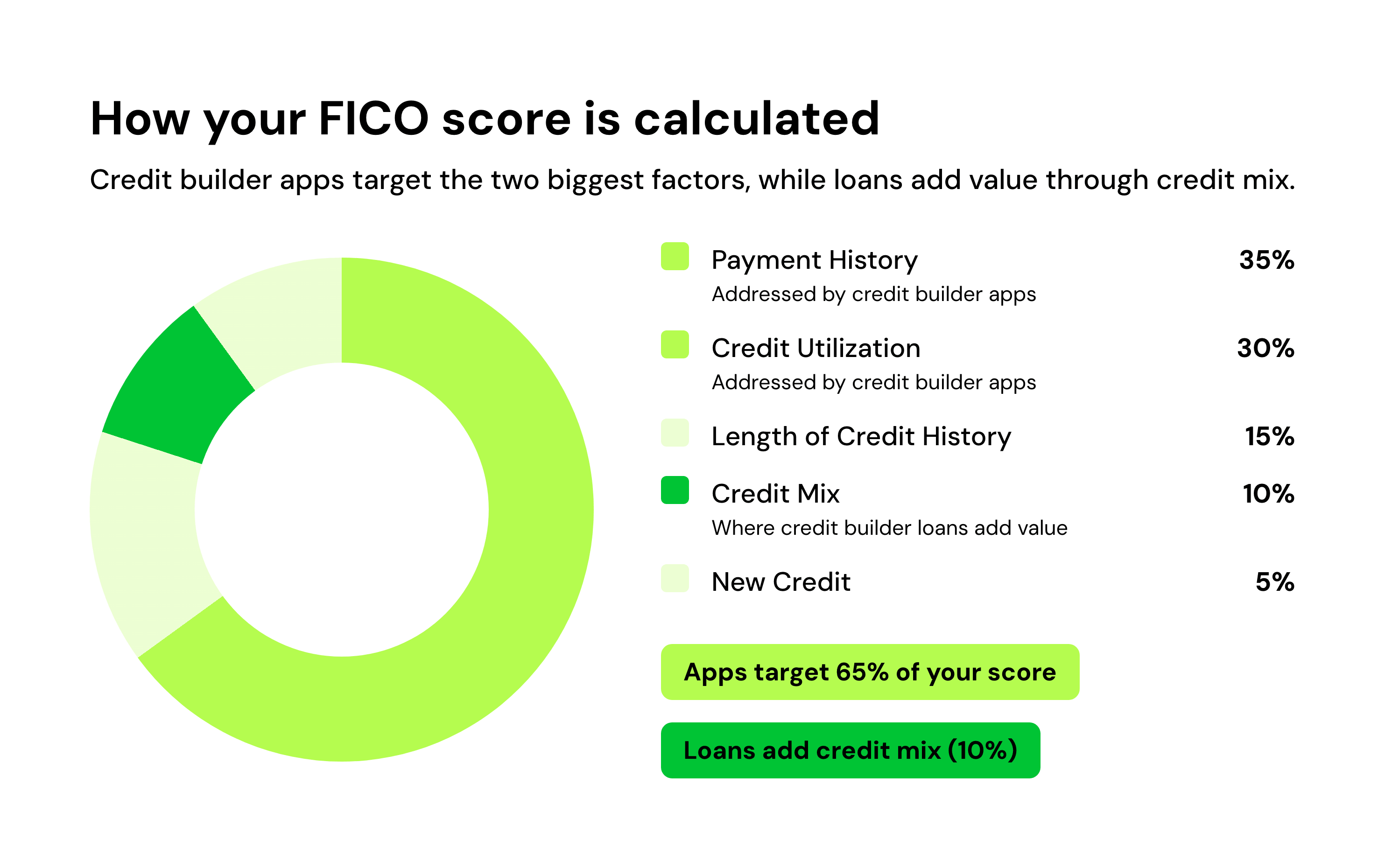
Every on-time payment gets reported to the major credit bureaus as positive payment history, which is the single most important factor in your credit score at 35%.
What makes credit accounts especially powerful is that they also affect your credit utilization ratio, which makes up 30% of your score. By keeping your balance low relative to your credit limit, you're building positive signals on two of the five credit scoring factors simultaneously.
This is a big deal. Most tools only address one factor at a time.
How secured cards help build credit
Secured cards are basically credit cards where you deposit funds upfront, which then become your credit limit.
Every purchase you make and every on-time payment you make on the card gets reported to the bureaus, which means you're building payment history just like you would with a regular credit card. Secured cards are super useful because they also affect utilization, and they're available to people who wouldn't qualify for a standard unsecured card.
The Kikoff Secured Credit Card is a no-fee option that reports to all three major credit bureaus.
How rent reporting works
Rent reporting is the practice of taking your existing monthly rent payment and having it reported to one or more credit bureaus as a positive tradeline.
Since rent is usually the largest monthly expense for most Americans, reporting it is a no-brainer if you're trying to build your credit history. You're already making the payment, so all you're really doing is making sure it counts.
Kikoff's rent reporting feature reports your verified rent payments to TransUnion, giving you credit for what you already pay.
What is a credit builder loan?
A credit builder loan is effectively a small loan designed specifically to help you build payment history on an installment account.
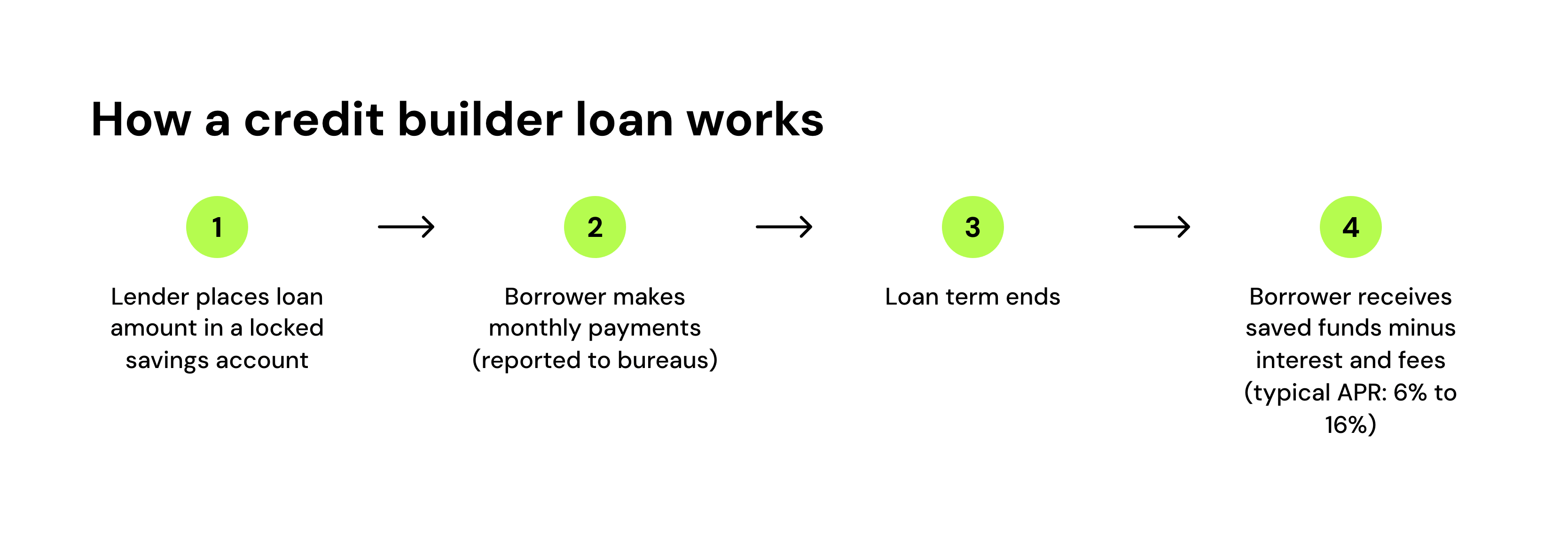
Here's how it works: the lender takes your loan amount and holds it in a locked savings account. You make monthly payments over the loan term, and each payment is reported to the credit bureaus as a positive on-time payment. Once the loan is paid off, you receive the saved funds back, minus any interest and fees charged along the way.
The concept sounds appealing, but the mechanics have some real drawbacks.
The problem with credit builder loans
The single most limiting thing about credit builder loans is that they only affect one credit scoring factor: payment history.
Payment history is a 35% factor, which is significant. But the other major scoring factor, credit utilization at 30%, is not touched at all by a credit builder loan because installment loans are not revolving credit. This means for all the months you're making payments and waiting for that loan to pay down, you're leaving one of the two biggest scoring levers completely untouched.
On top of that, credit builder loans lock up your funds for the entire term. You deposit money, you can't use it, and you pay interest for the privilege of watching it sit there. Most CBLs charge between 6% and 16% APR, which means you're paying to build credit that a credit account or secured card could build for a fraction of the cost.
There's also the question of flexibility. If your financial situation changes and you need to exit the loan early, you may face fees or penalties. Credit accounts and credit builder apps are generally much easier to pause, cancel, or adjust.
When a credit builder loan does make sense
There is one legitimate reason to consider a credit builder loan: credit mix.
Credit mix makes up 10% of your credit score and measures the variety of credit types you've managed. If your credit profile is made up entirely of revolving accounts like credit cards and credit accounts, adding an installment account, be it a CBL, auto loan, or personal loan, can add some variety that signals responsible management of different debt types.
This said, credit mix is a smaller factor, and it's generally not worth starting with a CBL when you don't yet have strong payment history and utilization established first.
Side-by-side comparison
Here's a breakdown of how credit builder apps and credit builder loans stack up on the factors that matter most:
| Factor | Credit Builder App | Credit Builder Loan |
|---|---|---|
| Payment History (35%) | Yes | Yes |
| Credit Utilization (30%) | Yes (revolving credit) | No |
| Credit Mix (10%) | Limited (installment via CBL add-on) | Yes |
| Funds Locked Up | No | Yes |
| Interest Charged | Generally no | Yes (6% to 16% APR) |
| Hard Credit Check | Generally no | Sometimes |
| Reporting Bureaus | Up to all three | Varies |
| Flexibility | High | Low |
How quickly can each option build credit?
The timeline for building credit depends a lot on the tools you use and how consistently you use them.
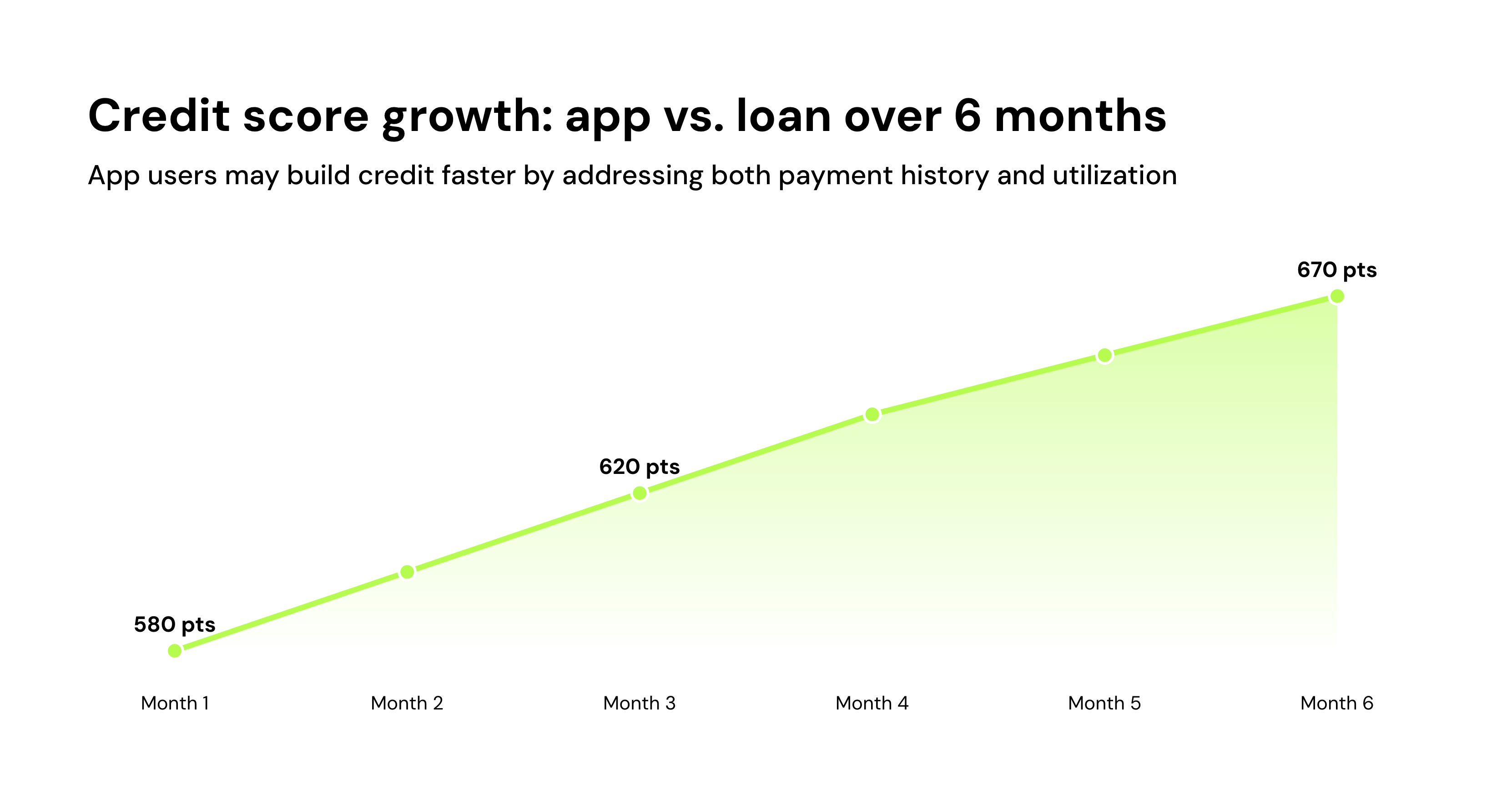
With a credit builder app, most users start to see their first credit score generate within one to two months of their first reported payment. After six months of consistent on-time payments with low utilization, scores typically move into the mid to high 600s.
With a credit builder loan, the timeline is similar for the payment history component, but because utilization isn't being addressed, progress can feel slower, especially for users who don't have other revolving accounts already open.
Luckily, there's no reason you can't combine both. If you want to establish strong payment history and utilization first, starting with a credit builder app is the smarter move, and adding an installment account later for credit mix diversification is always an option.
How to choose the right tool for your situation
Every individual who is building credit starts from a different place, and the right tool depends on where you're starting from.
If you have no credit history at all, a credit builder app is generally the best first step because it efficiently addresses the two biggest scoring factors from day one. If you have some credit history but are thin on revolving accounts, the same logic applies. If your credit profile already has multiple revolving accounts in good standing and you want to add variety, a credit builder loan can make sense as a supplement, not a replacement.
Just make sure that whatever tool you choose reports to all three major credit bureaus, since reporting to only one or two limits how widely your positive activity gets recognized.
Conclusion
For most people building credit from scratch or rebuilding after setbacks, credit builder apps offer a more efficient path than credit builder loans.
By addressing both payment history and credit utilization simultaneously, apps like Kikoff allow you to build stronger credit faster without locking up your money or paying interest. Credit builder loans still have a role in a well-rounded credit strategy, mainly for adding installment account diversity, but they shouldn't be your starting point.
If you're ready to start building credit the smart way, Kikoff offers a credit account, secured card, and rent reporting all in one place, with no hard credit check required to sign up.
Frequently Asked Questions
About the editor

Disclaimer: The information provided in this blog post is meant for informational purposes only and does not constitute financial advice.