.jpg)




If you're self-employed and use your car for work, part of your car insurance is deductible: you take the business-use share of the premium as an actual vehicle expense. Drive 40% of your miles for work and that's 40% of the premium.
If you're a W-2 employee, the answer is almost always no. And whoever you are, there’s no deduction if you take the standard mileage rate, because insurance is already priced into the rate.
How the tax deduction actually works
Car insurance can qualify as a tax deduction when you use your vehicle for business and calculate your deduction using the actual expense method. The IRS specifically lists insurance among the actual vehicle expenses that you can deduct based on the business use of your car.
If your car is driven only for personal use, those expenses don’t qualify. If you use your vehicle for both business and personal purposes, you need to separate the two uses and deduct only the portion related to business.
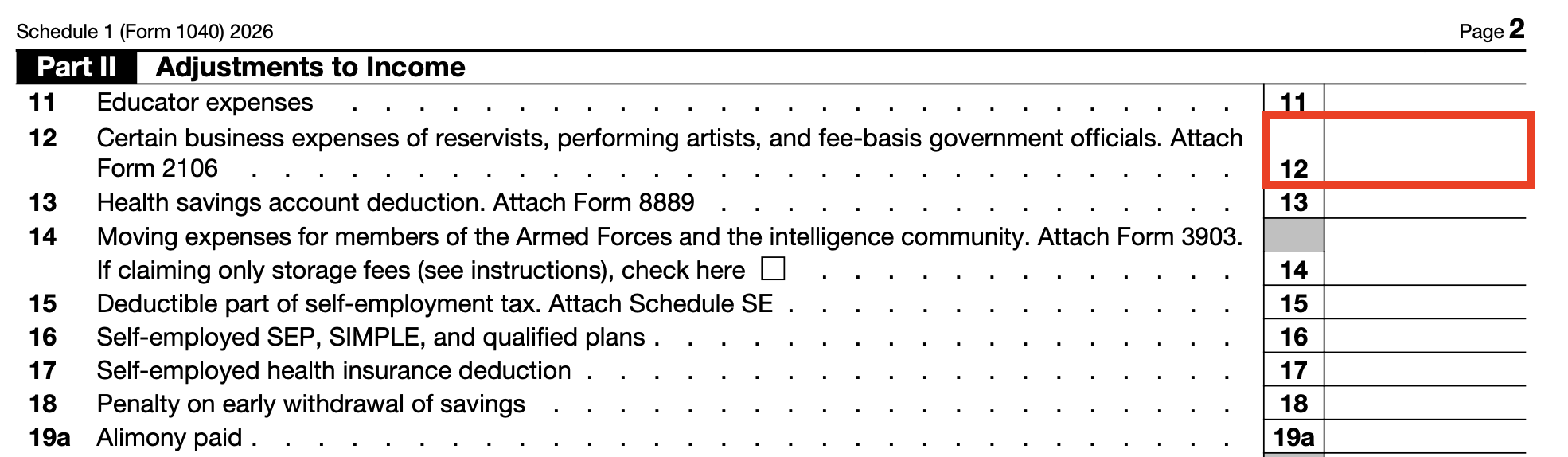
If you are self-employed, you will likely report qualifying vehicle expenses with other business expenses on Schedule C. However, certain employees, such as qualifying Armed Forces reservists, performing artists, and fee-basis state or local government officials, must file Form 2106 and carry the result to Schedule 1 (Form 1040). It's an adjustment to income, so it works whether you itemize or not.
When car insurance is tax-deductible
Three groups can deduct vehicle expenses at all. Only two of them can reach the insurance premium.
Self-employment and business use
If you use your vehicle for your business, you deduct the business portion of your insurance premium when you use the actual expense method. The IRS says you can include insurance among your actual vehicle expenses and allocate the expense between business and personal use.
Let’s say 50% of the miles you drive are for qualified business purposes. In that case, you’d deduct half of your insurance premium, along with half of your other business-related vehicle expenses, if you use the actual expense method.
Armed Forces reservists
If you're a member of a reserve component of the Armed Forces and travel more than 100 miles from home for reserve duties, you can deduct those travel expenses as an adjustment to income, which applies whether you itemize or not. But the amount is capped by the federal per diem rate for lodging and meals, the standard mileage rate for car expenses, plus parking, ferry fees, and tolls. Because car costs run at the mileage rate, insurance is already included and not separately deductible. File Form 2106 and carry the total to Schedule 1 (Form 1040).
Qualified performing artists
Certain performing artists can also deduct eligible unreimbursed employee business expenses. The IRS lists performing artists among the limited groups that can use Form 2106 for qualifying expenses.
You must meet four IRS requirements:
- Worked as a performing artist for at least two employers during the tax year.
- Earned at least $200 in wages from each of at least two of them.
- Had allowable business expenses of more than 10% of gross income from the performing arts.
- Had an AGI of up to $16,000 before deducting expenses as a performing artist.
Read more >> How to Lower Your Car Insurance
You don't have to pay for tax help. The IRS runs Free File for most filers and VITA, which offers free in-person help for people under certain income thresholds, people with disabilities, and limited-English speakers. Call 800-906-9887 to find a site near you.
If your situation is more complicated, talk with a CPA or enrolled agent for guidance specific to your situation.
How to deduct car insurance on your taxes
There are two main ways to calculate car insurance tax deductions, and you must choose one.
To use the standard mileage rate on a car you own, you have to choose it the first year you use that car for business. Start with actual expenses and you may be locked out of the mileage rate for that car for good. A leased car has to stay on the mileage rate for the whole lease, renewals included.
Actual expense method
The actual expense method lets you calculate the costs you actually incur to operate your vehicle. The IRS lists insurance, gas and oil, repairs, tires, registration fees, licenses, parking and tolls, and depreciation or lease payments as eligible expenses. Your commute doesn't count.
If you use your vehicle for both business and personal expenses, you need to allocate between those uses.
Standard mileage rate
The standard mileage rate provides a much simpler way to calculate your business vehicle deduction. Instead of separately adding up expenses such as insurance, you multiply qualifying business miles by the applicable IRS mileage rate. When you use the standard mileage rate, you generally cannot separately deduct your car insurance premium because the rate accounts for operating costs such as insurance.
Compare both options to determine which gives you the larger deduction, and talk with a tax professional or enrolled agent if you're not sure.
One year, two standard mileage rates. If you're claiming mileage for 2026, you'll use two rates: 20.5 cents a mile through June 30, and 23.5 cents from July 1. The IRS raised the rate partway through the year, so you’ll need to split your log by that date.
Records you need to keep
If you are going to claim any vehicle expenses come tax time, keep documents such as:
- Insurance statements showing the premium and that you paid it
- A mileage log, including starting and ending odometer readings or miles driven
- Receipts for oil changes and other maintenance
If you use your vehicle for personal and business expenses, your mileage records should break down how much you used it for business.
When car insurance is not tax-deductible
You can’t deduct your car insurance premium if you exclusively use your vehicle for personal use. You also can’t deduct your insurance separately when using the standard mileage rate. The IRS says the standard mileage rate accounts for insurance and other vehicle operating expenses.
Run the numbers >> Use Kikoff's auto insurance calculator to see how your coverage choices and deductible change what you pay.
What moves your premium more than the deduction will
For most drivers the deduction is worth nothing, and even for a self-employed driver it touches only part of one year's premium. The price itself moves for other reasons, and in most states, one of them is your credit.
Insurers in most states use a credit-based insurance score when they set personal auto rates. It's not the credit score a lender pulls, though both are built from the same credit report, and payment history is the largest factor to the insurance score.
Check with your state’s insurance department to learn how it works where you live.
If credit cost you the policy or raised your price, the insurer has to tell you under the Fair Credit Reporting Act and name the credit bureau it used.
Read more >> What is the Fair Credit Reporting Act?
Bottom line
Car insurance is only deductible if you're self-employed, you use the actual expense method, and you're claiming the business-use share of your driving. Run both methods before you file, because the choice may not be reversible.
What you can still change is the premium itself. In most states, part of what sets it comes off the same credit report a lender reads. The Kikoff Credit Account reports your on-time payments to Equifax, Experian, and TransUnion, with no credit check to sign up and plans starting at $5 a month.
Frequently Asked Questions
Article Sources
Disclaimer: The information provided in this blog post is meant for informational purposes only and does not constitute financial advice.