



Most people carry at least one of each, yet the distinction between a debit card and a credit card is something lots of people have never fully thought through.
Understanding how each one works can shape the way you spend, save, and build credit over time.
Let's jump in.
Debit vs. credit cards: the key differences
The single most important thing to understand is where the money comes from. A debit card pulls funds directly from your checking account, while a credit card lets you borrow money from a lender up to a set limit, which you then repay later.
That difference in funding source is what drives nearly every other distinction between the two, be it fraud protection, rewards, or your ability to build credit.
Here's a breakdown of the main areas where they diverge: how they access money, how they affect your credit, what protections they offer, and what perks they come with. Every individual who wants to make smart financial decisions should understand these distinctions clearly. The way you use each card can effectively shape your financial picture for years to come.
How debit cards work
A debit card is basically a direct line to your bank account. When you swipe or tap, the transaction amount is deducted from your available balance almost immediately.
This means you can only spend what you already have, which is why lots of people prefer debit for staying on budget.
Debit cards are generally issued by your bank or credit union and are tied to a checking or savings account. They are super convenient for everyday purchases and ATM withdrawals. This said, they do not help you build credit, and their fraud protections are more limited than what credit cards offer.
How credit cards work
A credit card is a revolving line of credit issued by a bank or financial institution. Every individual who uses one is essentially borrowing money with a promise to pay it back, usually by a monthly due date.
Carrying a balance past the due date typically triggers interest charges at the card's annual percentage rate, which is why paying in full each month is the standard advice for cardholders who want to avoid extra costs.
Credit cards report your payment activity to the major credit bureaus, which means using one responsibly builds your payment history over time. This is one of the biggest advantages they have over debit cards for anyone working on their credit profile.
How each card affects your credit score
This is one of the most meaningful differences between the two products.
Debit cards do not affect your credit score at all. There is no reporting to credit bureaus, no credit limit, and no payment history being built. Using a debit card exclusively means your credit file is not growing, regardless of how responsibly you manage your money.
Credit cards, by contrast, directly influence your credit score in multiple ways. On-time payments build your payment history, which is the largest factor in most scoring models. The balance you carry relative to your credit limit affects your credit utilization, which is the second largest factor. The length of time your account has been open contributes to your credit history length.
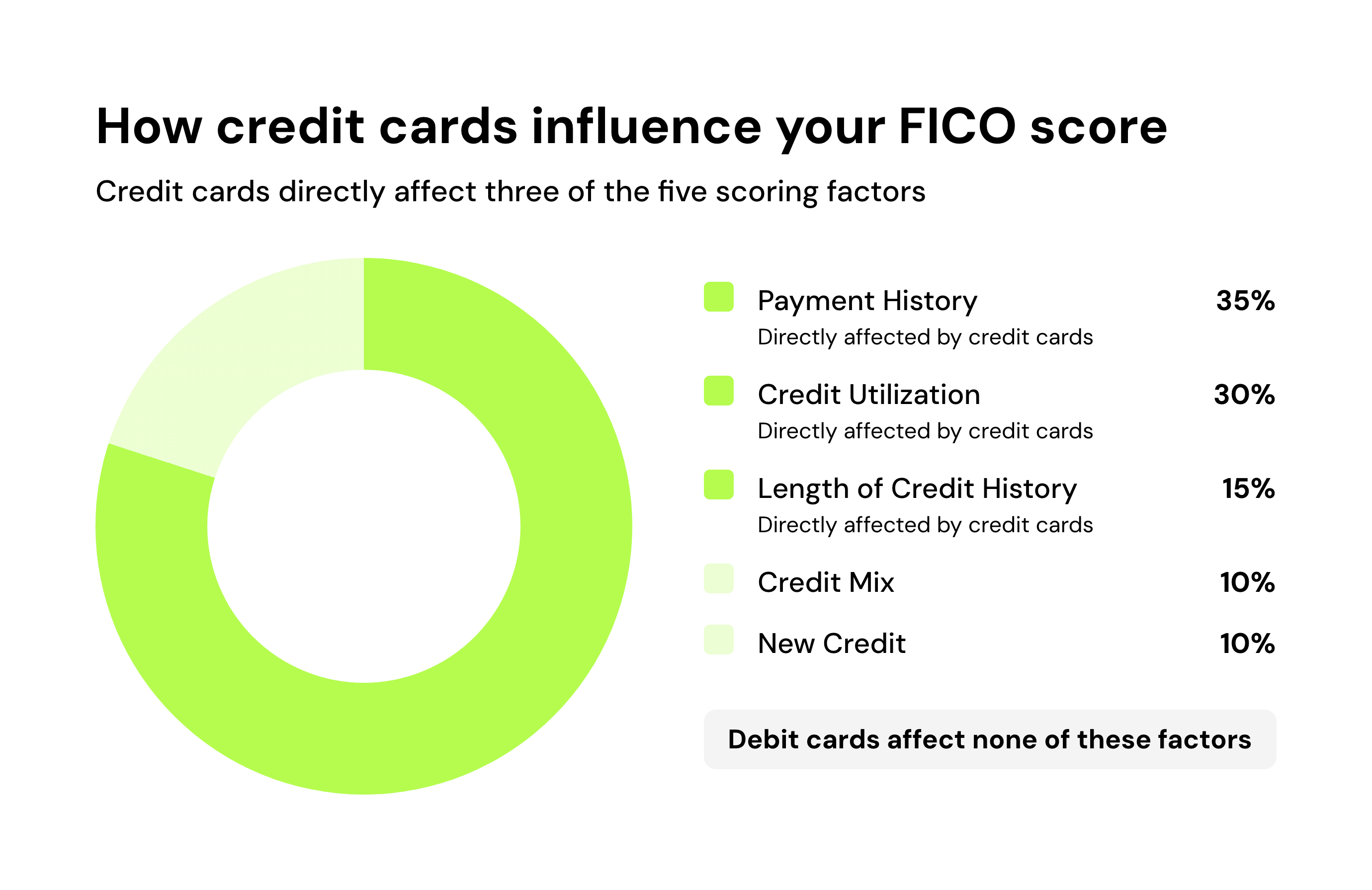
This means every on-time credit card payment is working in your favor, and every time you keep your balance low relative to your limit, you are sending a positive signal to the bureaus. Debit cards offer none of these benefits.
Fraud protection: credit cards have the edge
Credit cards generally offer stronger fraud protections than debit cards under federal law.
Under the Fair Credit Billing Act, if your credit card is used without authorization, your maximum liability is $50, and most major issuers offer zero-liability policies that eliminate that exposure entirely. Disputing a fraudulent charge on a credit card is also relatively straightforward, and you are not out of pocket while the dispute is being resolved.
Debit cards fall under the Electronic Fund Transfer Act, which provides less favorable terms. If you report fraud within two business days, your liability is capped at $50. If you wait longer, the liability increases significantly. Because debit transactions pull directly from your bank account, a fraudulent charge can create immediate cash flow problems while you wait for resolution.
Rewards and perks
Credit cards often come with rewards programs, cash back, travel points, purchase protections, and extended warranties. Debit cards generally offer none of these perks.
For someone who pays their balance in full each month, using a rewards credit card for everyday purchases can generate meaningful value over time with no interest cost. The key is treating the credit card like a debit card and only spending what you can afford to pay off when the billing cycle closes.
When to use each one
Neither card is universally better. Each has its place depending on the situation.
Debit cards make sense for ATM withdrawals, transactions where credit is not accepted, and situations where you want to strictly limit spending to what you already have. They are also a practical choice for younger users who are still developing spending discipline.
Credit cards make sense for online purchases where fraud protection matters, travel bookings where holds and disputes are common, and any scenario where you are working to build or maintain your credit profile. If you are trying to build credit without a credit card, there are alternatives, but a credit card used responsibly remains one of the most efficient tools available.
Conclusion
Debit cards and credit cards serve different purposes and come with different trade-offs. Debit cards keep you tied to what you have. Credit cards offer fraud protection, rewards, and the ability to build your credit profile over time.
For most people, a combination of both is the practical answer. Use your debit card for situations where simplicity matters, and use your credit card where protection and credit building are the priority.
If you are just starting to build credit or looking to add a new positive tradeline, Kikoff offers a credit account with no hard inquiry required. It reports to the major credit bureaus and starts at no cost, making it an accessible first step for anyone looking to strengthen their credit profile.
Frequently Asked Questions
About the editor

Disclaimer: The information provided in this blog post is meant for informational purposes only and does not constitute financial advice.