


.jpg)



When you use them strategically, credit cards can help you reach your financial goals. Cash back, 0% intro APRs, rewards programs, and other perks can all be useful. But if you end up paying interest, those perks will probably cost you more than they're worth.
Not sure how to avoid credit card interest? We'll offer a few tips to get you started.
How to avoid credit card interest
If you want to avoid paying credit card interest, the best way to do so is to pay your statement balance in full before interest accrues. Carrying a balance month-to-month means that interest will accumulate.[1]
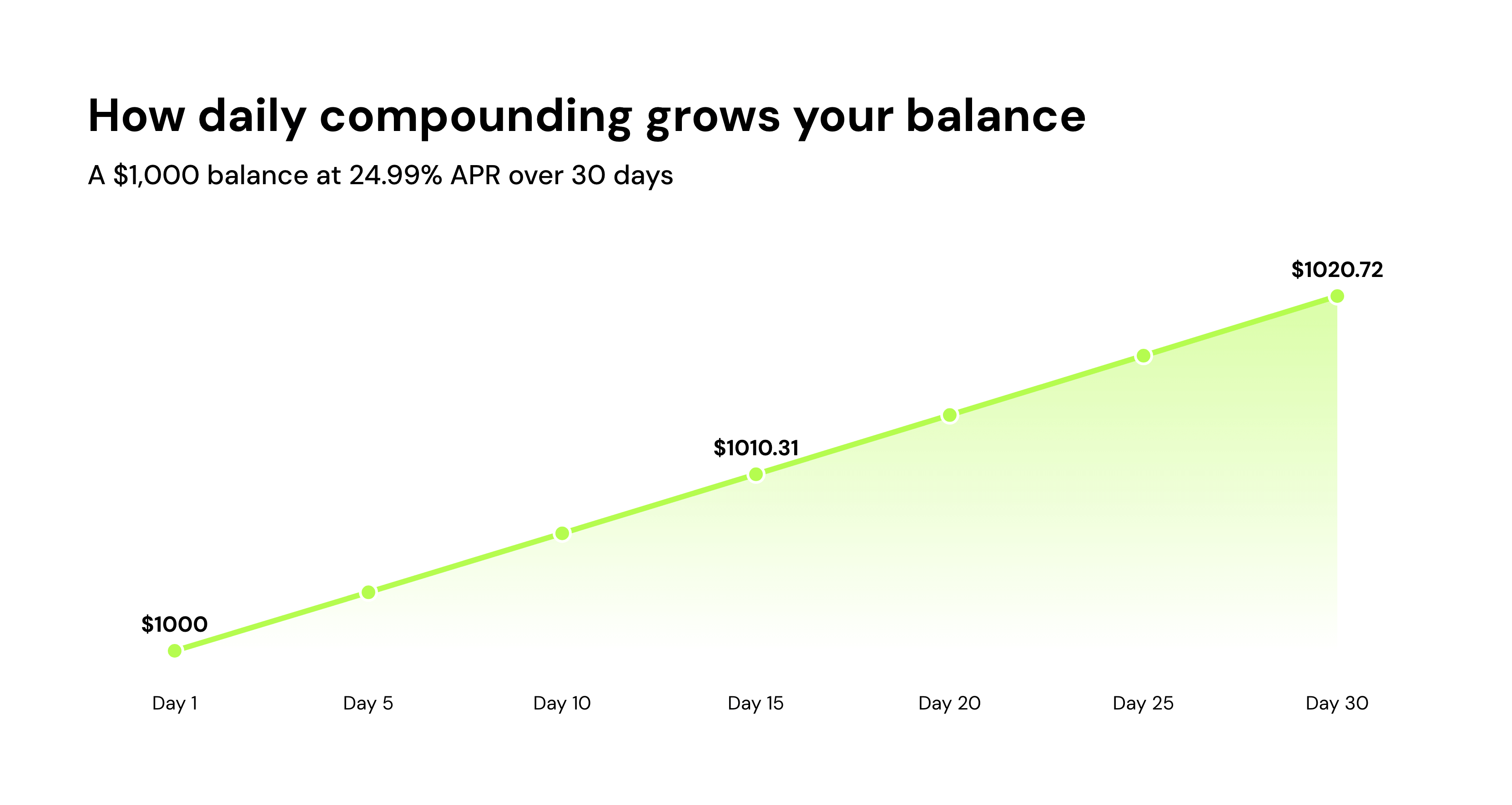
Unlike loans and many other kinds of credit, credit card interest compounds daily. This means that interest is calculated and added to the balance every day. If you don't keep up with payments, you could end up paying interest on interest. The balance will grow quickly, and you could get caught in a debt trap.
Tips to avoid credit card interest
You can enjoy the benefits of credit cards without losing money to interest payments every month. To learn how to avoid credit card interest, follow these tips.
Pay your full balance every month
Many people just make the minimum payments on their credit cards each month. It's tempting to do this, especially if money is tight. However, if at all possible, you should pay your whole statement balance each month. That way, you can avoid having to pay interest.
Understand your grace period
Paying your balance in full allows you to avoid interest charges, but it matters when you make the payment.
Most credit card companies have a grace period between the statement closing date and the payment due date. You won't be charged interest if you pay your statement balance during this grace period, which is usually 21 to 25 days. In most cases, the grace period applies only to purchases, not balance transfers or cash advances.
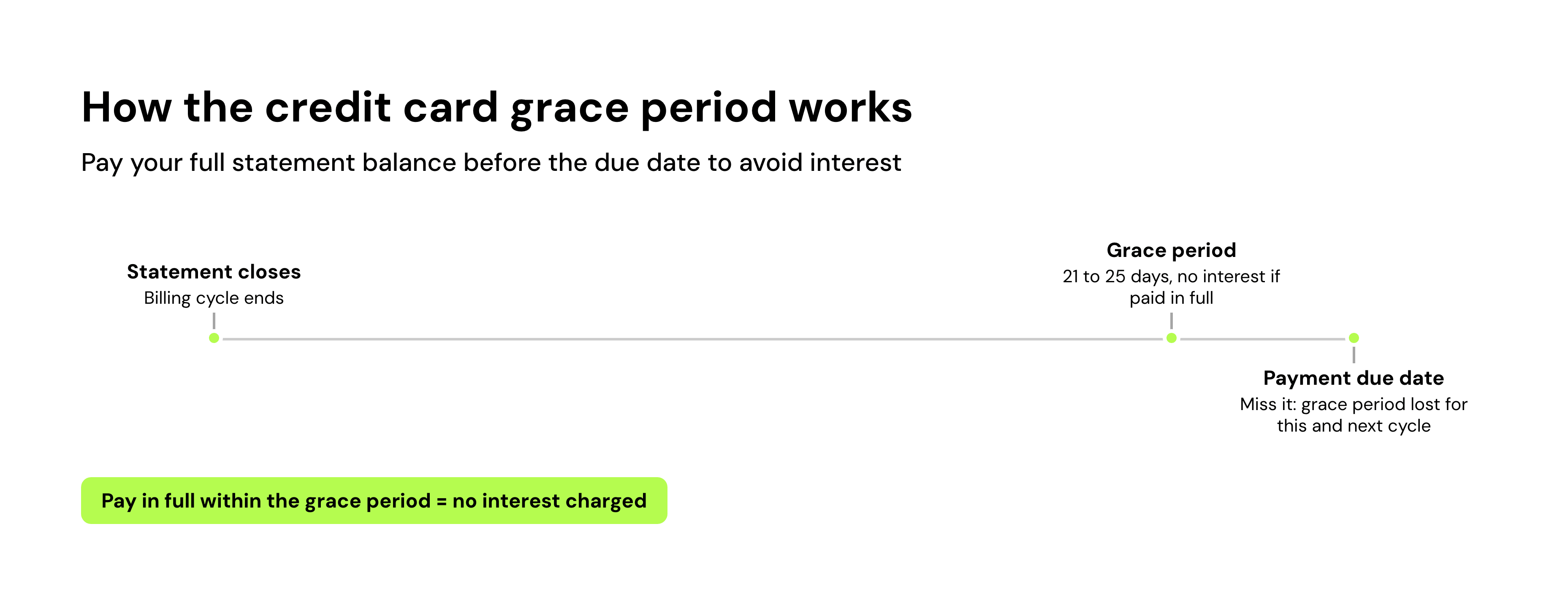
Notably, this only matters if you always pay your statement balance in full and on time. If you don't pay in full one month, you'll lose the grace period for that statement and the month after.
Avoid cash advances
Cash advances might seem like a major credit card perk, but you should avoid them unless you have a true financial emergency with no other options. There are multiple reasons you should steer clear of cash advances:[1]
- They usually have a higher interest rate than purchases
- They typically include a fee (usually a percentage of the advance) in addition to the interest
- Most cash advances don't have grace periods, so interest starts accruing right away
If you're chronically short on money, cash advances can lead to a dangerous debt cycle. Some people take out a cash advance and then find that they need to take another to pay the first one off. Interest accumulates very quickly, which means that the amount you owe can snowball.
Use a 0% intro APR card strategically
Many credit card companies try to draw in new customers by offering introductory 0% APRs. These cards allow you to make purchases without owing any interest for the first six to eighteen months.
People sometimes take out one of these cards with the full intention of paying the balance before the period ends. If they're unable to, they end up paying interest.[2]
That doesn't mean you should avoid 0% APR cards altogether. However, you should use them strategically. For example, if you're trying to pay off another credit card, you might do a balance transfer and pay it off before the introductory period ends.
Alternatively, if you need to make a big purchase, you could use a card with a 0% introductory APR to effectively give yourself interest-free financing. Just make sure you pay it off before the end of the intro APR!
What to do if you already have credit card interest charges
Understanding strategies to avoid paying credit card interest can be helpful. But what if you already owe interest on your credit cards? Fortunately, you have a few different ways to reduce (and eventually eliminate) those charges.
Pay your full balance
The best way to stop owing interest is to pay your balance in full. If you can't afford to do that, pay as much as you can.
Make multiple payments per month
When you make multiple payments toward your credit card each month, the average daily balance is lower. This means that you'll be charged less interest.
Consolidate debt
If you think it will take some time to pay off your credit cards, consider consolidating debt with a personal loan. These loans often have much lower interest rates, so they can save you thousands over time.
Choose a debt repayment strategy
If consolidation isn't an option, try following a debt repayment strategy. The "debt snowball" is a popular one. This is where you put extra money toward the card with the lowest balance. When you've paid that one off, you focus on the card with the next highest balance.
Another popular strategy is the "debt avalanche." This is where you focus on paying off the card with the highest interest rate first.
Want to build your credit?
If you can free yourself from the trap of credit card interest, you can reduce your total debt and boost your credit score. Having good credit can unlock more opportunities than you may realize.
However, if you're like many people, you might not be sure how to begin your credit-building journey. We're here to help!
Kikoff is a credit-builder app for people with poor credit, little credit, or no credit at all. We offer credit lines, secured credit cards, and other resources that make building credit easy and fun. We even offer personalized insights to help you get closer to your financial goals.
If you're ready to take your credit to the next level, getting started with us only takes a few minutes. Joining is free, and there's no credit check. Create your account today!
Frequently Asked Questions
About the editor

Article Sources
Disclaimer: The information provided in this blog post is meant for informational purposes only and does not constitute financial advice.