




From credit card debt to student loan payments to mortgage debt, many people have something that is weighing them down financially.
Without a good strategy to help you break down your total debt into manageable chunks, it is definitely hard. Using one individual's story we'll show you how to approach your debt with a plan (2 different ones to be precise).
What to Know Before You Pick a Strategy
2. Impact on Credit Score
Some debts may have more impact on your credit score than others, like overdue credit card payments or outstanding debt from loans. Having credit card debt will increase your credit utilization rate, which can lower your credit score.
Prioritizing high-interest debt, like credit card debt and loans, will help you save money in the long run. Always make at least the minimum monthly payment on time to avoid hurting your credit score.
Debt Avalanche Method vs. Debt Snowball Method
Tony has debt from credit cards, a Personal Loan, and car loan debt:
- Credit Card A: $5,000 balance at 22% APR
- Personal Loan: $8,000 balance at 10% APR
- Student Loan: $15,000 balance at 6% APR
- Car Loan: $20,000 balance at 4% APR
What's the snowball method, and how does it work?
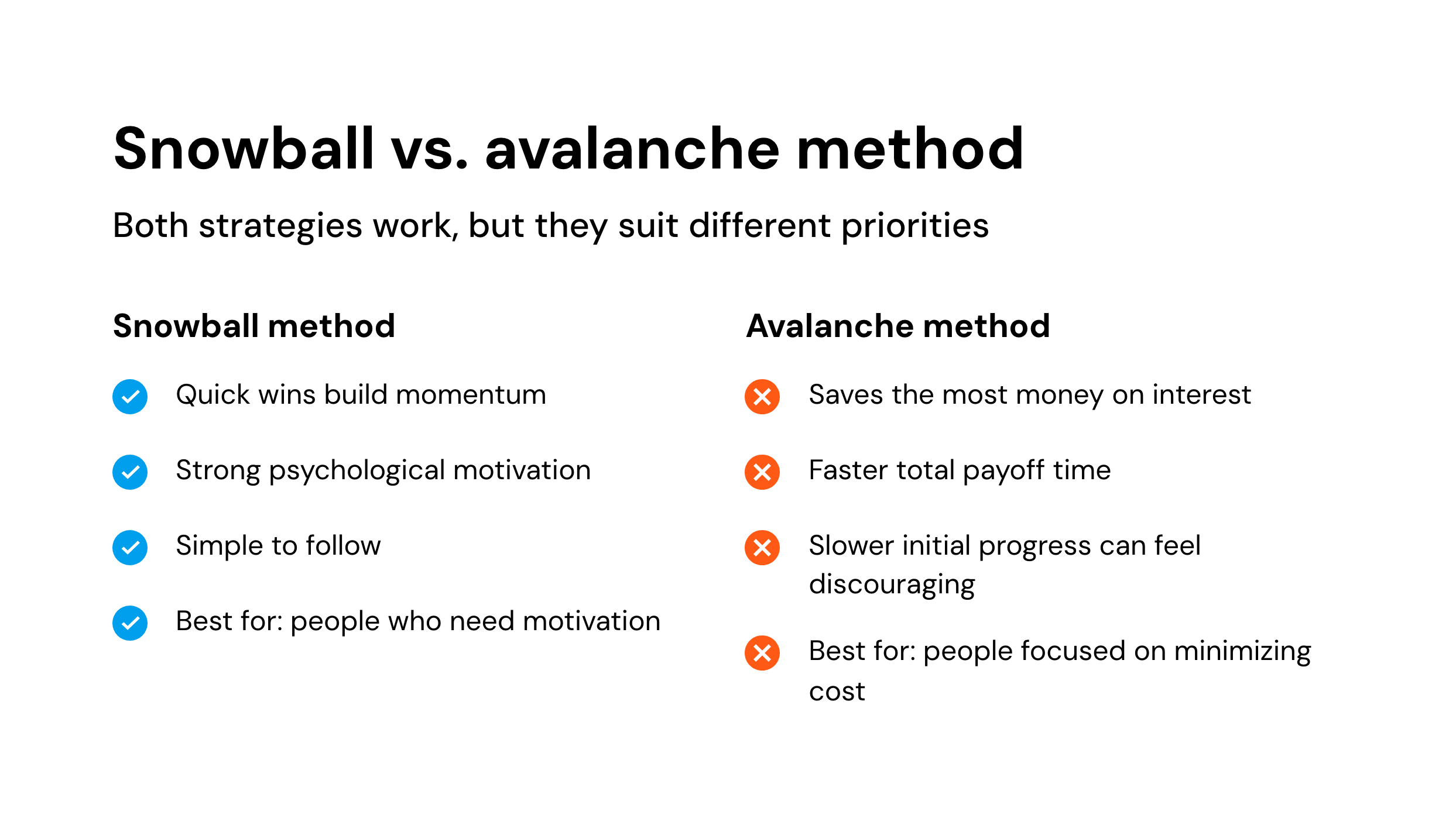
The debt snowball method has you focus on paying off the smallest debt first, ignoring any difference in interest rates. This way you can get quick wins and build confidence.
Repeat and Accelerate: As you keep going, you can increase the amount you put towards each debt. This momentum is the "snowball effect" that helps your debt repayment speed up.
What is the Debt Avalanche Method and How Does it Work?
The debt approach method can save you time and money by lowering your overall interest payments. It can feel daunting though, because you're focusing on larger balances that take more time to pay off.
Which Is Better, the Debt Snowball Method or the Debt Avalanche Method?
Both strategies are great for tackling debt, but it depends on your personal finance goals and how you handle money.
Handle debt, build your credit, and stay on top of your finances
Keeping your debt under control and eventually being debt-free is about more than just making your minimum monthly payments. It's also about building good habits that you can feel comfortable with.
Keep these overall strategies in mind:
- Set a Budget: Create a monthly budget to track your income and expenses.
- Start an Emergency Fund: Pad your savings account to cover unexpected expenses so you don't need to rely on credit for emergencies.
- Monitor Your Credit: Check your credit report often and monitor your credit score to see where you can improve. Build credit with positive habits over time.
Frequently Asked Questions
About the editor
Disclaimer: The information provided in this blog post is meant for informational purposes only and does not constitute financial advice.