A virtual card is a card number that lives in your card company’s app instead of your wallet. For online shopping, it’s usually the better choice. If a store’s checkout gets hacked, you delete that one number, and your plastic card keeps working.
A number that only exists on a screen can feel less real, or less protected, especially if you’re new to cards. It’s a stand-in for the account you already have, so your rate, your fraud rights, and your credit history stay the same.
How a virtual card compares with a physical card
When a virtual card is the better pick
Use a virtual number when you’d rather not hand over your main card number: a site you haven’t shopped before, a free trial that turns into a paid plan, or a subscription you may want to stop. At Capital One, for example, each virtual card gets its own number, security code, and expiration date. You can lock one to a single store’s website, and you can lock or delete it without affecting your account.
To set one up:
- Find the option. Log in to your card company’s app or website and look for virtual cards. If you don’t see them, call the number on the back of your card and ask whether your account offers them and whether they cost anything.
- Pick the type. Lock a number to one store for subscriptions. Use a single-use number for a one-time purchase, if your card company offers it.
- Check before you delete. If a refund is on its way or a subscription is tied to that number, ask your card company where the money goes once the number is gone.
When you’ll want the physical card
Plan on the plastic card for the register, the ATM, and anywhere that may ask to see the card you paid with, such as a hotel front desk or rental car counter.
A phone wallet gives you similar protection in a store. When you pay with Apple Pay, your card company creates a device-specific number, and the store never gets your actual card number. For other wallets, check the wallet’s help pages.
Your fraud protections stay the same
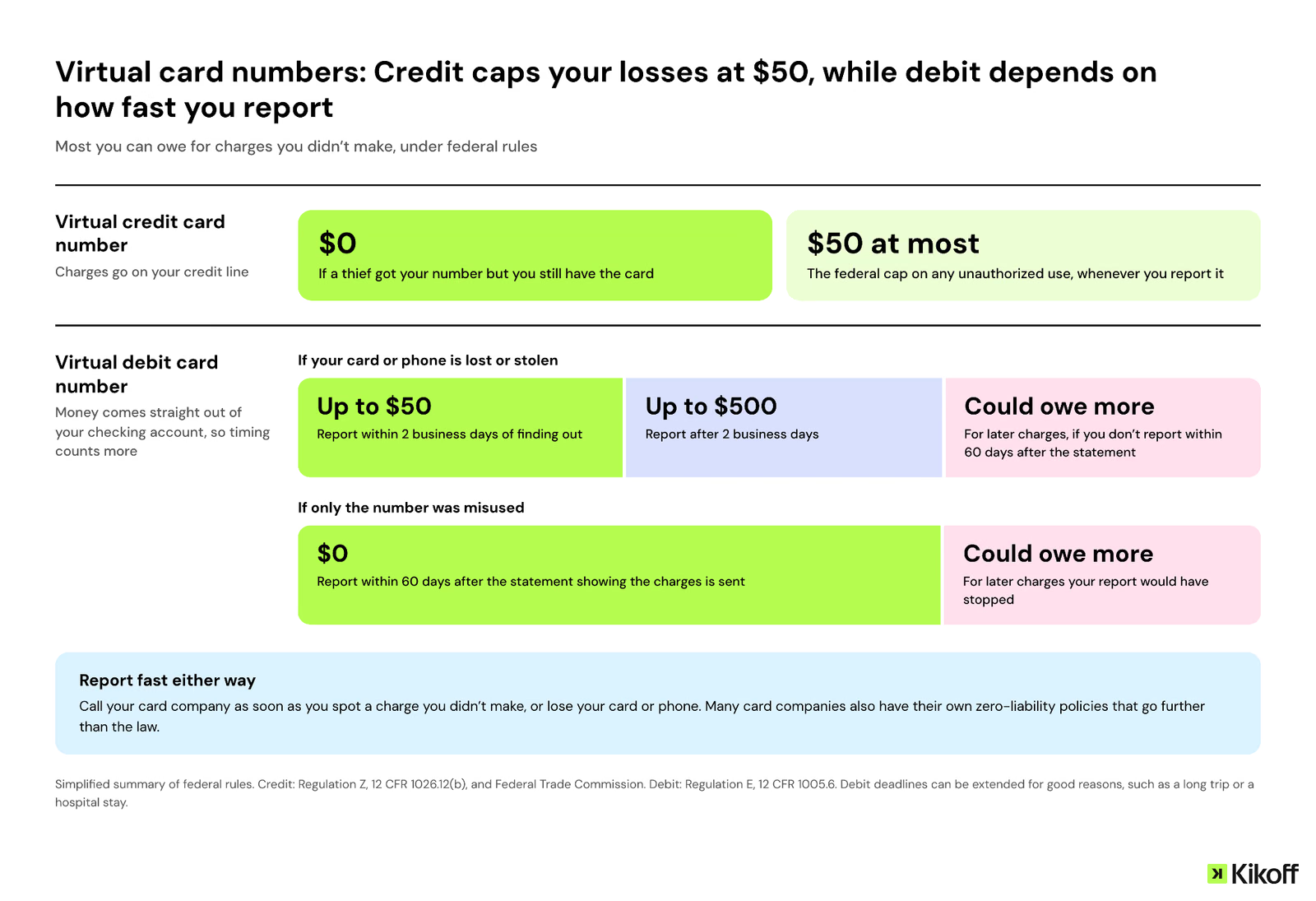
Federal rules follow the account. Under the official interpretation of Regulation Z, an account number you can use to buy things on a line of credit counts as a credit card. So the federal cap of $50 or less on unauthorized use covers a virtual credit card number, too. If a thief got your number but you still have the card, you aren’t responsible for charges you didn’t make.
Virtual debit numbers draw on your checking account, and timing counts more. If your card or phone is lost or stolen, report it within two business days of finding out, and your losses are generally capped at $50. After that, they can reach $500. If only the number was misused, report the charges within 60 days after the statement showing them is sent, or you could owe for later charges your report would have stopped.
Same account, same rules
A virtual number has no rate or fee schedule of its own. Purchases post to the linked account at that account’s APR. Card accounts also carry protections from the Credit CARD Act of 2009 and the Regulation Z rules that carry it out:
- Time to pay: Your card company has to mail or deliver your statement at least 21 days before your payment is due.
- Notice before changes: It has to give you notice at least 45 days before raising your rate or making another significant change.
- Over-limit fees: It can’t charge a fee for going over your limit unless you opt in.
Some virtual cards are prepaid: you load money first, then spend it. The provider has to show you its fees before you buy. Check that chart for monthly, reload, and inactivity fees before you load any money.
See a charge you didn’t make? Lock or delete the virtual number in your app, and report the charge to your card company or bank right away. Then get your free credit reports at AnnualCreditReport.com and look for accounts you didn’t open. If you find one, report it at IdentityTheft.gov for a free recovery plan.
Does a virtual card affect your credit?
Not by itself. Creating a virtual number isn’t applying for new credit, so no new account shows up on your credit reports. What you charge adds to the linked account’s balance, which counts toward how much of your available credit you’re using. Your on-time payments get reported the same way they would if you’d swiped the plastic.
Prepaid cards spend your own money, so that activity doesn’t show up on your credit reports.
Read more >> Secured Credit Cards vs. Unsecured Credit Cards
Bottom line
Use a virtual number for online shopping, and keep the physical card or a phone wallet for stores, ATMs, and check-ins. Both run on the same account, so the choice doesn’t change your credit. On-time payments reported on an account in your name do, and that takes an account to start. Kikoff’s Credit Account reports your on-time payments to all three credit bureaus, with no credit check to sign up. Plans start at $5 a month.
Frequently Asked Questions
Article Sources
Disclaimer: The information provided in this blog post is meant for informational purposes only and does not constitute financial advice.