


.jpg)




Whether you can open a closed card comes down to two things: who closed it, and how long ago. Accounts you recently closed yourself with no missed payments give you the best shot at reinstatement. Accounts the issuer closed for missed payments, a charge-off, or suspected fraud generally stay closed. Either way, the card stays on your credit report for up to 10 years and keeps counting toward your credit history the whole time. The loss that shows up right away is your available credit, not your history.
When can you reopen a closed credit card account?
Issuers sometimes allow it, and your odds are higher if you closed the account yourself and did it recently.
| Circumstance | Can the account be reopened? |
|---|---|
| The account was closed due to inactivity | Usually, yes, if you contact the issuer as soon as possible |
| You closed the account yourself | Usually, yes, if you do so promptly |
| The account was closed because you missed payments or went into default | Generally, no |
| The issuer charged off the account | No |
| Your credit score dropped or you otherwise became too risky to lend to | Usually, no |
| Your credit card was closed because you filed for bankruptcy | No |
| More than a year has passed since the account closed | Usually, no |
If the issuer closed the account
You have a real shot if the card was closed for either of these:
- You hadn't used it in a while. You didn't do anything wrong, the issuer just wasn't earning anything on a card that sat in a drawer.
- The issuer stopped offering that card. You'll usually end up with a different card rather than the old one back.
It's unlikely if the card was closed for any of these:
- Late payments, or going over the limit more than once
- Something on your credit report that made the issuer see you as a bigger risk
- A charge-off — the issuer gave up on collecting the balance and wrote it off as a loss, usually after about six months of missed payments
- Bankruptcy
If you closed the account yourself
Your odds are decent, and they depend almost entirely on timing. Some issuers reopen a voluntary closure on request. Others have a flat policy against it and will tell you to apply for a new card instead. You won't know which kind you have until you call.
Either way, call and ask
Most issuers that reinstate at all expect the request within about 30 days of closure. Policies vary and aren't published, so the phone is the only reliable source. Call the number on the back of the old card or your latest statement and ask specifically whether they can reinstate the original account, or whether you'd need to submit a new application.
Read more >> Does Locking Your Credit Card Affect Your Credit Score?
How to ask your issuer to reopen an account
Asking your issuer to reopen a card comes down to two general steps.
1. Find out why the account was closed
If you aren’t sure why the account was closed, check your email or your mail for a notice from the issuer. If you still aren’t sure, call the number on the back of your card or on your statement to ask.
2. Gather necessary information
Before you call your credit card issuer to ask about reopening your account, gather:f
- Your name, address, and Social Security number
- The credit card number of the closed account
- Your income and other key financial information, like your monthly rent or mortgage payment
- Why the account was closed
The issuer can turn your old account back on, or it can tell you to apply for a new card. If it's a new card, the issuer checks your credit, which requires a hard inquiry. It costs a few points and fades within about a year. The bigger difference is age: The old account keeps the years it already has, and a new one starts over.
Read more >> How Often Do Credit Reports Update?
How a closed credit card affects your credit score
Closing a credit card won’t cause nearly as much credit damage as a late payment or a charge-off. However, there are a couple of ways that closing an account could harm your credit.
Credit utilization
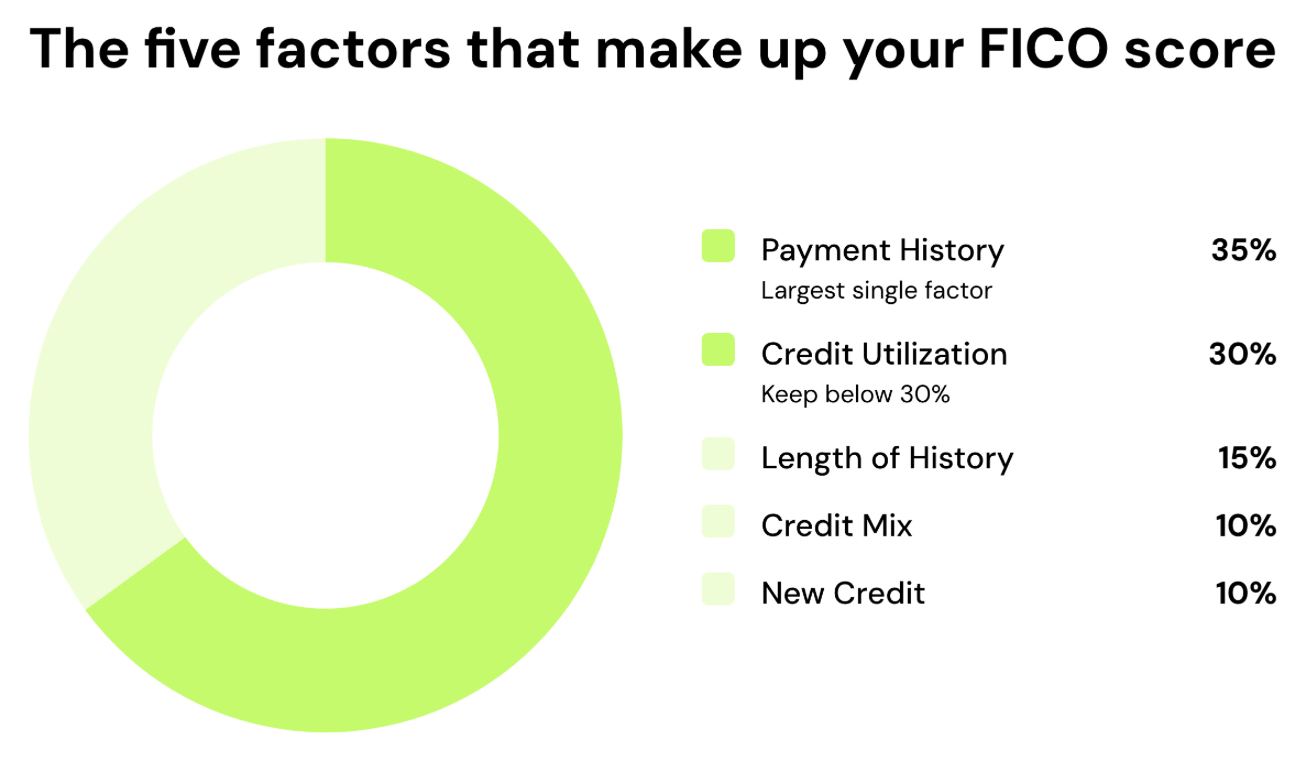
Your credit utilization is part of the amounts owed category that makes up 30% of your FICO Score, second only to payment history.
When your account is closed, your available credit decreases, which can increase your credit utilization.
Say you have three cards:
| Card | Credit line | Balance |
|---|---|---|
| The forgotten one | $2,000 | $0 |
| The everyday card | $1,000 | $500 |
| The emergency backup | $500 | $200 |
That's $3,500 in available credit and $700 owed, which means you're using 20% of it.
Now your issuer closes Card 1 for inactivity. You still owe the same $700, but you only have $1,500 in credit behind it. You're now using about 47%.
Length of credit history
Closing an account doesn't erase it. A closed account in good standing stays on your credit report for up to 10 years, and it keeps counting toward your length of credit history the entire time. Your average account age drops years later, when the account finally falls off.
The exception is reopening by reapplication. If the issuer won't reinstate the old account and makes you apply for a new card instead, you get a new account number and a new open date, and that account's age starts at zero.
Read more >> Impact of Credit History Length on Credit Scores
Bottom line
Whether a closed card can be reopened is the issuer's call, and the window is short. If you closed it yourself within the last month, call the number on the back of the old card or your latest statement and ask. If the answer is no, the account itself isn't the loss it looks like. It stays on your report for up to 10 years and keeps counting toward your credit history.
What you lose immediately is the available credit, and that number resets every month. But payment history accumulates. A Kikoff Credit Account is a line of credit that reports to Equifax, Experian, and TransUnion each month you pay, so your record grows whether or not your old issuer says yes. Plans start at $5 a month, with no credit check to sign up.
Frequently Asked Questions
Disclaimer: The information provided in this blog post is meant for informational purposes only and does not constitute financial advice.