







You can have a 401(k) and an individual retirement account (IRA) at the same time. You can even contribute to both in the same year, which can give you more room to save for retirement.
The catch is taxes: If you’re covered by a retirement plan at work, your income can limit the deduction for traditional IRA contributions. And your income and filing status decide whether you can contribute directly to a Roth IRA.
Can you have a 401(k) and an IRA at the same time?
Yes. No rule prevents you from having a 401(k) through your employer while also maintaining and contributing to an IRA.
The contribution limits are separate. For 2026, the employee contribution limit for a 401(k) is $24,500. The IRA contribution limit is $7,500, or $8,600 if you’re age 50 or older.
That means someone younger than 50 could potentially contribute $32,000 between a 401(k) and an IRA in 2026. You can’t put more into an IRA than you earned from work that year, so if you earned $5,000, your IRA limit is $5,000.
Note that the $7,500 IRA limit applies to your combined contributions to traditional and Roth IRAs. You don’t get a separate $7,500 limit for each type.
Read more >> How to Save for Retirement
Types of IRAs you can pair with a 401(k)
You can generally pair either a traditional IRA or a Roth IRA with your workplace 401(k). The main differences are about when you receive potential tax benefits.
Traditional IRA
A traditional IRA allows you to make contributions that may be tax-deductible. Investments grow tax-deferred, and withdrawals are generally taxable in retirement.
You can contribute to a traditional IRA even if you have a 401(k). However, participating in a retirement plan at work can affect whether you’re allowed to deduct your contribution.
Roth IRA
Roth IRA contributions are made with after-tax money, so you don’t receive a tax deduction for contributing. However, qualified withdrawals in retirement are tax-free.
Having a 401(k) doesn’t prevent you from contributing to a Roth IRA. Instead, your eligibility is based largely on your modified adjusted gross income (MAGI) and tax filing status.
Read more >> Financial Checklist When Starting a New Job
Income limits and deduction rules
There’s no income limit on contributing to a traditional IRA. Income only affects whether you can deduct it. These ranges adjust for inflation, so check the current year’s figures before you contribute.
Traditional IRA deduction limits when you have a 401(k)
If you’re covered by a retirement plan at work, your deduction shrinks gradually across an income range and disappears at the highest part of it. You count as covered if money went into your plan account for the year.
For 2026, the deduction phases out at a MAGI of $81,000 to $91,000 for single filers and heads of household covered by a workplace plan. For married couples filing jointly when the spouse making the IRA contribution is covered at work, the range is $129,000 to $149,000.
If you aren’t covered by a workplace plan but your spouse is, the 2026 phaseout range for married couples filing jointly is $242,000 to $252,000.
You can still contribute above that range. You just might not be able to deduct it.
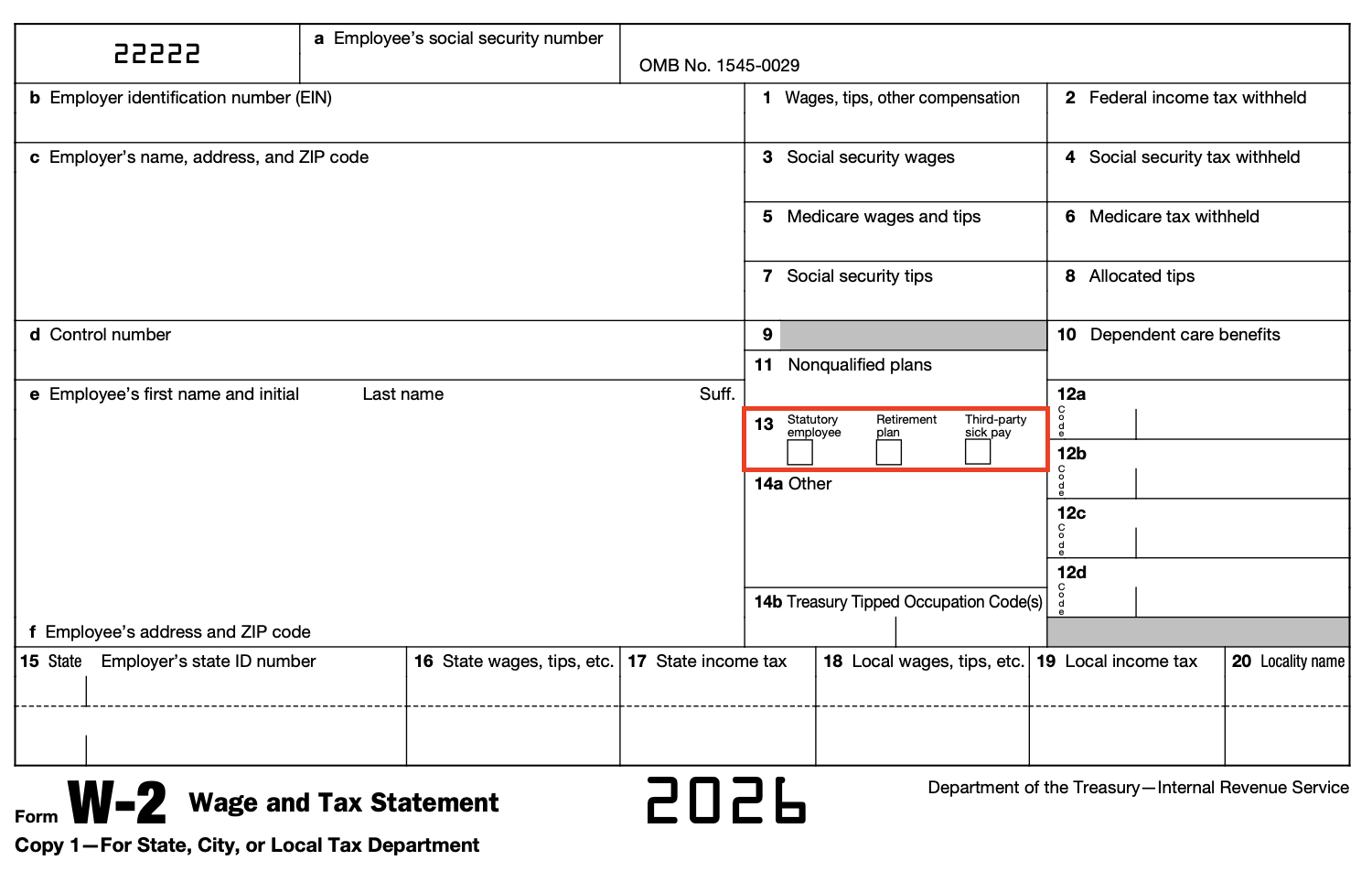
A checkbox can decide your deduction. If neither you nor your spouse is covered by a workplace retirement plan, your income doesn’t limit the deduction at all. Employer contributions count toward coverage, so check Box 13 on your W-2. If the “Retirement plan” box is checked, you’re covered. And if one spouse is covered and the other isn’t, the uncovered spouse gets a higher phaseout range.
Roth IRA income limits
For 2026, the Roth IRA contribution phaseout is $153,000 to $168,000 for single filers and heads of household. For married couples filing jointly, it’s $242,000 to $252,000.
Inside the range, your allowed Roth contribution decreases. At the high end, you can’t contribute directly to a Roth IRA that year.
Inside a phaseout range? Get help with the math. Partial deductions and reduced Roth limits require an IRS worksheet to calculate.
Three ways to get it right:
• The IRS’s Interactive Tax Assistant will tell you whether your traditional IRA contribution is deductible.
• The IRS’s Volunteer Income Tax Assistance (VITA) prepares returns free during tax season for filers under an income limit.
• A CPA or enrolled agent, if you’d rather hire someone. Check credentials first in the IRS’s preparer directory.
Why you might want both a 401(k) and an IRA
Using both accounts can give you more flexibility when planning for retirement.
A 401(k) can be especially useful if your employer offers matching contributions. It also has a much higher annual contribution limit than an IRA.
An IRA can give you more control over where you hold your money and how you invest it, potentially offering investment choices not available in your 401(k).
Using traditional and Roth accounts can also provide tax diversification. You might receive tax benefits today from pretax 401(k) or deductible traditional IRA contributions while building a pool of potentially tax-free retirement income in a Roth IRA.
Read more >> How to Rebalance Your Investment Portfolio
How to decide which accounts to prioritize
You don’t need to max out every retirement account. Start with what fits your budget and financial goals.
If your employer offers a 401(k) match, contribute enough to get the full match first. After that, shift additional contributions to an IRA if you want different investment options or Roth tax treatment.
Later, you can increase your 401(k) contribution if you have more money available for retirement.
Also consider your other financial priorities. Building an emergency fund and paying down high-interest debt may deserve room in your budget alongside retirement contributions.
Bottom line
You can have both a 401(k) and an IRA to put more money toward retirement, and their limits don’t overlap. Your income and workplace coverage decide how you’re taxed, not whether you’re allowed to save.
One thing neither account does is show up on your credit report. Your report reflects how you’ve handled borrowed money, not how much you’ve saved. Kikoff’s Credit Account reports your on-time payments to Equifax, Experian, and TransUnion, with no credit check to sign up. Plans start at $5 a month.
Frequently Asked Questions
Article Sources
Disclaimer: The information provided in this blog post is meant for informational purposes only and does not constitute financial advice.