




Portfolio rebalancing is the process of adjusting your investments to bring them back toward your target asset allocation. You can rebalance by buying and selling investments, but you may also use new contributions, dividends, or distributions to adjust without selling.
What is portfolio rebalancing?
Portfolio rebalancing means returning your investments to your desired asset allocation, or the percentage of your portfolio invested in different asset classes. Asset classes are broad types of investments that include stocks, bonds, and cash. Alternative assets can include real estate, precious metals, collectibles, cryptocurrency, and other potentially valuable investments.
The U.S. Securities and Exchange Commission (SEC) notes that investments can grow at different rates over time, causing your portfolio to move out of alignment with your investment goals. Rebalancing brings it back toward your intended mix.
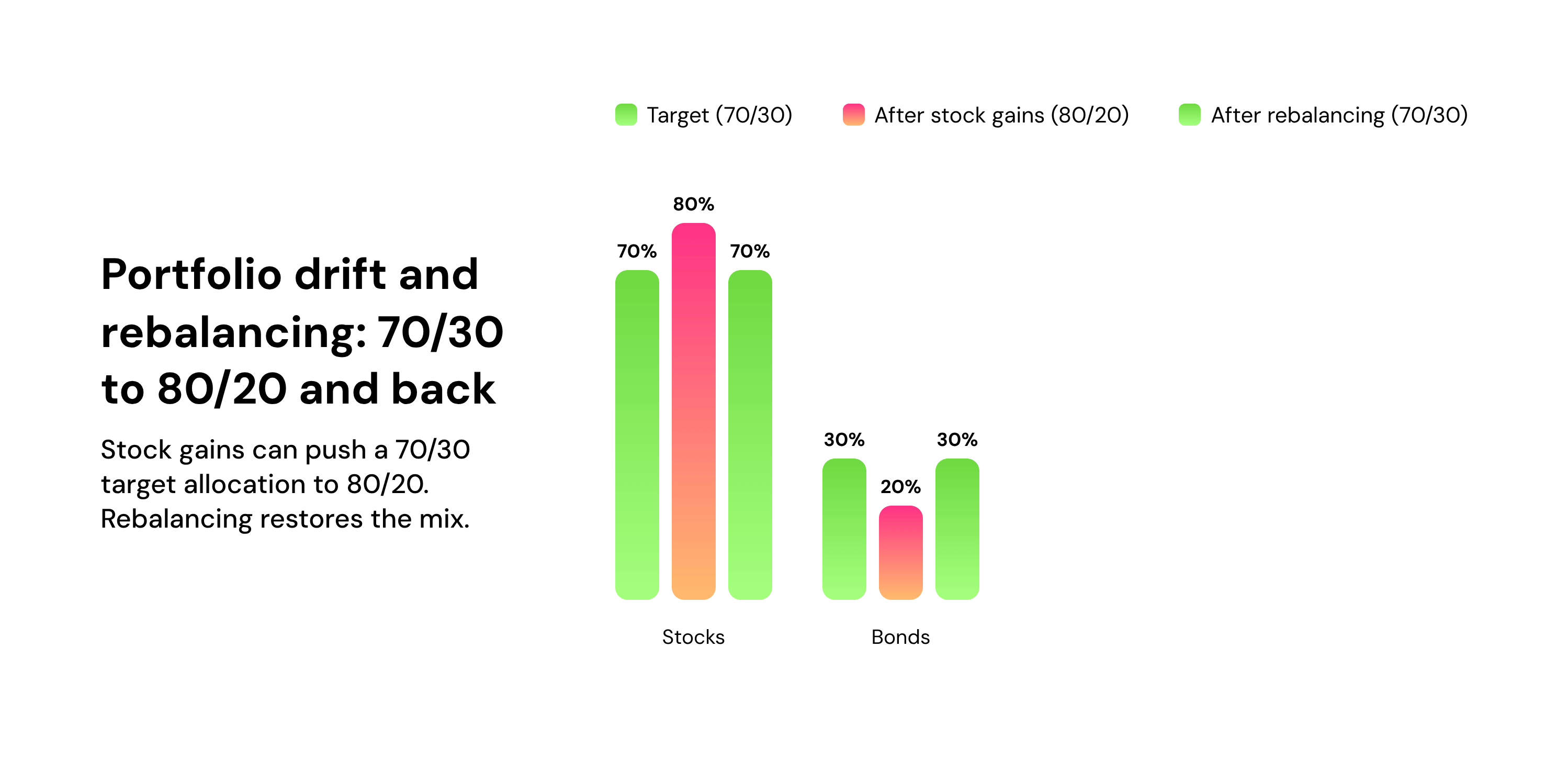
Say you create a portfolio consisting of 70% stocks and 30% bonds. After a strong stock market performance, your portfolio allocation could shift to 80% stocks and 20% bonds. Rebalancing could involve selling some stocks and buying bonds until you're closer to your 70/30 target.
Why rebalancing matters
Your asset allocation helps determine the level of risk you take. A portfolio heavily invested in stocks generally has greater growth potential, but it also tends to experience larger fluctuations than one with more bonds and cash.
When market performance changes your allocation, it can change how much risk you’re taking on. Rebalancing helps you maintain a portfolio consistent with your time horizon (or how long until you need the money), goals, and risk tolerance.
It can also build discipline. Moving money out of an asset class that's doing well and into one that isn't doesn't come naturally, which is the point. The SEC says rebalancing “forces you to buy low and sell high.”
Read more >> How to Save for Retirement
Overweight and underweight: What do they mean?
Both describe drift from your target, not quality. Say you set a target of 70% stocks and 30% bonds. Stocks have a strong year, and now they're 80% of your portfolio. Here, your stocks are overweight, meaning more of your money is in them than you planned, while your bonds are underweight at 20%.
Nothing was bought or sold to make that happen. The mix shifted on its own because one side grew faster.
How often should you rebalance your portfolio?
No single rebalancing schedule works for everyone. The SEC describes two approaches. Some financial experts advise rebalancing at regular intervals, such as every six or 12 months. Others recommend rebalancing when your holdings of an asset class move more than a percentage you set in advance.
Calendar-based rebalancing
With calendar-based rebalancing, you review your portfolio according to a schedule, such as every six months or once a year.
This approach can be relatively simple because you don't need to watch your investments constantly. Pick a date, compare your current portfolio to your target, and see if you need to adjust. If your portfolio remains close to your target, no changes are needed.
Threshold-based rebalancing
Threshold-based rebalancing uses a limit you set in advance, rather than dates. You rebalance when an asset class moves far enough away from your target to trigger action.
Suppose your target is 60% stocks and you establish a five-percentage-point threshold. You might consider rebalancing if stocks rise above 65% or fall below 55%.
This approach focuses on how far your portfolio has drifted rather than how much time has passed.
Step by step: How to rebalance your investment portfolio
You don't need to overhaul your portfolio to rebalance it. The process generally involves comparing where you are with where you want to be and making targeted adjustments.
Review your target asset allocation
Start with the allocation you've chosen based on your financial goals, investing timeline, and risk tolerance.
If your circumstances have changed substantially, consider whether the target itself still makes sense. Getting closer to retirement, changing financial goals, or becoming less comfortable with investment risk might justify changing your allocation rather than rebalancing to the old one.
Check your current allocation
Next, look at the current value of your investments and calculate what percentage each asset class represents.
For example:
In this example, you could reduce your stock allocation while increasing bonds and cash to move closer to your targets.
Decide what to buy and sell
One option is to sell part of an overweight asset and use the proceeds to purchase underweight investments. The SEC lists this as one of three ways to rebalance. Before selling, however, consider taxes and transaction costs.
Place your trades
Once you've determined the necessary adjustments, place the appropriate trades through your brokerage or retirement account.
You don't need to hit your percentages perfectly. The purpose is to keep your portfolio reasonably aligned with your investment strategy, not to make constant small trades every time markets move.
Ways to rebalance without selling
Selling isn't the only way to rebalance. In a taxable brokerage account, not selling saves you one specific thing: the capital gain. The rest of the account's taxes work the same either way.
Direct new contributions to underweight assets
Instead of selling an investment that has grown beyond its target, direct new money toward investments that are underweight.
For example, if stocks have grown from 60% to 65% of your portfolio, you could direct upcoming contributions toward bonds until the allocation moves closer to your target.
Redirect dividends and distributions
If your investments generate dividends, interest, or other distributions, consider using that cash to purchase underweight investments instead of automatically reinvesting it in the investment that produced it.
Over time, this can help move your allocation toward its target without requiring you to sell appreciated assets.
Tax considerations when rebalancing
Selling investments for more than what you paid for them in a taxable brokerage account generally creates a capital gain. The IRS classifies gains as short-term or long-term based on how long you held the investment, with investments held for more than one year generally treated as long-term.
Consider whether you can use contributions or distributions first, or prioritize trades inside tax-advantaged retirement accounts.
Traditional IRA earnings and gains generally aren't taxed while they remain in the account; taxation generally occurs when you withdraw from them. Similarly, earnings remaining inside a Roth IRA aren't taxed. Workplace plans like a 401(k) also generally defer taxes on contributions and earnings until you withdraw money from them, although Roth account rules differ.
Talk to a certified financial advisor or tax professional if you're unsure how rebalancing could affect your taxes. Many 401(k) plans include access to advice at no extra cost, so it’s worth checking your plan before you pay for it. If you do hire someone, Investor.gov's free search tool shows whether they're registered.
Bottom line
Portfolio rebalancing is less about reacting to market movements and more about maintaining your long-term investment strategy. Periodically compare your current investments with your target allocation and decide whether you need to make adjustments.
You can sell overweight assets, purchase underweight ones, or use new contributions and investment income to gradually restore your target mix. Before trading, consider taxes, fees, and whether your financial goals or risk tolerance have changed.
Rebalancing is one of the few pieces of financial upkeep nobody else records. Your brokerage sees it, but your credit report doesn't, because a credit file only shows what a lender chooses to report to the bureaus. If that side of your file is thin, Kikoff reports a credit account to all three bureaus with no credit check and plans.
Editorial disclaimer: Information on this page is for educational purposes and not investment advice or a recommendation to buy any specific asset or adopt any particular investment strategy. Research products and strategies independently before making any investment decision.
Frequently Asked Questions
Article Sources
Disclaimer: The information provided in this blog post is meant for informational purposes only and does not constitute financial advice.