







You can start building credit in college without a credit card. Credit building apps report small, regular payments to the credit bureaus, and some cost little or nothing while you’re in school.
Starting now matters because the biggest difference between age groups is time. Gen Z’s average FICO Score is 678, compared with 747 for baby boomers, according to a Kikoff analysis of Experian data, and the length of your credit history explains most of that gap. Every month you start earlier is a month of history working for you when you apply for an apartment or a car loan after graduation.
Best credit building apps for college students
On a student budget, the right app is one you can afford every month and qualify for now. We ranked these options on:
- What you need to apply — the ID number, bank account, and residency each app asks for
- No hard credit check — whether applying puts a hard inquiry on a brand-new file
- Bureau coverage — whether your payments reach all three bureaus (Equifax, Experian, and TransUnion)
- Cost — what you’ll pay each month, and whether any of it comes back to you
What you’d pay in your first year. Kikoff Basic is $60 over 12 months. Grow Credit’s Build Free plan and Chime Card have no fees to build credit. Self’s smallest Credit Builder Account plan takes $300 in payments in the first year, most of which you get back when the 24-month term ends.
1. Kikoff
Kikoff is our top pick for most students because it’s low-cost, there’s no hard credit check to sign up, and it reports to all three bureaus. It also works for international students, since you can verify your identity with an SSN or ITIN (though eligibility requirements apply).
The Kikoff Credit Account is a revolving line of credit used only for purchases in the Kikoff Store. Unlike a credit card, you can’t use it to buy textbooks or groceries, which can be a plus in college: There’s no balance to run up on late-night takeout. Because it’s revolving credit, it adds to your payment history, your credit utilization, and the age of your accounts at the same time.
Every plan also includes weekly credit monitoring at one bureau, so you can watch your first accounts show up, plus Fynn, an AI financial coach for questions like when to apply for your first student card. (Fynn isn’t a licensed financial advisor, so treat its answers as a starting point.) AI Credit Disputes is free for all Kikoff users too.
Rent reporting is included in every plan and goes to Equifax and TransUnion, which helps once you move off campus and sign your own lease.
Build credit starting at $5 a month for a $750 revolving line of credit, with a 45-day money-back guarantee if you’re not satisfied.
2. Grow Credit
Grow Credit turns subscriptions you already pay for, like Spotify or Netflix, into payment history. You pay them with a virtual Grow Mastercard, Grow debits your bank account each month, and it reports the payments to all three bureaus.
Its Build plan has a $17 monthly spending limit and reports a $204 credit line to Equifax, Experian, and TransUnion, according to Grow’s App Store listing, and applying doesn’t trigger a hard credit pull. After six months of on-time payments in a row, you can upgrade to a Grow membership for $4.99 a month, which raises your spending limit and credit line, and lets you put eligible cell phone bills on the card.
Grow Credit asks for an SSN and permanent U.S. residency, so it won’t work for most international students.
3. Chime Card (formerly Chime Credit Builder)
If you already bank with Chime, its secured card is a no-cost way to add a credit account. The Chime Card has no annual fee, no interest, and no credit check to apply, but you’ll need a Chime Checking Account.
Unlike the other apps on our list, you can use it for groceries, gas, and other everyday purchases anywhere Visa credit cards are accepted. There’s no minimum security deposit: The money you add to your Chime account is what you can spend, and Chime can use it to pay your balance automatically. Chime reports to all three bureaus, but it doesn’t report a utilization rate, since the card has no preset limit.
Chime asks for a valid Social Security number to open the checking account, which is held at one of Chime’s partner banks, either The Bancorp Bank or Stride Bank. Direct deposit isn’t required to get the card, but it is for Chime’s cashback rewards.
4. Self Credit Builder Account
Self’s Credit Builder Account is a type of credit-builder loan. You make fixed monthly payments into a certificate of deposit (CD) held by one of Self’s partner banks, like Lead Bank or Sunrise Banks, and get the money back when the term ends, minus interest and fees. It’s the only option on our list that builds savings at the same time.
The smallest Credit Builder Account plan charges $25 a month for 24 months at a 15.92% annual percentage rate (APR). You’d pay $600 in total and get $511 back, so building credit this way costs $89 in interest. Self also says a variable admin fee of $1 to $5 may apply, so confirm current terms before you sign up.
Opening a Credit Builder Account doesn’t require a hard credit pull, and Self reports your payments to all three bureaus. To open one, you’ll need an SSN and U.S. citizenship or permanent residency.
Self also sells a separate Rent+Bills subscription for $6.95 a month that covers your rent plus up to five cell phone and utility payments, which it reports to TransUnion. For a one-time $49.95 fee, Self’s Lookback can add up to two years of past rent, phone, and utility payments.
Can you commit to the payment? A missed payment on a credit-builder loan can hurt the credit you’re trying to build. If $25 a month would be hard during a semester with fewer work hours, a lower-cost option may fit better for now.
Runner-up: Kovo
Kovo reports $10 monthly payments for 24 months, $240 in total, to Equifax, Experian, TransUnion, and Innovis, a smaller fourth bureau. There’s no credit check to apply.
It didn’t make the main list for three reasons:
- It’s a longer, pricier commitment. Kovo runs two years at $10 a month. Kikoff Basic runs 12 months at $5 a month.
- You don’t get the money back. Unlike Self’s Credit Builder Account, nothing comes back to you when the term ends.
- We couldn’t confirm what ID it accepts. Kovo’s own pages don’t say clearly whether you need an SSN, which is important to know if you’re an international student.
If you have an SSN and a two-year payment fits your budget, Kovo is still a reasonable way to add payment history.
Why these picks? We ranked apps that report to all three bureaus and that a student can open without a credit history. Every eligibility and pricing detail comes from each company’s own pages or app store listings. Where a provider doesn’t publish something clearly, we tell you what to ask.
Student credit cards and the under-21 rule
A student credit card can be a good long-term account, but your age changes what it takes to get one. If you’re under 21, federal rules say a card issuer can’t open a credit card account for you unless you can show you’re able to make the payments on your own or you have a cosigner, guarantor, or joint applicant who’s at least 21.
In practice, that means income in your name, such as wages from a campus or part-time job. A parent’s income doesn’t count while you’re under 21. Once you turn 21, issuers can consider income you have a reasonable expectation of access to, such as a partner’s or household income.
Not every issuer accepts cosigners, so before you apply, ask whether you can use a cosigner and whether the account will report to both of your credit files. A cosigner is responsible for any debt you can’t pay, so it’s a big ask for a parent.
If you do get a student card, use it lightly and keep it open after graduation. The length of your credit history builds over time, and your first card could end up being your oldest account.
Read more >> Impact of Credit History Length on Credit Scores
Becoming an authorized user on a parent’s card
If a parent or other family member has a good payment record, they can add you to one of their credit cards as an authorized user. You’ll get your own card, and the account’s history can start showing on your credit report, even if you never use it.
The tradeoff is that their habits become part of your file. Before you say yes, ask how they pay and how much of their limit they usually use, since a late payment or a high balance on their account can show up on your report. Your activity also affects their credit file, so agree on how you’ll use the card before it’s in your wallet.
Ask the card issuer if they report authorized users to all three credit bureaus. If the answer is no, the account may not add much to your file.
Read more >> How to Build Credit in College
If you’re an international student
You can build U.S. credit as an international student, but you’ll likely start from the ground up. Credit history from other countries typically doesn’t transfer to the U.S., according to TransUnion.
The bigger hurdle is the ID number. Most of the apps on our list ask for a Social Security number, and you may not have one unless you’re authorized to work in the U.S. Some apps accept Individual Taxpayer Identification Number (ITIN) instead. Kikoff does, while Grow Credit, Chime, and Self ask for an SSN.
An ITIN doesn’t give you immigration status or authorize work. It's meant for federal taxes, not for getting credit. If you’re not sure which number you qualify for, start with your school’s international student office before you apply for either.
Read more >> Best credit building apps for immigrants in the U.S.
Other ways to build credit in college
An app or card isn’t the only way to add history. Some of the bills you start paying in college can count too.
Report your rent. Your landlord probably doesn’t send your payments to the credit bureaus. Once you rent an apartment, a rent reporting service can turn your biggest monthly bill into payment history.
Report your phone and utility bills. If your phone plan or utilities are in your name, Kikoff’s Bill Reporting sends on-time phone, electricity, natural gas, and water payments to TransUnion, and it doesn’t report late payments. It’s included in Kikoff Premium and Ultimate, with plans starting at $20 a month.
Read more >> How to Build Credit From Scratch
Open a checking account first. Every app above needs a bank account or debit card for payments, and a checking account makes it easier to pay on time. If you have a campus job, setting up direct deposit there also gives you a record of your own income, which matters for a student credit card if you’re under 21.
Mistakes that set new credit files back
A thin file has less history to absorb a mistake, so the early months count more than usual. Each mistake affects a different part of your FICO Score, and some weigh more than others.
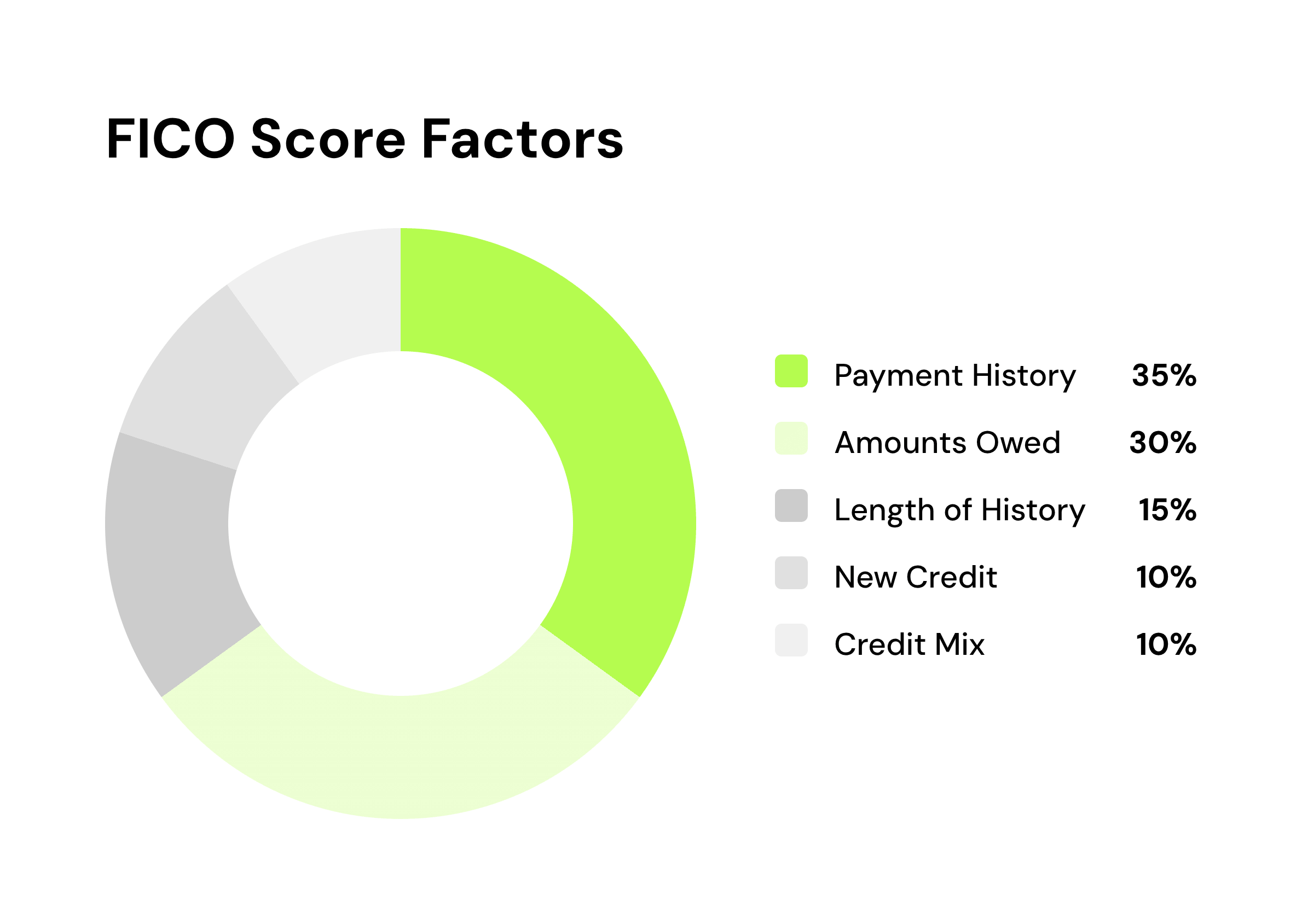
- Applying for several cards at once. Each application can add a hard inquiry, and a denial leaves the inquiry without an account. Check what an issuer requires before you apply.
- Letting your first account sit unused. Some companies close accounts that go unused. Keep one small, regular charge on it and pay it on time.
- Missing a payment during a busy week. Finals, move-out, and travel are easy times to forget a due date. Set up autopay for at least the minimum so a hectic month doesn’t turn into a late payment.
- Carrying a balance to cover the gap until payday. A student card’s interest can add up fast. If you can’t pay the full statement balance, pay what you can and stop adding new charges until it’s cleared.
- Closing your first card after graduation. It may be your oldest account, and keeping it open protects the length of your credit history.
- Forgetting to update your address. Moving between dorms, apartments, and home is common in college. Update your address with every lender so bills don’t go to an old mailbox.
Red flags on and off campus. Be wary of anyone who promises a quick credit fix, charges upfront fees to build or repair credit, or sells a "CPN" as a replacement for your Social Security number. A CPN isn’t issued by the government, and using one to apply for credit may be considered identity theft and fraud. To dispute errors on your report, go to the bureaus directly at no cost. Kikoff’s AI Credit Disputes tool can also help you write dispute letters, free for all Kikoff users.
Bottom line
If you’re under 21 without your own income, a student credit card may have to wait. Your credit history doesn’t. An authorized user spot, a credit building app, or reported rent can all start adding to your file now.
The months you build in school are months you won’t need to wait through later, when you’re applying for your first apartment or car loan. Kikoff’s Credit Account reports your on-time payments to Equifax, Experian, and TransUnion, with no credit check to sign up. Plans start at $5 a month.
Methodology: How we chose these apps
We started with credit building apps students are most likely to come across, then kept the ones that report to all three bureaus and that you can open without an existing credit history.
For each app, we checked what you need to apply, whether applying means a hard credit check, which bureaus receive your payments, and what it costs. Every eligibility and pricing detail comes from the provider's own help, pricing, or app store pages, checked in October 2026. Where a provider doesn't publish something clearly, we say so or tell you what to ask.
Kikoff publishes this site, and Kikoff products appear in this article. We include them on the same terms as everything else: the same criteria, the same published sources, and the same limitations stated plainly. Where a competitor does something Kikoff doesn't, such as building savings with a credit-builder loan, that's in here too.
Prices and eligibility rules can change. Check each app's current terms before you apply.
Frequently Asked Questions
Article Sources
Disclaimer: The information provided in this blog post is meant for informational purposes only and does not constitute financial advice.