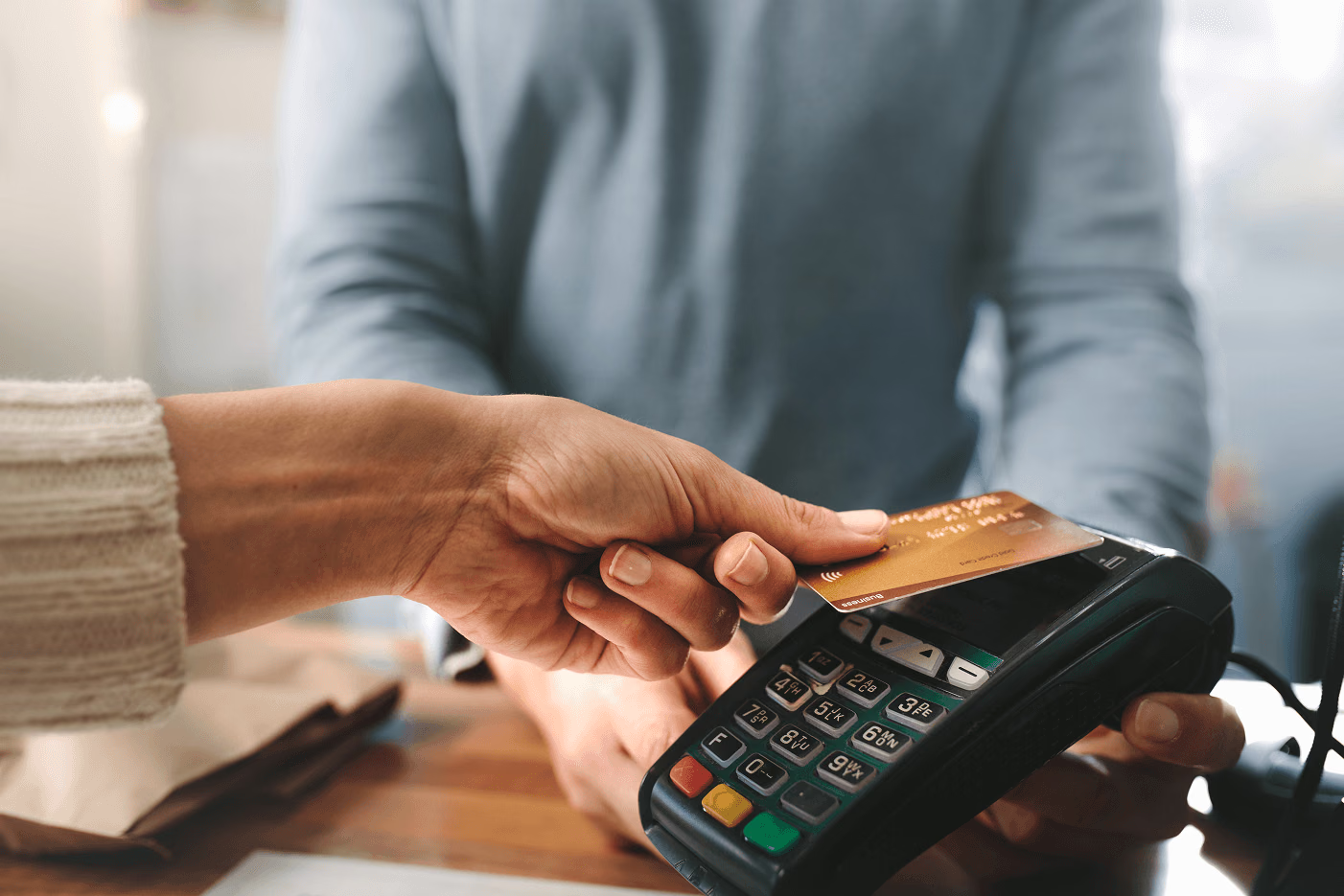
Zero liability fraud protection is a promise from your card network, such as Visa or Mastercard, that you won’t have to pay for charges you didn’t make. If someone steals your card or your card number and goes shopping, those charges come off your account once you report them.
If you just spotted a charge you don’t recognize, you’re probably wondering whether you’re stuck with it. On most personal credit and debit cards, you won’t be, as long as you report it quickly. Speed counts most with debit, because that money leaves your checking account right away.
How zero liability protection works
Zero liability is a company policy layered on top of federal law. The law sets the most you can owe for fraud, and the card networks’ policies bring that down to $0 in most cases. The coverage comes with the card, so there’s nothing to sign up for.
Visa’s policy says your bank has to replace the stolen money within five business days of hearing from you, once the charge has posted. That money is provisional, meaning the bank can reverse it. Visa lets the bank hold it back or take it back in some cases, such as late reporting or being very careless with your card.
Mastercard’s Zero Liability Protection also covers unauthorized charges, as long as you’ve taken reasonable care to protect your card from loss or theft.
American Express and Discover set their own fraud policies, so ask your card company whether you’d owe anything for a charge you didn’t make.
What federal law covers on its own
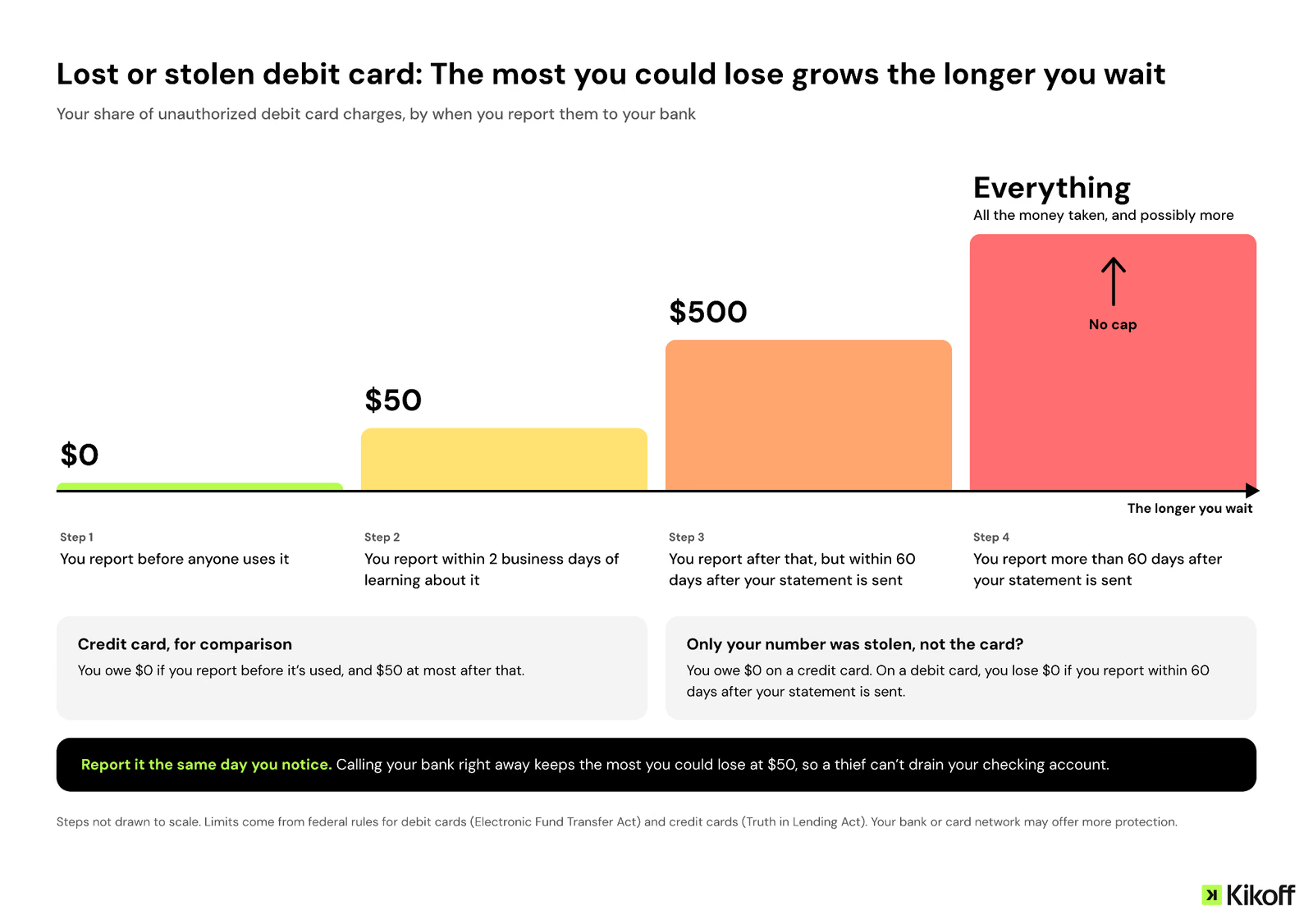
If your card isn’t covered, or your bank decides a claim doesn’t qualify, federal limits still apply. With a credit card, Regulation Z caps your liability for unauthorized use at $50. With a debit or ATM card, what you could lose depends on how fast you report, under Regulation E’s liability rules. And if only your card number was stolen, not the card itself, you aren’t responsible for charges you didn’t make, as long as you report debit card charges within 60 days after your statement is sent, according to the FTC.
Zero liability can bring these amounts down to $0, but Visa lets banks hold back replacement money when you report late.
What zero liability doesn’t cover
The promise covers charges someone made without your permission. These usually fall outside it:
- Payments you sent yourself. If a scammer talks you into paying them, your bank may treat it as authorized. Contact your bank right away anyway. If someone tricks you into sharing your login, a one-time code, or your debit card number and then moves the money themselves, the CFPB says that’s an unauthorized transfer.
- People you let use your card. Charges by an authorized user or someone you handed your card to usually aren’t treated as fraud.
- Some kinds of cards. Visa’s policy skips certain business and anonymous prepaid card transactions, and transactions Visa doesn’t process. Mastercard’s skips certain business cards and unregistered prepaid cards, such as gift cards. If you can register your prepaid card in your name, do it.
- New accounts in your name. Someone with your Social Security number can try to open credit as you. A card network’s policy doesn’t reach those accounts.
Red flags. Someone calls, texts, or emails saying they’re from your bank’s fraud team and asks for a one-time code or your PIN, or tells you to move money to a “safe” account. Hang up and call the number on the back of your card.
What to do if you spot fraud
Start by calling the number on the back of your card, or report the charge in the app, as soon as you notice it. Ask for the card to be locked or replaced with a new number.
Next, follow up in writing with your account number, when you noticed the problem, and when you first reported it. Keep a copy and notes from each call, including the date and who you spoke with, in case the bank questions your claim.
Then get your free credit reports from AnnualCreditReport.com, which you can do every week, and look for accounts or credit checks you don’t recognize. Checking your own reports doesn’t affect your credit.
If someone has used your identity beyond your card, report it to the FTC at IdentityTheft.gov or by calling 877-438-4338. You’ll get an Identity Theft Report and a recovery plan. From there, the CFPB suggests these free steps:
- Place a fraud alert. Contact one credit bureau, and it tells the other two. An initial alert lasts one year. An FTC Identity Theft Report gets you a seven-year extended alert.
- Freeze your credit. It’s free, but you contact Equifax, Experian, and TransUnion separately.
To correct an account you didn’t open, dispute it with both the credit bureau and the company that reported it. Kikoff’s AI Credit Disputes can help you dispute inaccurate items, such as accounts opened through identity theft, for free.
Bottom line
Zero liability fraud protection means you usually pay nothing for card charges you didn’t make, as long as you protect your card and report fraud fast. It covers the money taken from that card, not what it takes to recover if someone uses your information to open accounts somewhere else. Kikoff Ultimate includes $1M in ID theft insurance. Ultimate is $35 a month, billed over 12 months.
Frequently Asked Questions
Article Sources
Disclaimer: The information provided in this blog post is meant for informational purposes only and does not constitute financial advice.