
Water backup insurance is an add-on you buy with a homeowners, condo, or renters policy. It pays for damage when water or sewage comes up through your drains, toilets, or sump pump and into your home. A typical homeowners policy doesn’t cover that damage, and flood insurance usually doesn’t either. If a clogged sewer line or a dead sump pump floods your basement, you could be paying for the cleanup, the flooring, and everything that got soaked. The add-on costs extra and isn’t on your policy unless someone added it, so check before the next heavy storm.
What water backup coverage pays for
Water backup coverage, also called sewer backup coverage, is an endorsement, meaning a change that adds coverage to your policy. It covers water or sewage that backs up through your drains or overflows from your sump pump, the pump in a basement pit that pushes groundwater out.
It usually pays to clean up and repair your home and replace ruined belongings, up to the limit you pick. It usually won’t pay to replace the broken pump or failed pipe. The Maryland Insurance Administration notes that most of these policies don’t cover repairing or replacing the pipe itself.
Here’s how the three kinds of coverage usually line up. Your own policy’s wording is what counts.
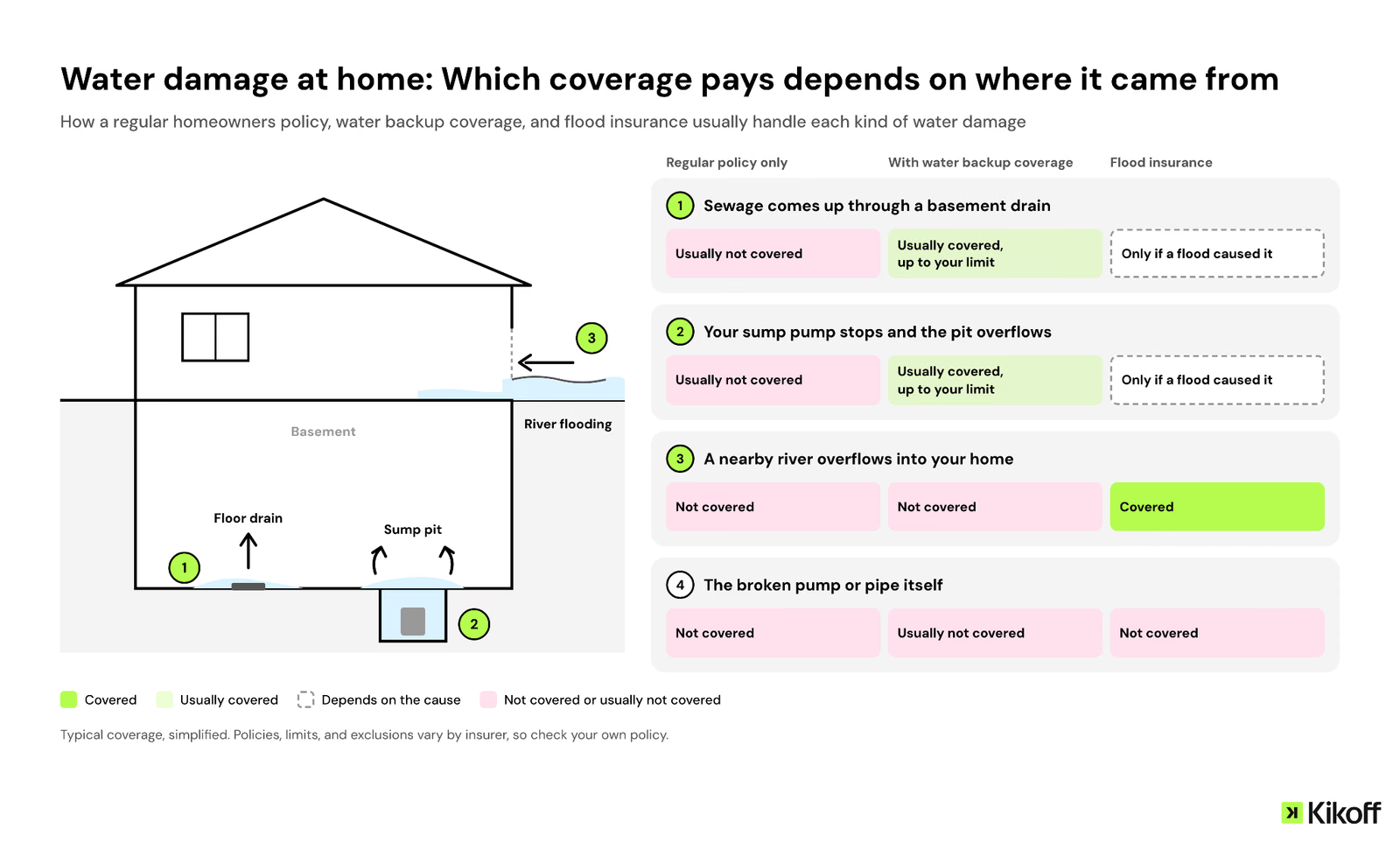
Why flood insurance doesn’t fill the gap
Flood insurance and water backup coverage pay for different things. Under the National Flood Insurance Program, a flood means water covering at least two acres of normally dry land or two or more properties, one of them yours. FEMA’s FloodSmart site says sewer backup is covered only when it directly results from flooding. A backup from clogged pipes isn’t.
Minnesota’s insurance regulator puts it plainly: for backups that a flood didn’t cause, neither flood insurance nor a typical homeowners policy covers sewer backups, so you’d need a separate endorsement. It also warns that some insurers exclude backup damage that happens at the same time as a flood. If you live where both can happen, ask how your policies handle a storm that causes both.
If you also want flood coverage, buy it well before storm season. New flood insurance usually takes effect 30 days after you buy it, with exceptions such as a policy bought when you take out a mortgage.
Your state and insurer set the terms
No national rule sets what water backup coverage includes. Each insurer writes its own, and each state regulates it a little differently. Maryland law requires insurance companies to offer you this coverage, and coverage there applies only when the backup isn’t caused by your own negligence. Other states don’t have that rule, so you may need to ask for it.
Before you add it, or before you assume you already have it, ask your insurer or agent:
- Is water backup on my policy now? Ask them to point to it on your declarations page, the summary of what you bought.
- What’s the limit? Ask for the price at two or three limits.
- Is there a separate deductible? That’s what you’d pay before the coverage starts paying.
- Does it cover drain backup and sump pump overflow? Some insurers word these separately.
- What would get a claim denied? Ask about maintenance or negligence conditions, and about backup during a flood.
If you rent, your landlord’s insurance usually covers the building, not your belongings. Ask whether your renters policy offers a water backup add-on.
If water backs up into your home. Call your insurer to report the damage. Then take reasonable steps to keep it from getting worse, such as stopping the water and moving dry belongings out of the way. Photograph everything before you throw anything out. Make a list of damaged items. If you can’t stay in your home, ask whether your policy pays for loss of use, meaning extra living costs while repairs happen.
What water backup coverage costs
No government source publishes a typical price, and the cost is built into your policy’s premium. It depends on the limit you choose, your deductible, where you live, and the insurer. The way to find your number is to ask for a quote at a few limits.
Your credit may play a part, too. In states that allow it, insurers can use a credit-based insurance score, a rating built from your credit report to predict how likely you are to file a claim. FICO estimates about 85% of homeowners insurers use these scores where state law allows, according to the National Association of Insurance Commissioners (NAIC). A few states, including California, Maryland, and Massachusetts, don’t allow insurers to use credit to price homeowners policies.
Bottom line
Water backup insurance pays for damage from water or sewage that comes up through your drains or sump pump, which regular home and flood policies usually leave out. What the add-on costs comes down to the price of your whole policy, and in most states your credit report can help set that price. Kikoff’s Credit Account reports your on-time payments to Equifax, Experian, and TransUnion, with no credit check to sign up, so those reports can start to show a payment record in your name. Plans start at $5 a month.
Frequently Asked Questions
Article Sources
Disclaimer: The information provided in this blog post is meant for informational purposes only and does not constitute financial advice.