
Temporary car insurance is coverage for a short stretch, like a weekend, a couple of weeks, or a month, instead of a full policy term. In the U.S., it’s hard to buy as its own product. Short-term coverage usually comes from a workaround instead: someone else’s policy, a rental counter, a non-owner policy, or a regular policy you cancel once you don’t need it.
If you’re worried about paying for six months of coverage you’ll only use for three weeks, you usually don’t have to. A regular policy can generally be canceled when you’re done with it. Before you buy, ask whether you’ll get a refund for the unused months and whether there’s a cancellation fee.
Why you can’t easily buy a one-day policy
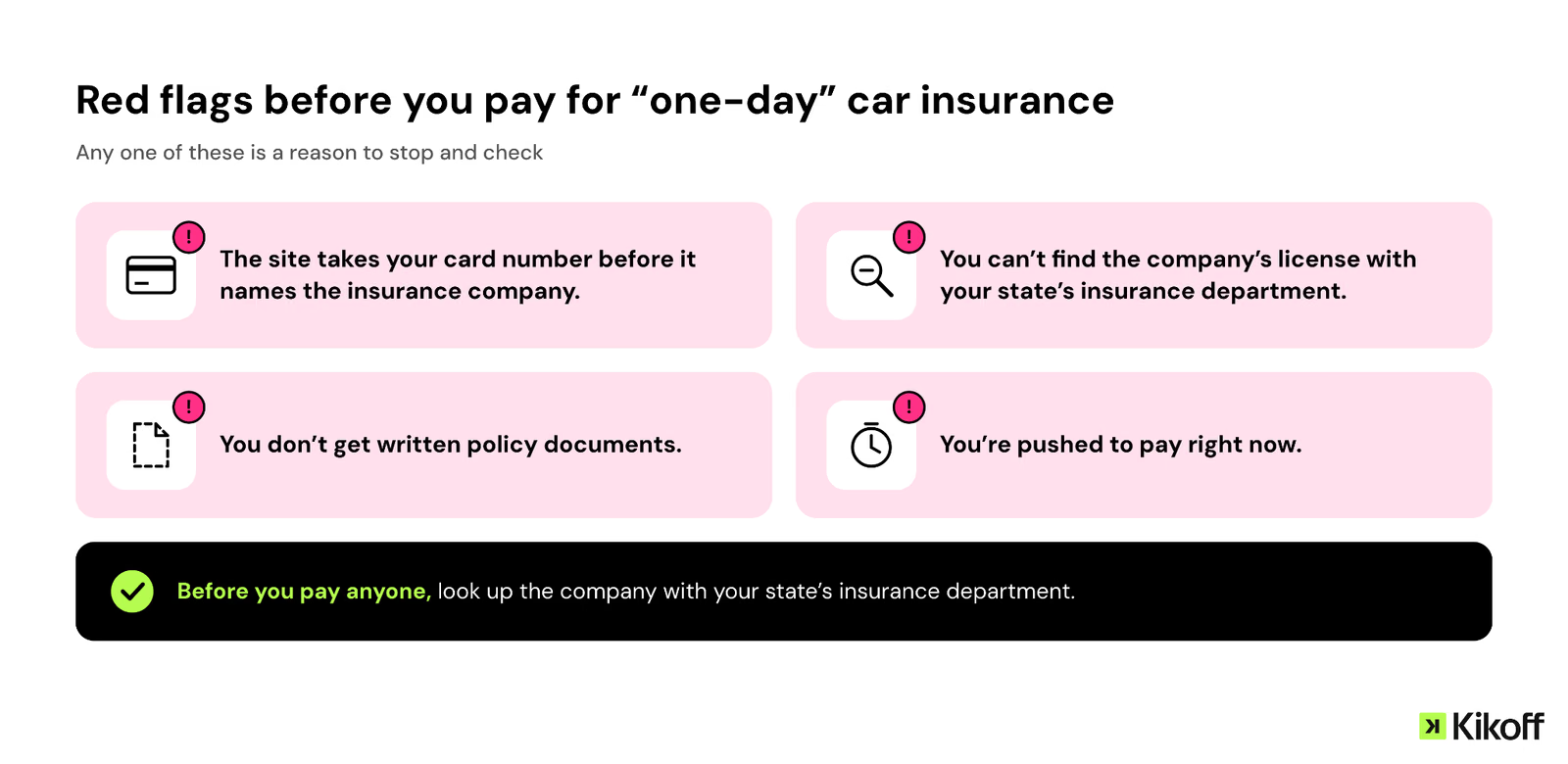
Progressive says major insurers don’t offer temporary auto insurance and typically sell six-month or yearly policies. Day-by-day coverage is common in the U.K., so search results often mix in policies you can’t buy here. Some U.S. sites that advertise one-day policies only pass your contact details to insurers. Others are fake.
Ways to get short-term coverage
- Borrowing a car. Many policies cover a driver the owner gives permission to, often called permissive use. If you have an accident, the claim usually goes on the owner’s policy and can affect what they pay, so ask them to check their policy before you drive.
- Renting. If you already have car insurance, call your insurer and ask whether your coverage extends to rental cars. If you plan to rely on a credit card’s rental benefit, ask your card company whether it pays first or only after your own insurance does.
- Driving without a car of your own. A non-owner policy covers you when you drive cars you don’t own, and it keeps coverage on your record between cars. If you’ve been ordered to carry an SR-22, a form your insurer files with the state to show you have insurance, ask whether the insurer can file it for you
- Canceling a regular policy early. Pick a cancellation date and confirm it in writing. If you’re switching to new coverage, have it start on or before the day the old one ends, so you don’t drive uninsured even for a day.
How state rules change the answer
Every state writes its own car insurance rules. Your state decides how much coverage you need to drive legally and what happens if you’re caught without it, such as fines or a suspended license or registration. That means an option that works in one state may not meet the minimum in another.
Before you choose, look up your state’s insurance department on the NAIC’s state insurance department map. Ask what minimum coverage you need and whether the company you’re considering is licensed there.
If you’re canceling a policy on a car that’s still registered, check with your state’s motor vehicle agency first. In some states, a registered car needs continuous insurance even when it’s parked.
How your credit can affect the price
Short-term or not, the price you’re quoted can depend partly on your credit. Many insurers use a credit-based insurance score, a score built partly or entirely from your credit history, to help predict claims. FICO estimates about 95% of auto insurers use these scores in states that allow it, according to the National Association of Insurance Commissioners (NAIC).
In most states, insurers can’t use the score as the only reason to raise your rate or to deny, cancel, or refuse to renew your policy. It’s one input next to your driving record, claims history, where you live, and the coverage you pick. Some states restrict it further or bar certain uses, so ask your state’s insurance department how it works where you live. If a quote comes back higher than you expected, ask the insurer which factors drove the price.
Bottom line
In the U.S., temporary car insurance usually means a workaround: the owner’s policy, rental coverage, a non-owner policy, or a regular policy you cancel early. Check your state’s minimums before you pick one. Whichever you choose, the price can reflect your credit history in states that allow it, and that history builds from the payments on your credit reports.
Kikoff’s Credit Account reports your on-time payments to Equifax, Experian, and TransUnion, with no credit check to sign up. Plans start at $5 a month.
Frequently Asked Questions
Article Sources
Disclaimer: The information provided in this blog post is meant for informational purposes only and does not constitute financial advice.