Yes. Mail tampering is a federal crime. It covers taking, opening, hiding, or destroying someone else’s mail before it reaches them, and the most common charges can bring up to five years in federal prison. Intent is the line, so opening your neighbor’s letter by mistake isn’t a crime.
If your own mail went missing, the bigger worry is usually what was inside. A bank statement, a new debit card, or a check can give someone enough to open accounts or take money in your name. Every step to block that is free.
What counts as mail tampering
“Mail tampering” isn’t the name of one law. It’s an everyday term for a group of federal crimes.
A conviction can also bring a fine of up to $250,000 per felony. Many states have their own mail theft laws, too. The theft law covers outgoing mail as well, including a letter left in your box with the flag up.
Is it a crime to open someone else’s mail by mistake?
No. The federal law against opening mail applies when someone acts “with design to obstruct the correspondence, or to pry into the business or secrets of another.” Tearing open an envelope before you notice the name isn’t that. What you do next is what counts.
Got someone else’s mail? Hand a neighbor’s mail to them. If the person doesn’t live there, write “Not at this address” on it and put it back out for your carrier. Opened it by mistake? Tape it shut and write “Opened by mistake” on the front.
Signs your mail was tampered with
Sorting machines sometimes tear envelopes, so look for a pattern:
- Envelopes arrive opened, resealed, or empty.
- Mail you expect never shows up, such as a new card, a check, or a tax form.
- Your mailbox lock is broken or has pry marks.
Informed Delivery is free from USPS. It emails you preview images of letters headed to your address, so you can tell when something never makes it to your box. If a check or card is missing, call the sender and ask them to cancel it and send a new one.
What to do if your mail was stolen
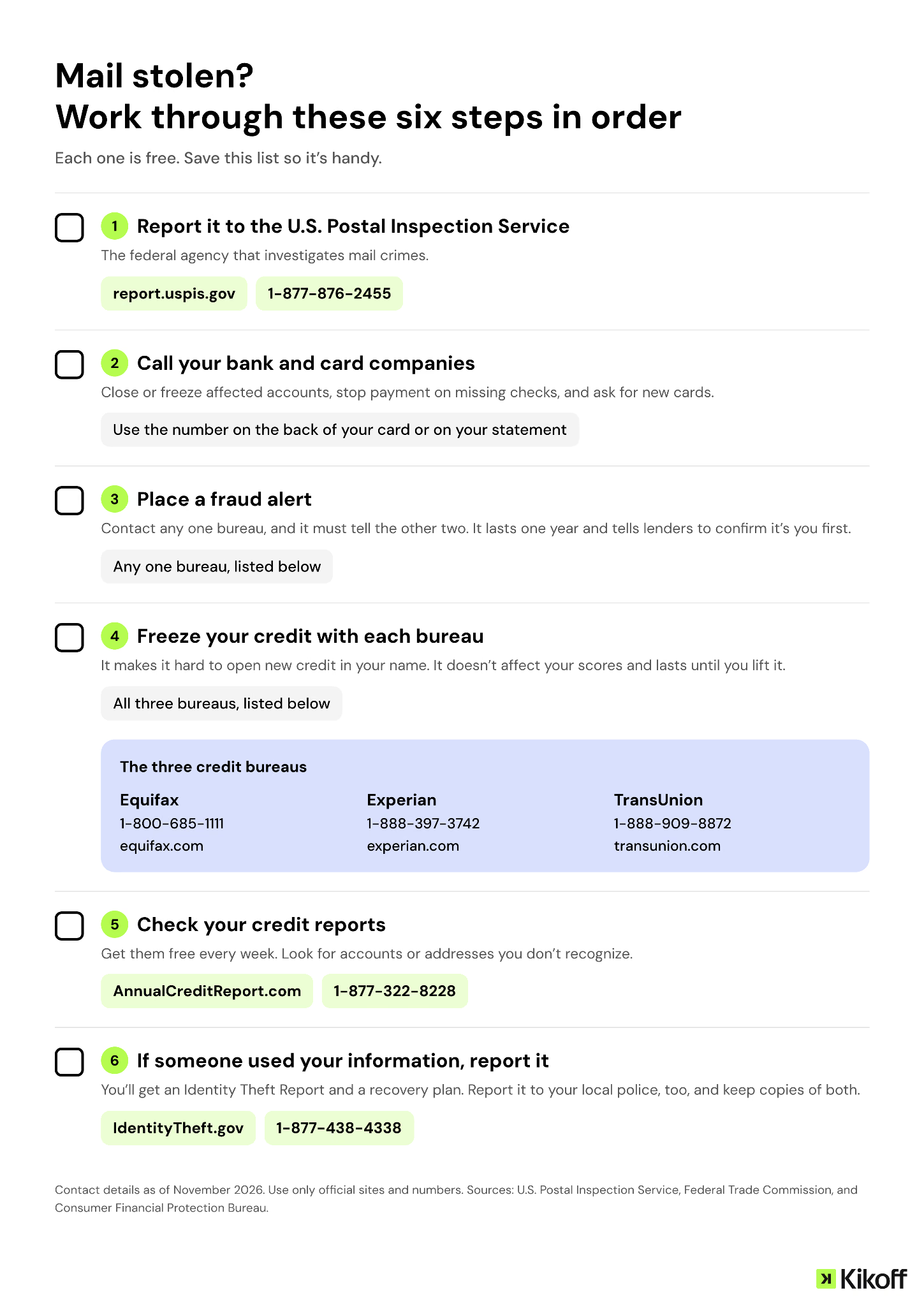
Work through these in order. Each one is free.
- Report it to the U.S. Postal Inspection Service, the federal agency that investigates mail crimes. File a report with USPS.
- Call your bank and card companies. Ask them to close or freeze any affected accounts, stop payment on missing checks, and send new cards.
- Place a fraud alert. Contact Equifax, Experian, or TransUnion, and that bureau must tell the other two. It lasts one year and tells lenders to confirm it’s you first.
- Freeze your credit with each bureau. A freeze makes it hard for anyone to open new credit in your name. It doesn’t affect your scores, and it lasts until you lift it.
- Check your credit reports. Get them free every week at AnnualCreditReport.com, and look for accounts or addresses you don’t recognize.
- If someone used your information, report it at IdentityTheft.gov. You’ll get an Identity Theft Report and a recovery plan. Report it to your local police, too, and keep copies of both.
If an account you didn’t open shows up, dispute it with each bureau that lists it. You can do that yourself for free, and your Identity Theft Report helps you ask the bureaus to block it. Disputes correct inaccurate items only, and an account opened in your name by someone else is inaccurate. Kikoff’s AI Credit Disputes can help you dispute errors on your credit report with a few taps.
What is mail fraud?
Mail fraud is using the mail, or a private carrier like UPS or FedEx, to carry out a scam. Tampering targets the mail. Mail fraud uses it as a tool.
It carries up to 20 years in federal prison. If the scam affects a bank or relates to disaster relief, the maximum rises to 30 years and a $1,000,000 fine.
A common example is a letter saying you’ve won a prize but must pay a fee to collect it. A real prize doesn’t ask you to pay first. Report mail scams through the Postal Inspection Service’s mail fraud form.
Read more >> 6 Common Credit Card Scams and How to Avoid Them
How to protect your mail
- Pick up mail the day it arrives. The less time it sits, the less chance someone takes it.
- Hand outgoing checks to the post office, or pay online. Thieves can wash a stolen check, using chemicals to erase the ink and write in a new name and amount.
- Hold your mail when you travel. USPS will hold it for 3 to 30 days.
Bottom line
Mail tampering is a federal crime when it’s on purpose, and an honest mistake isn’t. If your mail was stolen, report it, call your bank, and freeze your credit. Stolen details can still be used months later, and a freeze won’t show you what lands on your report. Kikoff’s Credit Monitoring checks your credit every week, focused on one bureau, so an account or inquiry you didn’t expect can surface sooner. It’s included in Kikoff Basic. Plans start at $5 a month.
Frequently Asked Questions
Article Sources
Disclaimer: The information provided in this blog post is meant for informational purposes only and does not constitute financial advice.