
Home title fraud, also called deed theft, is when someone pretends to be you, forges your signature on a deed, and files it with your county. On paper, your home now looks like it belongs to them. From there, they can try to sell it or take out a loan against it, often before you notice anything has changed.
If you’re wondering whether a stranger can really take your house this way, a forged deed generally doesn’t make the forger the legal owner. Undoing the paperwork is the hard part, and it can take a court order. Catching it early helps, and many counties will alert you at no cost.
How home title fraud works
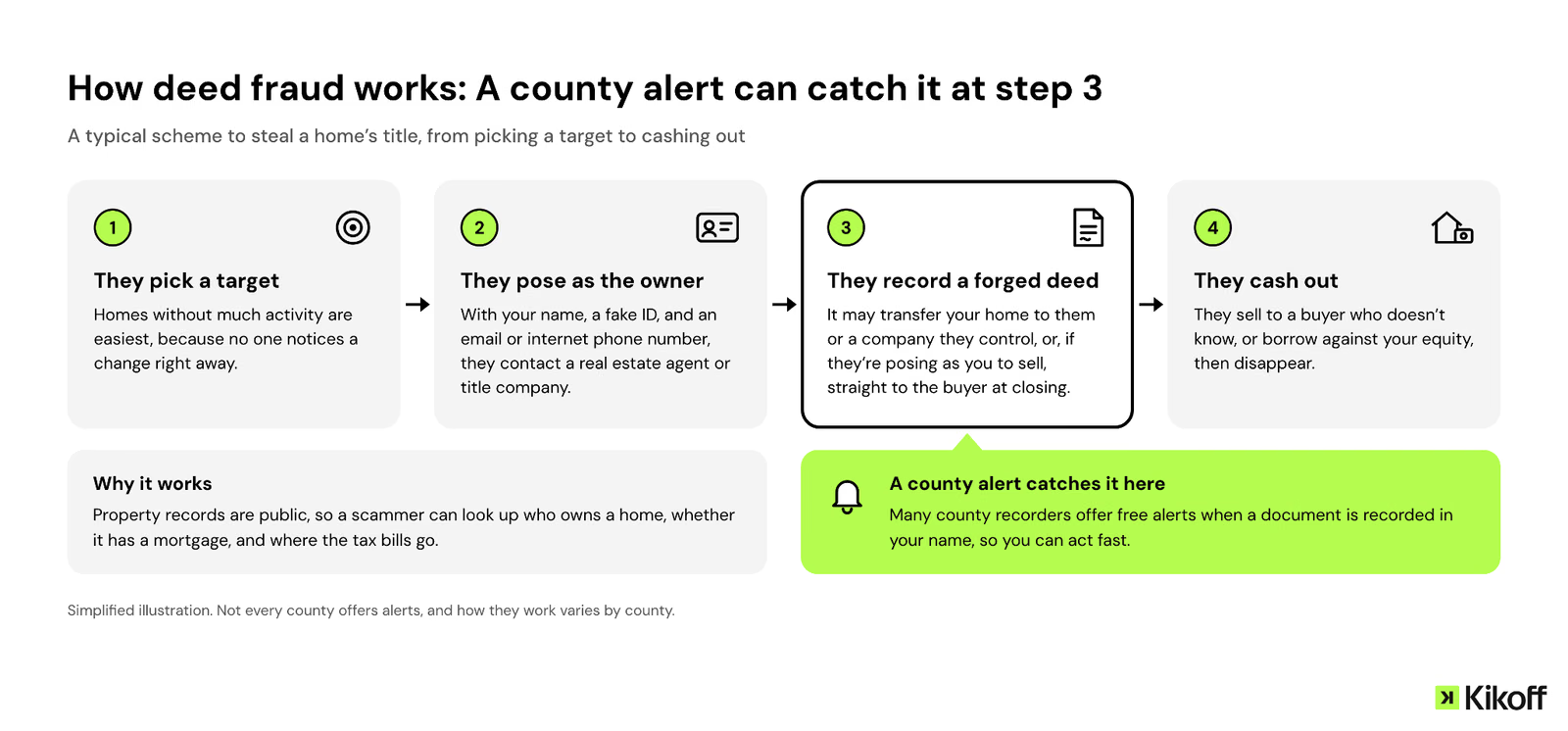
Property records are public, so a scammer can look up who owns a home, whether it has a mortgage, and where the tax bills go. A typical scheme has four steps:
- They pick a target. Homes without much activity are easiest, because no one notices a change right away.
- They pose as the owner. With your name, a fake ID, and an email or internet phone number, they contact a real estate agent or title company. The FBI warned in June 2026 that criminals are impersonating owners of vacant land this way and wiring the sale money to a partner in another state.
- They record a forged deed. It may transfer your home to them or a company they control, or, if they’re posing as you to sell, straight to the buyer at closing.
- They cash out. They sell to a buyer who doesn’t know, or borrow against your equity, then disappear.
The homeowners most at risk are older, recently deceased, or live somewhere else, according to California’s financial regulator. These owners are more likely to have a paid-off home, a vacant lot, or a rental.
Warning signs to watch for
The scammer’s paperwork goes to the county, not to you, so watch for these signs:
- Your property tax bill, water bill, or other utility bill for the home stops arriving.
- Mail at the property shows up addressed to someone you don’t know.
- You get a notice about a loan, a deed, or a sale you didn’t agree to.
- A neighbor or real estate agent mentions your property is listed for sale.
- A loan or account you don’t recognize shows up on your credit report.
Spotted one of these? Ask your county recorder’s office for a copy of the most recent deed on your home. If the name or signature isn’t yours, start the recovery steps below.
How to protect your home for free
Start with your county. Ask your county recorder, register of deeds, or county clerk whether it offers property fraud alerts, which notify you when a document is recorded in your name. Many counties offer these free. In California, a new state law will require county recorders to run these programs starting January 1, 2027, and to mail owners a notice within 30 days of a recorded deed or mortgage in their name.
Before you pay for “title lock,” know what you’d get. The Federal Trade Commission (FTC) says these services aren’t insurance and can’t stop a forged deed. They tell you after the title has changed, which a free county alert also does.
Next, check your title insurance. A standard owner’s policy usually doesn’t cover fraud after you buy. Ask your title company about post-policy protection, which may cover forgery and the cost of clearing your title.
Finally, protect your credit. A free credit freeze blocks most new credit in your name until you lift it. It won’t stop a forged deed, but it can stop loans opened as you. You can also check your credit reports free every week at AnnualCreditReport.com.
What to do if your home’s title was stolen
Act as soon as you can. Each step creates a record you’ll need later.
- Get a copy of the forged deed. Ask your county recorder for it, and tell the office you believe it’s fraudulent.
- Report the identity theft to the FTC. Go to IdentityTheft.gov or call 877-438-4338. You’ll get a recovery plan and prefilled letters to send to companies.
- File a police report. Bring your FTC report, a photo ID, and proof of address, and ask for a copy. Your lender and title company may need it. You can also report the fraud to the FBI at ic3.gov.
- Freeze your credit or place a fraud alert. For a freeze, contact Equifax, Experian, and TransUnion separately. For a fraud alert, contact one bureau, and it tells the other two. An initial alert lasts one year. With an FTC or police report, you can get an extended fraud alert that lasts seven years.
- Call your mortgage company and title insurer. If someone borrowed against your home, your lender needs to know right away.
- Talk with a real estate attorney about clearing the title. A court can cancel a forged deed, often through a case called a quiet title action. If a fraudulent loan brings payment demands or foreclosure notices, a HUD-approved housing counselor can help you plan next steps. Search on HUD’s site or call (800) 569-4287.
Bottom line
Home title fraud is identity theft aimed at your property records. A free county alert is your best early warning for the deed itself, and the IdentityTheft.gov steps cover what to do if it happens. That alert only watches your county’s land records, though, and someone who forges your signature on a deed has enough of your details to try other kinds of identity theft. Kikoff Ultimate includes up to $1M in ID theft insurance. Ultimate is $35 a month, billed over 12 months.
Frequently Asked Questions
Article Sources
Disclaimer: The information provided in this blog post is meant for informational purposes only and does not constitute financial advice.