



Seeing an unfamiliar name on your credit report is one of the more unsettling experiences in personal finance.
If you've spotted "Harris & Harris" on your credit report and have no idea who they are, you're not alone. Here's a breakdown of exactly what Harris & Harris is, why it appears on your report, and what your options are.
What is Harris & Harris?
Harris & Harris is a debt collection agency.
Effectively, they are a third-party company that purchases or is hired to collect unpaid debts on behalf of original creditors, be it a hospital, utility company, government agency, or other service provider.
When a debt goes unpaid long enough, the original creditor will generally either sell it to a debt collection agency like Harris & Harris, or hire them to collect on it directly.
Harris & Harris is known for handling debts from a wide range of industries, but they are mainly associated with medical debt, utility bills, and government-related accounts.
This means that if they've shown up on your report, there's likely an old unpaid balance from one of those categories that has been turned over to them for collection.
Their appearance on your credit report is usually the result of that debt being "furnished" to the credit bureaus as a collection account, which is what's now visible when you pull your report.
Why does Harris & Harris appear on your credit report?
Harris & Harris appears on your credit report because a debt you owe has been placed in collections.
When a creditor assigns or sells your debt, the new collector, in this case Harris & Harris, has the right to report that collection account to Equifax, Experian, and TransUnion.
This means the collection account can show up as a negative mark across all three major bureaus, potentially hurting your credit score.
The original debt that triggered this could be from a while ago, which is super common, and many people are caught off guard because they didn't realize a balance was ever sent to collections.
Lots of these situations stem from a missed hospital co-pay, a final utility bill after moving, or a forgotten subscription that went to collections without any clear notice.
It's also worth noting that Harris & Harris may have purchased the debt from another collector, so the chain of ownership can get a little complicated.
Is Harris & Harris a legitimate company?
Yes, Harris & Harris is a legitimate, licensed debt collection agency.
They are based in Chicago, Illinois, and have been operating for decades, which is primarily why they appear on so many consumers' credit reports.
Harris & Harris is required to follow the Fair Debt Collection Practices Act (FDCPA), a federal law that governs how debt collectors are allowed to contact you and what they are and aren't allowed to do.
This said, just because they are legitimate doesn't mean every debt they report is accurate.
Errors in debt collection are common, and every individual who finds a collection account on their report has the right to verify that the debt is valid before taking any action.
If anything on the account looks off, be it the amount, the original creditor, or the date, you generally have the right to dispute it.
How does a Harris & Harris collection affect your credit score?
A collection account from Harris & Harris can have a significant negative impact on your credit score.
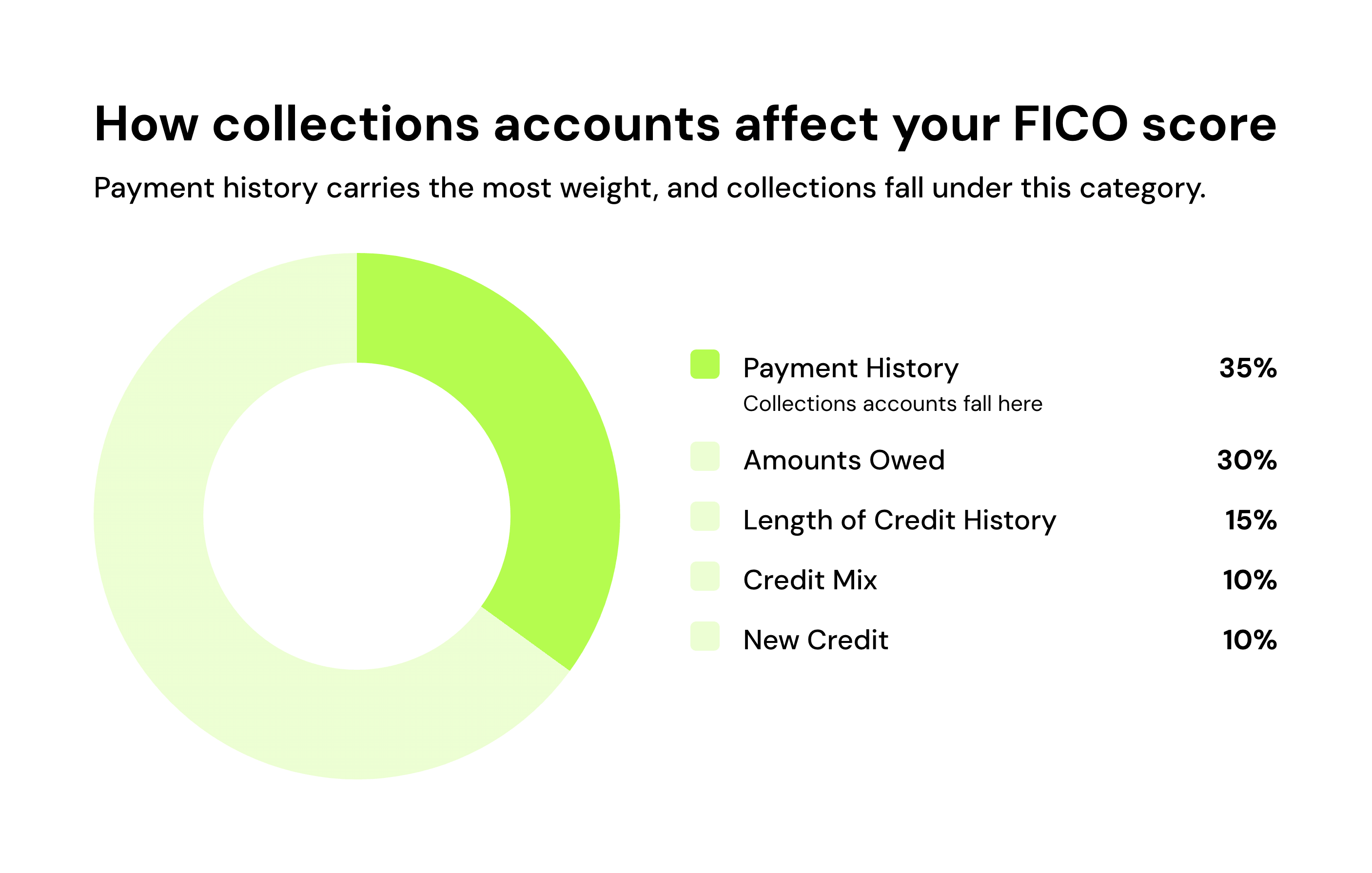
Collection accounts fall under payment history, which is the single most important factor in your credit score, making up 35% of your FICO score.
The impact is usually most severe in the first year the collection account appears, and it generally fades over time as the account gets older.
A collection account can stay on your credit report for up to seven years from the date the original account first went delinquent, which is basically the "first missed payment" date.
Luckily, the impact of a collection does diminish over time, especially if you're building positive credit history elsewhere in your report.
If you're working to rebuild your credit after a collection account, adding positive payment history to your profile is one of the most effective moves you can make. Kikoff lets you build credit by making on-time payments that get reported to all three major credit bureaus, with no hard credit check to sign up.
What should you do if you see Harris & Harris on your credit report?
There are a few steps worth taking when you spot Harris & Harris on your report.

Verify the debt
The first thing to do is verify that the debt is actually yours and that the details are accurate.
You can request a "debt validation letter" from Harris & Harris, which they are legally required to send you under the FDCPA if you request it within 30 days of their first contact.
This letter should include the original creditor's name, the amount owed, and other details that help you confirm whether this debt belongs to you.
Just make sure you send any requests in writing and keep a copy for your records.
Check your credit report for errors
Pull your full credit report from all three bureaus at annualcreditreport.com to see if Harris & Harris appears in one place or across multiple reports.
Sometimes the same debt is reported differently across bureaus, or inaccurate information shows up that needs to be corrected.
Every individual who finds errors on their credit report has the right to dispute them directly with the bureaus, be it an incorrect balance, wrong date, or an account that doesn't belong to them at all.
Kikoff offers free dispute tools that make it easy to send disputes to the credit bureaus, no subscription required.
Decide whether to pay, negotiate, or dispute
Once you've verified the debt, you have a few options depending on your situation.
If the debt is valid, paying it off removes the financial obligation, though the collection account may still remain on your report until the seven-year window is up.
Negotiating a settlement for less than the full amount is also possible, since many collectors will accept a reduced payment, especially on older debts.
If the debt is inaccurate, outdated, or can't be verified, you can file a dispute with the credit bureaus to have it investigated and potentially removed.
Can you remove Harris & Harris from your credit report?
Removing a legitimate, accurate collection account before the seven-year mark is difficult, but not impossible.
Some consumers successfully negotiate a "pay-for-delete" agreement, where the collector agrees to remove the account from your report in exchange for payment, though not all collectors will agree to this.
If you pay the debt without a pay-for-delete agreement, the account will generally be updated to show a $0 balance but will remain on your report as a paid collection.
Disputing inaccurate information is a different story, and if Harris & Harris cannot verify the account details, the bureaus are required to remove it.
Conclusion
Finding Harris & Harris on your credit report is understandably alarming, but it's a solvable problem.
Verify the debt, check for errors, and decide on the right path forward, whether that's paying it off, negotiating a settlement, or filing a dispute.
If you're looking to rebuild your credit after a collection account, the most effective thing you can do is start adding positive payment history to your report. Kikoff helps you do exactly that, with credit-building products designed for people working to improve their credit, no hard credit check required.
Frequently Asked Questions
About the editor

Disclaimer: The information provided in this blog post is meant for informational purposes only and does not constitute financial advice.