
Check fraud is when someone uses a check to take money that isn’t theirs. A thief might change a check you mailed, forge your signature, or send you a bogus check and ask for part of it back. In 2022, financial institutions filed more than 680,000 reports of suspected check fraud, nearly double the year before, according to the Financial Crimes Enforcement Network (FinCEN), part of the U.S. Treasury.
If a thief used your checks, the money may not be gone. When you report it quickly, banks generally cover checks you didn’t sign or approve. A fake check you deposit works the other way: the loss usually lands on you, so the best protection is catching it before you send anything.
How check fraud works
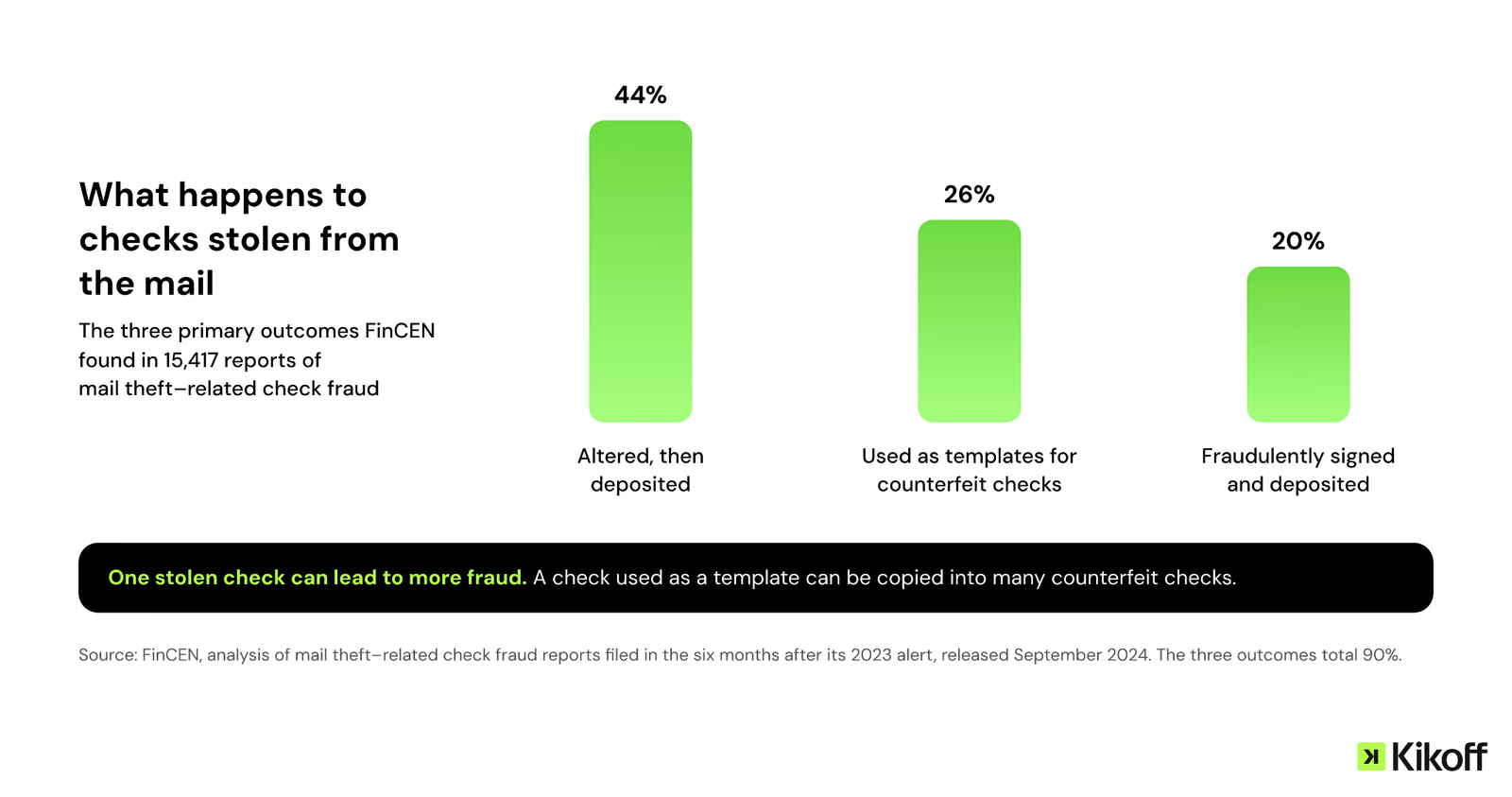
Stolen mail feeds a large share of this. In the six months after its 2023 alert, FinCEN received 15,417 reports from 841 financial institutions on mail theft–related check fraud, covering more than $688 million in suspicious activity.
How to spot it and protect your checks
Log in to your bank account every week or so instead of waiting for the statement. Look for checks you didn’t write, payees you don’t know, and small withdrawals you don’t recognize, which can be a thief testing your account.
To make your checks harder to steal or change:
- Write them in black gel ink, which the Office of the Comptroller of the Currency (OCC) recommends because it’s harder to wash off.
- Mail them inside the post office, not from your home mailbox.
- Pay bills through your bank’s bill pay when you can, and shred old checks.
For fake checks, the warning sign is the request, not the check. By law, banks have to make deposited money available quickly, according to the Federal Trade Commission (FTC), but it can take weeks to find out a check is fake. If it bounces, you’ll have to pay the bank back.
Got a check from someone who wants part of it sent back? Don’t send anything. Call your bank at the number on its website, not one on the check or from the sender. A real buyer or employer has no reason to overpay you and ask for the difference.
What to do if you’re a victim of check fraud
If a check you wrote was changed or forged
- Call your bank as soon as you notice. Ask whether to close the account and open one with new numbers, so a thief can’t reuse checks they already have. Write down who you spoke with and any claim number.
- Report it in writing before the deadline. You generally have up to 30 days from the statement date to tell your bank about a forged signature or a changed check. Your account agreement or state law may set a different window, so don’t wait for the last day. Banks are generally required to reimburse forged checks, though they may investigate first.
- Report stolen mail. If the check was taken from the mail, report it to the U.S. Postal Inspection Service or 1-877-876-2455. File a police report too, since your bank may ask for one.
If your bank won’t resolve it, you can file a free complaint with the Consumer Financial Protection Bureau at consumerfinance.gov/complaint.
If you deposited a check that turned out to be fake
Your bank can generally reverse the deposit, even after the money showed up in your balance. If you can’t repay it all at once, ask about a payment plan. If you sent money, ask the payment app, wire service, or gift card company to reverse it right away. Then report the scam at ReportFraud.ftc.gov.
When check fraud becomes identity theft
A check shows your name, address, account and routing numbers, and signature. Checking accounts aren’t on your credit reports, so a forged check alone won’t show up there. But if a thief also took mail like bank statements or tax forms, they may try to open accounts in your name. If that’s possible:
- Report it at IdentityTheft.gov. The FTC gives you a free recovery plan with next steps.
- Place a fraud alert or freeze your credit. A fraud alert is free and lasts one year, and you only need to contact one credit bureau. A freeze is free to place and lift, but you contact Equifax, Experian, and TransUnion separately.
- Check your credit reports. Get them free every week at AnnualCreditReport.com, and look for accounts or hard inquiries you don’t recognize. Checking your own reports doesn’t affect your scores.
If you find an account you didn’t open, dispute it with the credit bureau and the company that reported it. Disputes are free, and Kikoff’s free AI Credit Disputes can help you dispute accounts that aren’t yours.
Bottom line
If a check you wrote was changed or forged, tell your bank right away. If someone handed you a check and wants money back, don’t send it. Your bank can sort out the check. But your checks carry your name and account number, and a thief can use details like those to try to steal your identity. Kikoff Ultimate includes up to $1M in ID theft insurance. Ultimate is $35 a month, billed over 12 months.
Frequently Asked Questions
Article Sources
Disclaimer: The information provided in this blog post is meant for informational purposes only and does not constitute financial advice.