
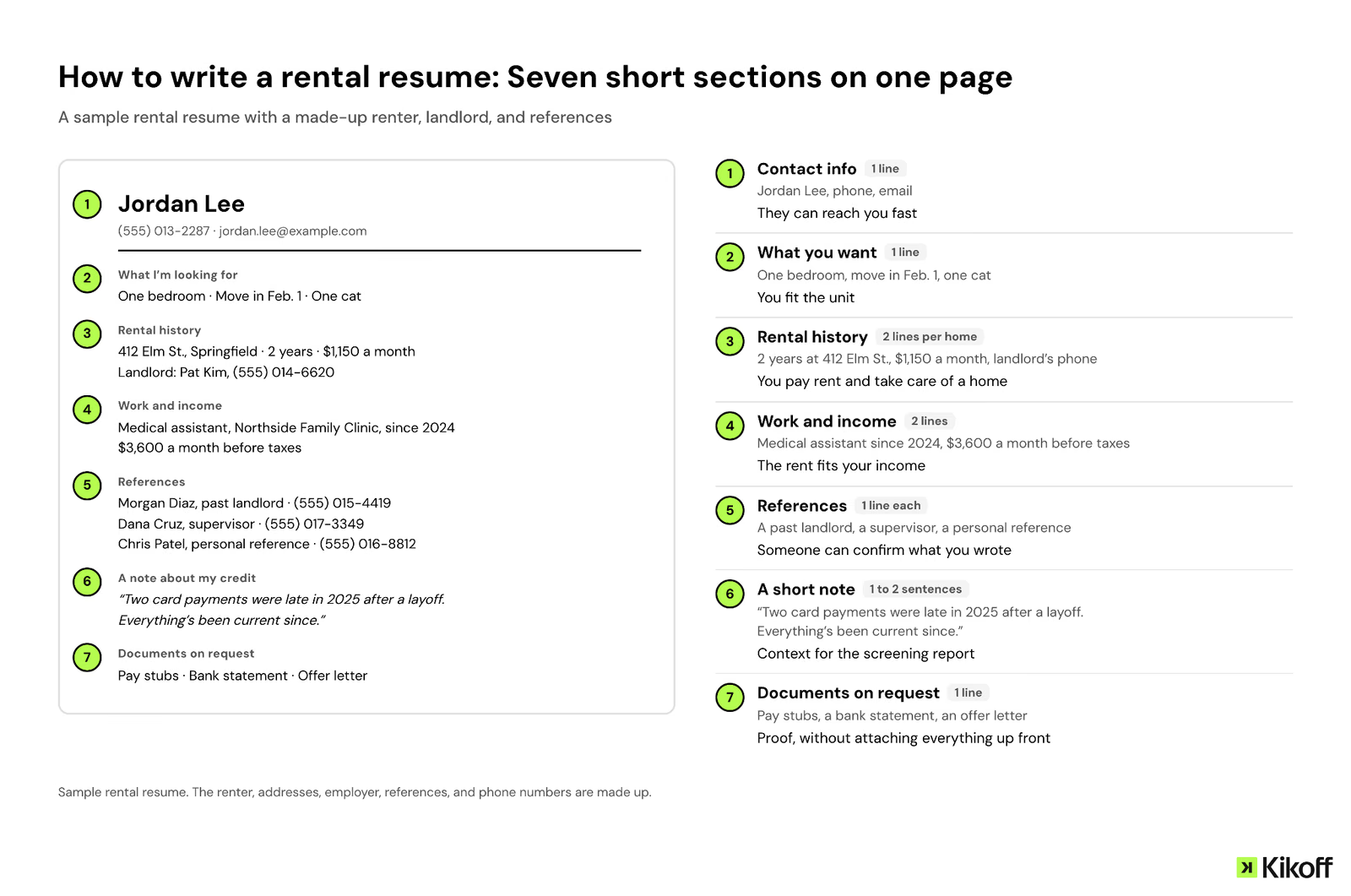
A rental resume is a short document, usually one page, that tells a landlord who you are as a renter. It lists where you’ve lived, what you earn, who can vouch for you, and anything a screening report won’t explain on its own. Landlords rarely ask for one, and it doesn’t replace their application. If you’re worried a short credit history or one hard year will end your chances before anyone reads further, the resume is where you answer that. A screening report shows landlord records. Your resume can show two years of on-time rent, or a steady job that started after a layoff.
What goes on a rental resume
Keep it to one page, and save it as a PDF with your name in the file name. This sample uses made-up details.
What to leave off
A rental resume can get forwarded and left in an inbox. Leave off your Social Security number, date of birth, and bank or card account numbers. Give your SSN only on the landlord’s official application or the screening company’s form.
Leave off details landlords can’t legally weigh, too. The federal Fair Housing Act bars housing discrimination based on race, color, national origin, religion, sex, familial status, or disability. If you think a landlord turned you down for one of those reasons, you can report it to HUD online, by phone, by email, or by mail. You generally have one year from the last date of the discrimination to file.
If your credit history is short or has a rough patch
The FTC says tenant background checks can include your credit accounts and payment history, missed rent, eviction records, and criminal records. Your resume can’t change that report, but it can explain it.
- No rental history yet. List shared housing where you paid your share, with someone who can confirm it. Add an employer reference, and ask whether the landlord accepts a cosigner.
- A late payment or collection. Write one or two plain sentences on what happened and what’s different now. The dates and your current record do the work.
- Check your reports first. Get your free credit reports every week at AnnualCreditReport.com. Checking doesn’t affect your scores. Dispute errors for free with the credit bureau and the company that reported them, or use Kikoff’s free AI Credit Disputes. Disputes correct inaccurate items only.
If a landlord turns you down, or asks for a cosigner or bigger deposit, because of a screening report, federal law requires an adverse action notice naming the screening company. Ask that company for your free report within 60 days of the notice. If you dispute an error, it has 30 days to investigate.
State laws on screening fees and reports
Federal law covers your rights after a screening report. States set much of the rest, including what you can be charged to apply. Three examples, as of November 2026:
Since Jan. 1, 2026, Colorado renters using a housing subsidy, such as a voucher, don’t have to include credit history in a portable report.
Other states and cities set their own rules. Before you pay a fee, ask the landlord what it covers, and check your state attorney general’s tenant guide.
Bottom line
A rental resume gives a landlord the context a screening report can’t, and in some states, a recent report you bring can save you a fee. Your resume can say you’ve paid rent on time for two years. A screening report can pull your credit history, though, and rent usually isn’t there unless something reports it. Kikoff’s rent reporting reports your rent payments to Equifax and TransUnion, so that history can show up on two of your credit reports. It’s included in every plan, and plans start at $5 a month. A one-time $50 fee adds up to two prior years of rent.
Frequently Asked Questions
Article Sources
Disclaimer: The information provided in this blog post is meant for informational purposes only and does not constitute financial advice.