
A rental agreement is the contract that lets you live in a home in exchange for rent. It spells out how much you pay, when it’s due, how big a deposit you put down, and what it takes to move out.
If it’s your first place, the worry is usually signing something you can’t undo. Most of what matters sits in a handful of clauses, and many of the rules behind them come from your state, not your landlord. A deposit that’s legal in one state can be over the limit in the next.
Rental agreement vs. lease
People use the two words interchangeably, and both are legally binding contracts. The difference is usually how long they last.
Before you sign a lease, ask the landlord whether it rolls into month-to-month when it ends and whether the rent changes when it does.
What’s in a rental agreement
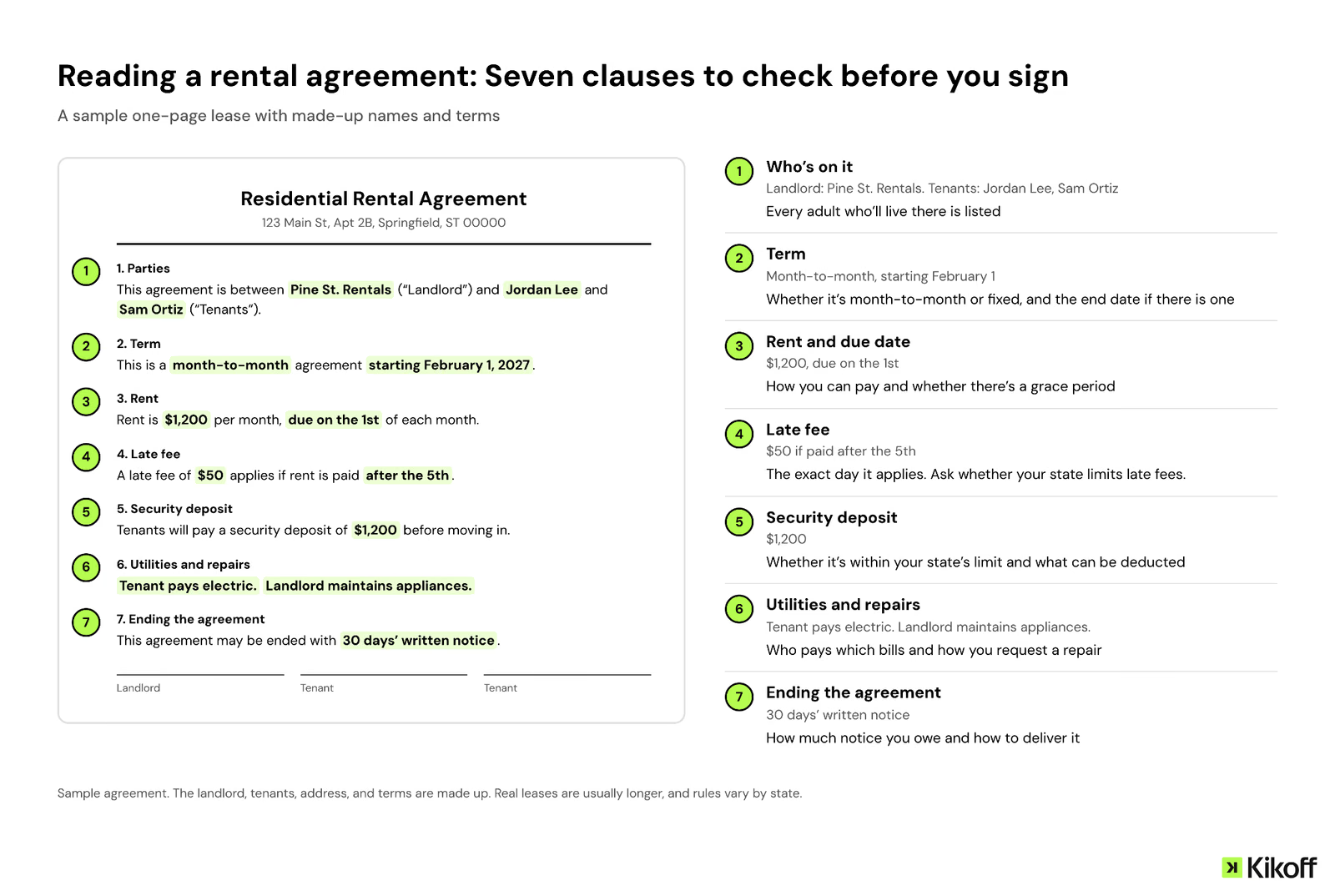
Agreements look different from landlord to landlord, but most cover the same core terms. Here’s an example of what you might see. The names and amounts are made up.
Some pages are there because federal law requires them. If the home was built before 1978, federal rules require the landlord to disclose any known lead-based paint before you sign and give you an EPA pamphlet on lead hazards. Leases of 100 days or less and a few other types of housing are exempt.
How state law shapes your agreement
Your rental agreement sits on top of your state’s landlord-tenant laws, and some cities add rules, such as rent control. If a clause asks for more than the law allows, the law usually controls. Deposits show how much states differ:
California’s deposit limit changed in 2024, dropping to one month’s rent for most rentals. After you move out, a California landlord has 21 days to return your deposit, or return whatever is left with an itemized statement of what was deducted. In New York, state law caps most deposits at one month’s rent. A New York landlord who misses the 14-day deadline loses the right to keep any part of the deposit.
Notice periods vary, too. In California, a landlord generally has to give 30 days’ notice to end a month-to-month tenancy if you’ve lived there less than a year, and 60 days if it’s been a year or more. Many California tenants also have just-cause protections, which limit when a landlord can end the tenancy at all.
To look up your state’s rules, search “tenant rights” on your state attorney general’s website or your state court’s self-help site. If a landlord keeps your deposit and you think the deductions are wrong, a legal aid office can explain your options, often at no cost. Find one at LawHelp.org.
Before you sign, look up your state’s deposit limit and how many days the landlord has to return it. Write both on your copy of the agreement for move-out day.
What to check before you sign
Start with the clauses in the table above, then walk through these steps:
- Read every page, including the add-ons. Pet, parking, and lead disclosure pages are part of the deal.
- Get promises in writing. If the landlord agrees to replace the stove or waive a fee, ask them to add it to the agreement before you sign.
- Document the place on move-in day. Take dated photos or video of every room, including existing damage. They’re your best evidence if deposit deductions come up later.
- Keep a signed copy. Save a PDF or photos of every page, and keep a record of every rent payment.
Your application may also be checked before you ever see an agreement. If a landlord turns you down because of a tenant screening report, it has to send you an adverse action notice naming the screening company. You can ask that company for a free copy within 60 days and dispute anything that’s wrong. Federal law also bars landlords from discriminating in rentals based on race, color, national origin, religion, sex, familial status, or disability.
Bottom line
A rental agreement sets your rent, your deposit, and how you move out, and your state’s tenant laws limit what it can require. Once you sign, you’ll make that rent payment every month. Those payments don’t show up on your credit reports unless your landlord or a rent reporting service sends them to the bureaus. Kikoff’s rent reporting reports your rent payments to Equifax and TransUnion, and a one-time $50 fee can add up to two years of past rent. Plans start at $5 a month.
Frequently Asked Questions
Article Sources
Disclaimer: The information provided in this blog post is meant for informational purposes only and does not constitute financial advice.