
A credit agreement is the contract you accept when you take out a loan or open a credit card. It spells out how much you can borrow, what it costs, how you’ll pay it back, and what the lender can do if you fall behind. Once you sign or start using the account, you’re both bound by it.
If you’re about to sign your first one, the worry is usually that something costly is buried in the fine print. Most of what matters sits in a few places you can learn to spot. Federal rules require lenders to show the main costs in a standard format before you’re committed, so the APR and the total you’ll repay are usually on the first page or two.
How a credit agreement works
Every credit agreement covers the same basic deal: the lender gives you money or a credit line, and you agree to pay it back on set terms. The shape of that deal depends on the type of credit.
You don’t always sign with a pen. Clicking “I agree” in an app or using a new card for the first time can count as accepting the terms, so read before you tap.
What’s inside a credit agreement
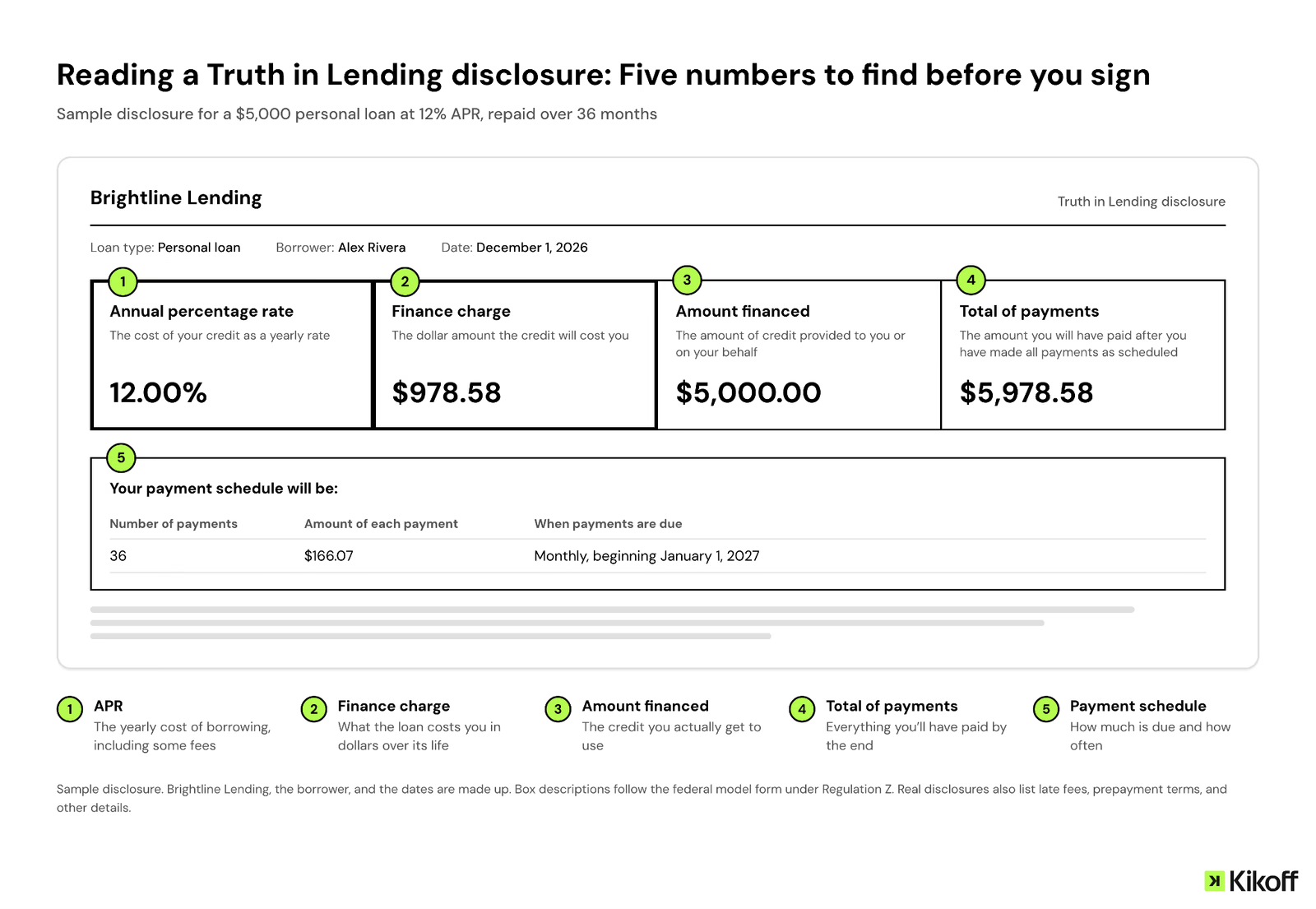
For a loan with a fixed term, federal Truth in Lending rules require lenders to disclose a few key numbers before you sign. Here’s what that box might look like for an example $5,000 personal loan at 12% APR over three years. These numbers are an illustration, not a market rate.
Then look past the box. These terms usually sit in the body of the agreement:
- Fees: late fees, returned-payment fees, and, for cards, any annual fee or cash advance fee.
- Penalty APR: a higher rate a card company may charge if you pay late.
- Prepayment terms: whether you pay a fee for paying a loan off early.
- Default terms: what counts as falling behind and what the lender can do next, such as charging fees or sending the debt to collections.
- Dispute terms: whether disagreements go to court or to arbitration, a private process outside of court. Ask the lender whether you can opt out of arbitration and by when.
The two numbers to find first: the APR and the total of payments. Together they show what the credit really costs you.
What to check before you sign
Start with the disclosure box, then work through the rest in order:
- Compare the APR with any other offers you have. Lenders typically set your rate based on your credit history, so two offers can differ a lot.
- Check whether the rate is fixed or variable. A variable rate can rise over time, which changes your payment or your balance growth.
- Find every fee and when it applies. Write down the late fee amount and the due date, so a missed date doesn’t catch you off guard.
- Read what happens if you pay late. A late payment can mean a fee and a penalty APR, and it can also end up on your credit reports, where lenders will see it.
- Keep a copy. Save the PDF or screenshot the terms the day you accept them. You’ll want them if a charge or a change doesn’t look right later.
When the terms can change
Credit card agreements can change, but federal rules set limits. Your card company generally must give you 45 days’ notice before a significant change, such as a higher rate or a new fee. You can usually reject the change before it takes effect. If you do, the card company may close the account, but you can pay off what you owe under limits that keep your minimum payment from jumping too far.
There’s also protection for the balance you already carry. Under federal rules on rate increases, a card company generally can’t raise the rate on your existing balance. The main exception for missed payments: if you’re more than 60 days late on a minimum payment. Your rate on an existing balance can also go up if a promotional rate ends, if you have a variable rate and its index rises, or if you don’t keep up with a hardship plan. Before that point, a missed payment can already show up on your credit reports, so pay at least the minimum as soon as you can.
Fixed-rate loans work differently. Their terms typically stay the same for the life of the loan, unless you agree to a change, such as a loan modification.
How to find your credit agreement
If you’ve lost your copy, you have a few options:
- Check your online account. Many lenders keep your agreement in a documents or statements section.
- Ask your card company. Federal rules require card companies to post your agreement online or send you a copy within 30 days of your request.
- Search the CFPB’s database. The CFPB keeps a database of credit card agreements you can search by the card company’s name. It shows general terms, not your account’s specific rate.
Bottom line
A credit agreement is the rulebook for your loan or card, and the APR and total of payments tell you most of what it’ll cost. Reading it protects you from surprises, but by the time an agreement is in front of you, your rate is already set. Lenders typically base that rate on your credit history, and on-time payments are what add to that record before your next application. Kikoff’s Credit Account reports your on-time payments to all three credit bureaus, with no credit check to sign up. Plans start at $5 a month.
Frequently Asked Questions
Article Sources
Disclaimer: The information provided in this blog post is meant for informational purposes only and does not constitute financial advice.