
A car rebate is cash the automaker offers you for buying or leasing a particular new car. You usually apply it at the dealership, where it lowers the price or counts toward your down payment. Some offers let you take a check instead.
What you save depends on three things the ad doesn’t show: the price you negotiate first, whether you give up a lower financing rate, and how your state taxes the rebate. If you’re worried you won’t qualify, the cash rebate is generally open to anyone who buys the eligible car and meets the offer’s terms. The discounted financing rates are what can depend on your credit.
How a car rebate works
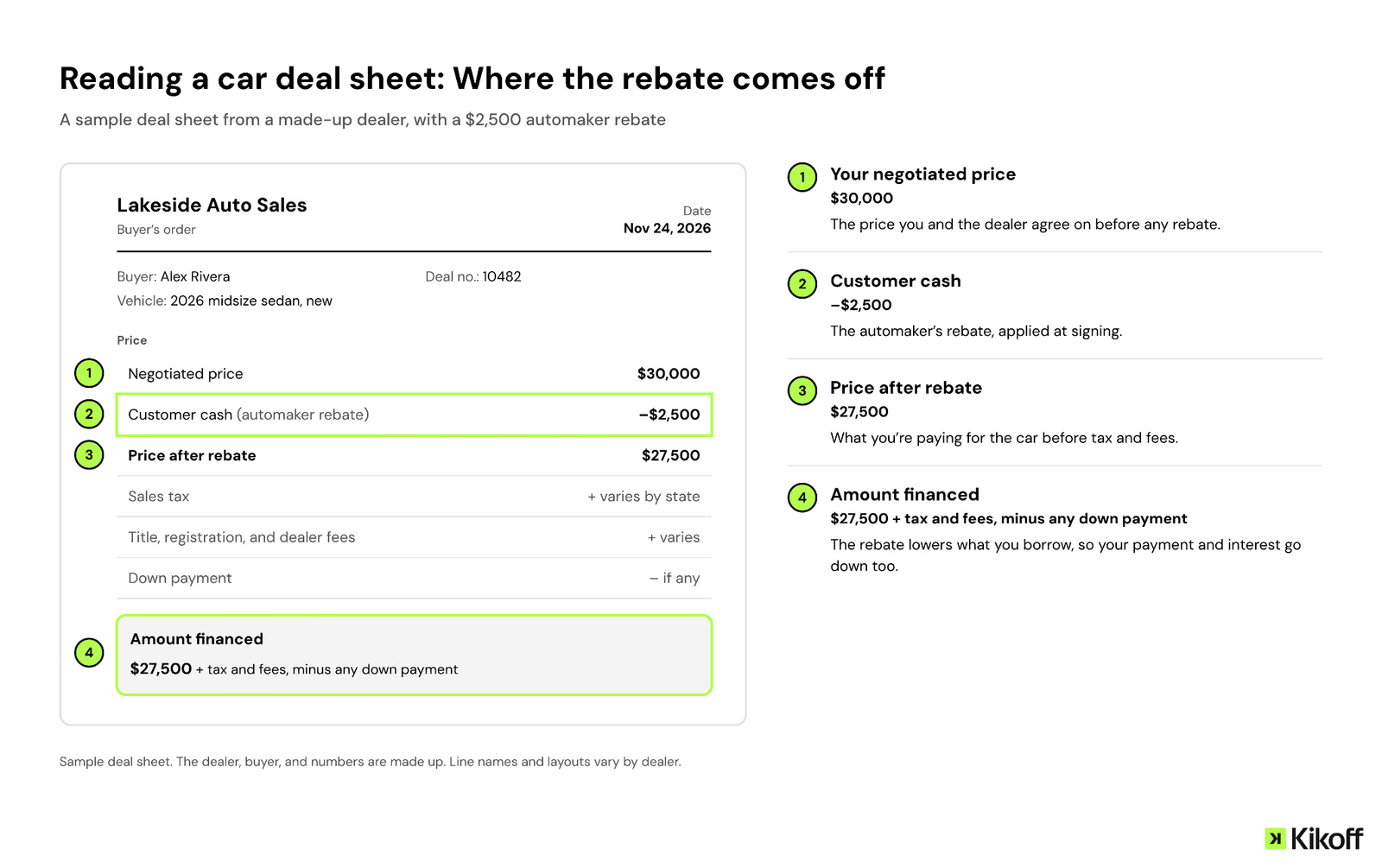
The automaker, not the dealer, pays for a rebate, which you may see called customer cash or bonus cash. You negotiate the price first, and then the rebate comes off what you agreed on. If the dealer brings up the rebate before you’ve settled the price, steer the conversation back to the price.
On a deal sheet, a rebate might look like this.
The FTC advises asking ahead of time which rebates you qualify for, and not assuming one is already built into the price you’re offered. Check the contract for a line showing it.
If you’re trading in a car and owe more than it’s worth, the leftover balance can get added to your new loan, and the rebate may quietly go toward covering it. Ask the dealer to show the rebate and the leftover balance as separate lines.
Rebate or low-rate financing: run the numbers
Automakers often pair a rebate with a discounted financing rate through their own lending company, and many offers make you pick one. To see which saves more, compare the total you’d pay over the whole loan.
Say the car costs $30,000 after you negotiate. The automaker offers $2,500 cash back or a 1.9% APR for 60 months, and your credit union preapproved you at 7% APR for 60 months. These rates are examples, and the math leaves out tax, fees, and a down payment.
In this example, the low APR saves about $1,200 even though you give up $2,500 up front. A bigger rebate, a lower outside rate, or a shorter loan can change the result, so run your own numbers with the real offers.
The catch with the low APR is qualifying for it. According to the FTC, these discounted rates generally aren’t negotiable and may be limited by your credit history. Get preapproved by a bank or credit union before you shop, so you have a real rate to compare against. If you don’t get the special APR, you can still take the rebate.
How sales tax can shrink a rebate
In some states, a rebate lowers the price you pay sales tax on. In others, you pay tax on the full price.
- California: The state’s tax agency treats a consumer rebate as fully taxable, whether it comes off the cash price or counts as your down payment.
- Idaho: A manufacturer’s rebate lowers the taxable price only if the automaker pays it straight to the dealer and it comes off the car’s price. If you take the cash instead, you pay tax on the full price.
At an example 6% sales tax rate, a $30,000 car with a $2,500 rebate costs $1,650 in tax if the rebate lowers the taxable price, or $1,800 if it doesn’t. Ask the dealer how your state taxes the rebate, or check your state revenue department’s motor vehicle sales tax page.
Before you sign: get preapproved by a bank or credit union, negotiate the price before the rebate, ask which rebates you qualify for, compare the rebate with the special APR at your real rate, and find the rebate on the contract.
Bottom line
A car rebate is the automaker’s cash off a new car, and it’s worth the most when you negotiate the price first and compare it with the special financing offer. Every buyer who qualifies gets the same rebate, but the rate you’re offered depends on your credit. If your credit history is thin, the time to build it is before your next car loan application. Kikoff’s Credit Account reports your on-time payments to Equifax, Experian, and TransUnion, with no credit check to sign up. Plans start at $5 a month.
Frequently Asked Questions
Article Sources
Disclaimer: The information provided in this blog post is meant for informational purposes only and does not constitute financial advice.