



.jpg)



A bridge loan is short-term financing that can help you buy a new home before your current home sells. It may provide money for a down payment and closing costs without making your purchase dependent on the prior sale.
That flexibility comes with meaningful risk. You may have to carry payments on your current mortgage, new mortgage, and bridge loan at the same time. If your home sells later or for less than expected, you still need a way to repay the bridge loan when it comes due.
What is a bridge loan?
A bridge loan, sometimes called a swing loan, temporarily fills the funding gap between buying your next home and receiving proceeds from the sale of your current one. Fannie Mae describes bridge-loan funds as an acceptable source for closing on a new principal residence before the current residence is sold, subject to its documentation requirements for the new mortgage.
The loan agreement identifies which property secures the debt. If the mortgage on your new home will be sold to Fannie Mae, Fannie Mae requires that the bridge loan not be cross-collateralized against the new property. In other words, that bridge loan cannot be secured by both the current and new homes.
A lender may place a lien on property pledged as collateral, and failure to repay could put that property at risk of foreclosure.
Bridge loans are intended to be temporary. They are commonly repaid with proceeds from the sale of the previous home, although the exact repayment source and deadline will be stated in your loan agreement.
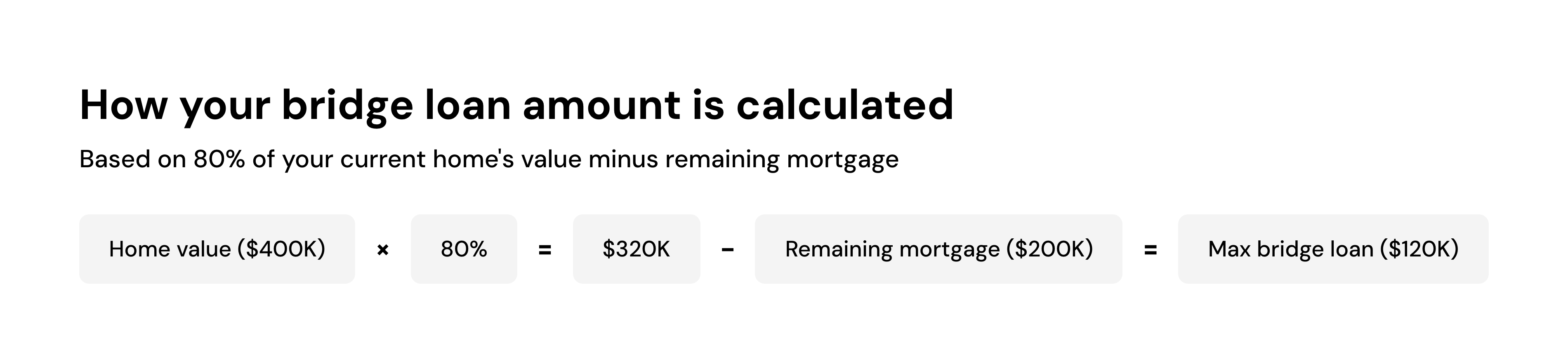
How does a bridge loan work?
The process generally looks like this:
- You apply for the bridge loan and the mortgage on your next home.
- The lender reviews your income, credit, existing debts, available equity, and both properties involved in the transaction.
- If approved, you use the bridge funds for an agreed purpose, such as the down payment or closing costs on the new home.
- You carry the required payments while marketing your current home.
- When the current home sells, its proceeds are used to pay off the existing mortgage, the bridge loan, and any other liens secured by that property.
Some bridge loans provide a lump sum. Others may offer access to funds as needed. Payment structures also differ. You may make monthly principal-and-interest or interest-only payments, or the lender may allow interest to accrue until the loan is paid off. Deferring a payment does not make the interest free. It generally increases the amount owed at payoff.
Risk check: Before borrowing, calculate how long you could afford the overlapping housing costs if the sale takes longer than expected.
How much can you borrow with a bridge loan?
There is no universal bridge-loan percentage. The amount available depends on the lender’s rules, the value of the property securing the loan, your existing mortgage and other liens, and your ability to repay.
When a bridge loan is secured by your current home, a lender may use a combined loan-to-value ratio, or CLTV. CLTV compares the total debt secured by the home, including the existing mortgage and proposed bridge loan, with the home’s appraised value.
A common way to estimate the maximum additional borrowing is:
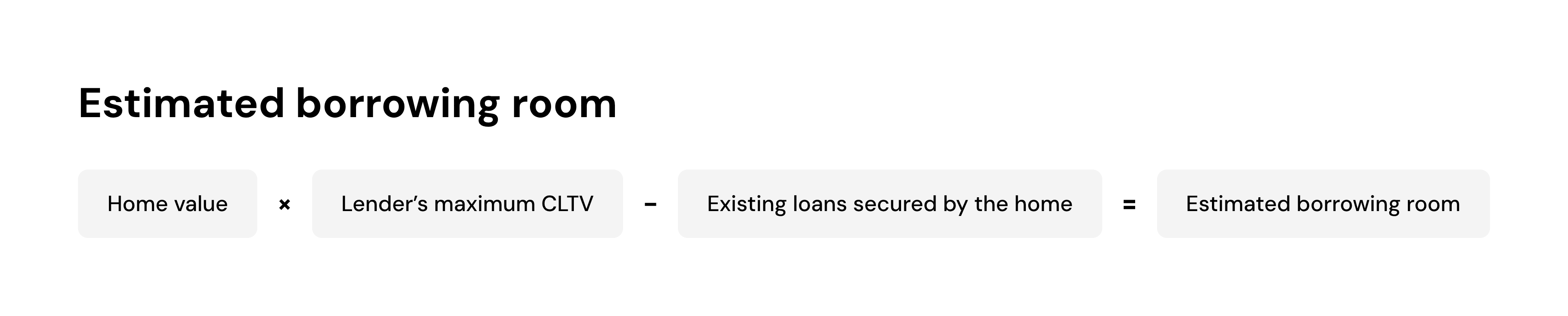
This is only an estimate. The lender may use a different property value, subtract fees, require an equity cushion, or approve less based on your finances. Ask for the lender’s maximum CLTV, appraisal requirements, and net proceeds after fees before relying on the money for a purchase.
Read more >> What Is a HELOC and How Does It Work?
How long is a bridge loan term?
Bridge loans are short-term products, and terms vary by lender. Federal mortgage regulations use a term of 12 months or less when describing temporary bridge financing, but that regulatory description does not set the term for every product marketed as a bridge loan.
Do not assume the loan automatically extends if your home has not sold. Before closing, confirm:
- The maturity date
- Whether monthly payments are required
- Whether unpaid interest is added to the payoff balance
- Whether the loan has a balloon payment
- Whether an extension is available and what it costs
- What happens if the current home sells for less than expected
- Whether there is a prepayment penalty
What does it take to qualify for a bridge loan?
Qualification standards vary, so there is no single required credit score, debt-to-income ratio, or equity percentage. A lender may evaluate:
- Your credit history and credit scores
- Verified income and assets
- Your existing mortgage and other monthly debts
- The appraised value and marketability of the home you plan to sell
- The proposed purchase and mortgage on the new home
- Your available cash reserves
- Your plan for repaying the bridge loan
The ability to carry overlapping obligations is particularly important. For a new mortgage sold to Fannie Mae, its bridge-loan guidance requires the lender to document the borrower’s ability to carry the payments for the new home, current home, bridge loan, and other obligations.
Approval for a bridge loan does not ensure approval for the mortgage on your new home. Ask the mortgage lender how the bridge-loan payment and debt will be treated before you make an offer.
Read more >> What Is Mortgage Amortization?
When might a bridge loan make sense?
A bridge loan may be worth considering when:
- You have substantial equity in your current home.
- You can qualify while carrying overlapping housing obligations.
- You have found a new home but have not completed your current sale.
- Removing a home-sale contingency would strengthen your offer in your local market.
- You have a realistic sale timeline and a backup repayment plan.
- The expected benefit outweighs the interest, fees, and additional risk.
The key question is not simply whether you expect your home to sell. It is whether you could still repay the loan if the sale takes longer or produces less cash than planned.
Pros and cons of a bridge loan
Potential advantages include:
- Buying your next home before completing your current sale
- Using expected sale proceeds before they are available
- Making an offer without a home-sale contingency
- Avoiding a rushed move between closings
Potential drawbacks include:
- Carrying multiple housing-related debts at once
- Paying interest, origination charges, appraisal expenses, and other fees
- Facing a short repayment deadline or balloon payment
- Owing more interest if the current home takes longer to sell
- Risking the property used as collateral if you cannot repay
- Receiving less from the sale than your repayment plan assumed
Bridge-loan pricing and fees vary. Compare the annual percentage rate, finance charges, repayment schedule, maturity date, extension terms, and total payoff amount rather than looking only at the advertised interest rate. The Consumer Financial Protection Bureau’s overview of loan costs explains how fees can affect the cost of borrowing.
Alternatives to a bridge loan
Several alternatives may provide more time or expose you to less risk.
Make a contingent offer
A home-sale contingency can allow you to complete the purchase only if your current home sells under the terms in your contract. This avoids taking on a bridge loan, but the seller may prefer an offer with fewer conditions. A local real estate professional or attorney can explain the contract and market implications.
Sell your current home first
Selling first gives you a clearer picture of your available cash and eliminates uncertainty about the timing and price of the sale. You may need temporary housing, a rent-back agreement, or storage while looking for your next home.
Consider a HELOC
A home equity line of credit lets you borrow repeatedly against available home equity. The CFPB explains that HELOCs usually have adjustable rates, so payments can change. A HELOC secured by the current home generally must be repaid when that home is sold. Availability, timing, and fees vary by lender.
Consider a home equity loan
A home equity loan provides a lump sum secured by your home. According to the CFPB’s home equity loan guidance, these loans usually have fixed rates and may include upfront fees and costs. If you already have a first mortgage, the home equity loan adds a separate debt and payment until it is repaid.
Compare each option based on total cost, monthly cash flow, repayment deadline, collateral risk, and what happens if the sale is delayed.
Bottom line
A bridge loan can make it possible to buy before you sell, but it transfers much of the timing risk to you. Before committing, confirm the payoff deadline, all fees, the payment structure, and how you would repay the loan if your current home takes longer to sell or sells for less than expected.
Your credit profile may affect the financing options and terms lenders offer. Kikoff’s Credit Account reports your on-time payments to all three major credit bureaus, with no hard credit check to sign up. It can help you add positive payment history, but mortgage and bridge-loan approval still depend on the lender’s requirements.
Frequently Asked Questions
Article Sources
Disclaimer: The information provided in this blog post is meant for informational purposes only and does not constitute financial advice.