






Minimum car insurance requirements depend on where your car is registered. Most states set the minimum at around $25,000 per injured person, $50,000 per crash, and $25,000 for property damage. A few states ask for much less, a few ask for double, and New Hampshire doesn’t require a policy at all.
The minimum is the least you can buy and still drive legally, and it only pays for harm you cause other people. If a crash costs more than your limits, the difference comes out of your pocket.
California, Hawaii, Massachusetts, North Carolina, and Virginia recently raised their minimums, and policies written or renewed after each change have to meet the new minimums. Your declarations page shows where yours stands.
What are minimum car insurance requirements?
Minimum car insurance requirements are the smallest amounts of coverage your state requires before you can register and drive a car. In almost every state, that means liability insurance. Some states also require coverage that pays for your own medical bills or protects you from drivers who don’t have insurance.
Liability coverage explained
Liability coverage is the part of your policy that pays other people when a crash is your fault. It comes in two parts:
- Bodily injury liability pays the other people’s medical bills, lost wages, and related costs.
- Property damage liability pays to repair or replace what you hit, whether that’s another car, a fence, or a light pole.
Something to note: Liability coverage doesn’t pay for your car or your own injuries. That’s the job of other coverage types, like collision and personal injury protection.
What the numbers mean: 25/50/25
States and insurers write liability limits as three numbers, in thousands of dollars. Here’s how to read 25/50/25, the most common minimum.
Think of the limits as caps, not budgets. The per-person cap applies even when the per-crash total has room left.
Say you cause a crash with 25/50/25 coverage, and one driver has $30,000 in medical bills, a passenger has $15,000, and their car needs $20,000 in repairs. Your policy pays $25,000 for the driver (the per-person cap), $15,000 for the passenger, and the full $20,000 for the car. The last $5,000 of the driver’s bills could land on you, even though $10,000 of your per-crash limit went unused.
Read more >> How to Lower Your Car Insurance
Where to find your limits. Pull up your declarations page — the summary your insurer sends at each renewal — and look for “bodily injury liability” and “property damage liability.” The amounts next to them are your limits.
Minimum car insurance requirements by state
Our table shows each state’s minimum liability limits, in thousands of dollars, plus any other coverage the state requires. Each state name links to the state agency or law the numbers come from.
Some states, including Colorado, Idaho, and Indiana, add uninsured motorist or medical coverage to your policy unless you turn it down in writing. Before you sign any form, ask your insurer what it costs to keep.
States with the lowest minimums
- Florida doesn’t require bodily injury liability for most drivers. You need $10,000 in property damage liability and $10,000 in personal injury protection, according to Florida Highway Safety and Motor Vehicles.
- Pennsylvania requires 15/30/5, plus $5,000 in medical benefits for you.
- Louisiana requires 15/30/25.
- Iowa requires 20/40/15.
Low minimums keep the price of a basic policy down, but they also leave the most room for a gap. In Pennsylvania, $5,000 in property damage coverage may not cover even a minor fender bender with a newer car.
States with the highest minimums
- North Carolina requires 50/100/50 for policies written or renewed since July 1, 2025.
- Alaska, Maine, and Virginia require 50/100/25. Virginia’s increase took effect January 1, 2025.
- Michigan requires at least 50/100 in bodily injury coverage, and the state sets 250/500 as the default unless you choose lower limits in writing.
- Hawaii moved to 40/80/20 for policies starting on or after January 1, 2026.
States with no-fault insurance laws
In a no-fault state, your own insurance pays for your medical bills after a crash, up to a set amount, no matter who caused it. That coverage is called personal injury protection (PIP). The trade-off is that no-fault laws limit when you can sue the other driver, usually to more serious injuries.
Twelve states have no-fault laws: Florida, Hawaii, Kansas, Kentucky, Massachusetts, Michigan, Minnesota, New Jersey, New York, North Dakota, Pennsylvania, and Utah. In Kentucky, New Jersey, and Pennsylvania, you get to pick. You can keep a full right to sue in exchange for a higher price, or accept limits for a lower one.
But don’t let the name fool you: In a no-fault state, PIP covers your injuries, not the other driver’s. You still need liability coverage for harm you cause others. That is, except in Florida, where bodily injury liability isn’t required for most drivers.
States that don’t require car insurance
New Hampshire is the only state that doesn’t require car insurance. Virginia ended its option to pay a $500 uninsured motor vehicle fee instead of buying insurance on July 1, 2024.
Skipping insurance in New Hampshire doesn’t mean skipping responsibility, though. If you cause a crash without coverage, you can be required to pay for the damage yourself and to show proof of financial responsibility, at 25/50/25 under state law, to keep driving.
Read more >> Can You Pay Car Insurance With a Credit Card?
What minimum coverage does and doesn’t cover
A minimum policy covers the people and property you damage, up to your limits. In most states, it doesn’t cover your own car or, outside no-fault states, your own injuries. Here’s how the common coverage types compare.
So if you carry only the minimum and back into a pole, you’re paying for your own repairs. The same goes if your car is stolen or damaged in a storm.
The other gap is the amount above your limits. If you cause a crash and the bills run past what your policy pays, the injured person can come after you for the rest.
If you’re sued after a crash, call your insurer first, then talk with an attorney before you respond. If you can’t afford one, your local legal aid office may be able to help, and your state bar association can refer you to a lawyer.
Should you carry more than the minimum?
The minimum may be enough if your car is older and paid off, and your main goal is staying legal on a tight budget. It’s usually not enough if you have a car loan, savings to protect, or a long daily drive. The question is what you can afford to cover yourself if a crash costs more than your policy pays.
When minimum coverage is enough
Minimum coverage can make sense when:
- Your car is worth little. If repairs would cost more than the car is worth, collision coverage may not pay you much.
- You own the car outright. There’s no lender requiring extra coverage.
- Money is tight right now. Legal coverage you can keep paying for is better than a bigger policy that lapses. A lapse can mean fines or a suspended registration, and it may raise your price when you buy again.
Even then, run your state’s numbers against a realistic crash. In Arizona, the minimum pays up to $15,000 for property damage. If you total someone’s $40,000 SUV, you’re looking at a $25,000 gap.
If a premium is due before payday, ask your insurer first whether you can move your due date or switch to monthly payments. If you still come up short, Grant Cash Advance $25 to $500 to eligible customers, with no interest, no credit check, and no late fees. Instant delivery starts at $5, and repayment is automatic on your next payday, so plan for less to spend that pay period.
When you need more coverage
Consider higher limits or added coverage when:
- You’re financing or leasing. Check your loan or lease agreement before you shop. Lenders usually require collision and comprehensive coverage so their collateral is protected.
- You have money or property to protect. The more you own, the more you could lose in a lawsuit over unpaid crash costs.
- You couldn’t replace your car. If losing your car would mean losing your way to work, collision and comprehensive coverage may be worth the cost.
- You drive a lot. More time on the road means more chances for a crash.
When you shop around for quotes, ask at three levelsYour state’s minimum, 50/100/50, and 100/300/100. Compare what each one adds to your monthly bill, so you’re deciding with real numbers instead of guesses.
Read more >> 10 Essential Categories to Include in Your Budget
If you can’t afford more coverage right now
Get quotes from at least three insurers, since prices for the same coverage can vary widely. Ask about discounts for safe driving, bundling, paying in full, or taking a defensive driving course. And ask your state insurance department whether it offers a low-cost program. New Jersey, for example, has a Special Automobile Insurance Policy for drivers enrolled in Medicaid.
How your credit affects car insurance rates
In most states, insurers can use your credit to help decide what you pay. They don’t look at your credit score itself. Instead, they use a credit-based insurance score, which relies on five factors from your credit reports to predict how likely you are to file a claim.
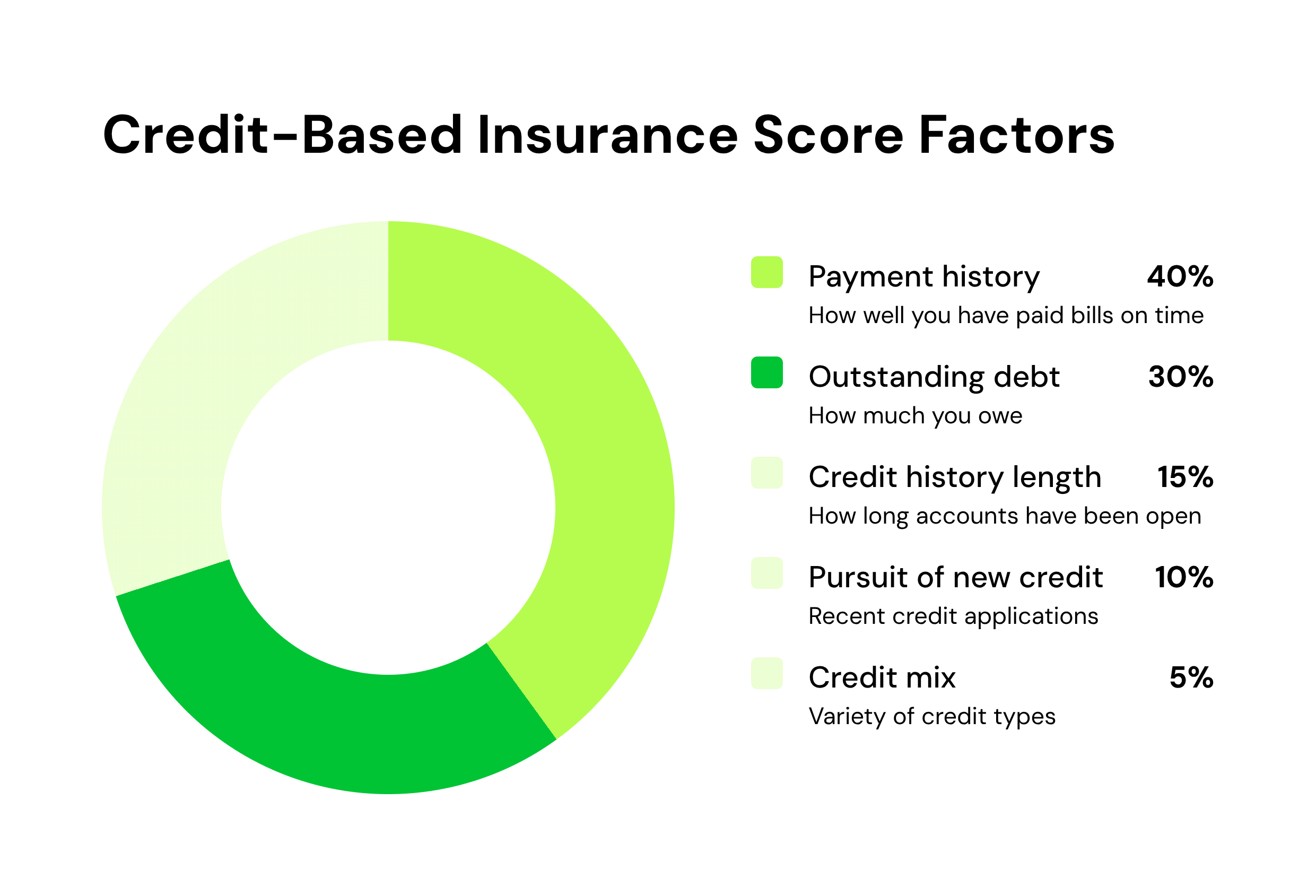
Insurers use these scores because they tend to line up with claims. About 95% of auto insurers use credit-based insurance scores, according to FICO data cited by the National Association of Insurance Commissioners. That’s only where it’s allowed: a handful of states including California, Hawaii, Massachusetts, and Michigan either don’t let insurers use credit to price policies or limit how they do.
A few rules work in your favor:
- Shopping around doesn’t hurt your credit. Insurers typically use a soft inquiry for quotes, and car insurance quotes won’t affect your credit scores.
- Credit usually can’t be the only reason. States typically don’t let insurers use these scores as the sole reason to deny, cancel, or raise the price of a policy.
- If credit costs you, you’ll hear about it. When information in your credit report plays any part in a higher price or a denial, the insurer has to send you an adverse action notice. It names the credit bureau it used and explains your right to a free copy of that report within 60 days.
That free report is worth requesting. And while you’re at it, check your reports from all three bureaus for free every week at AnnualCreditReport.com. Look for accounts you don’t recognize, late payments you don’t remember, or balances that look wrong.
A dispute corrects inaccurate information only. Accurate late payments and other negative items stay on your report until they age off. If you do find an error, you can dispute it with the credit bureau yourself for free, or Kikoff’s AI Credit Disputes tool can help you find errors and generate a personalized dispute letter in a few taps.
Read more >> Do Car Insurance Companies Check Your Credit Score?
Bottom line
Your state’s minimum is the least coverage you can carry and still drive legally. Whether it’s enough depends on what you could pay yourself if a crash costs more than your limits.
In most states, your credit can shape the price of that coverage too. Disputing errors makes your report more accurate, but it doesn’t add anything new.
On-time payment history is what builds your credit from there. Kikoff’s Credit Account reports your on-time payments to Equifax, Experian, and TransUnion, with no credit check to sign up. Plans start at $5 a month.
Frequently Asked Questions
Article Sources
Disclaimer: The information provided in this blog post is meant for informational purposes only and does not constitute financial advice.