




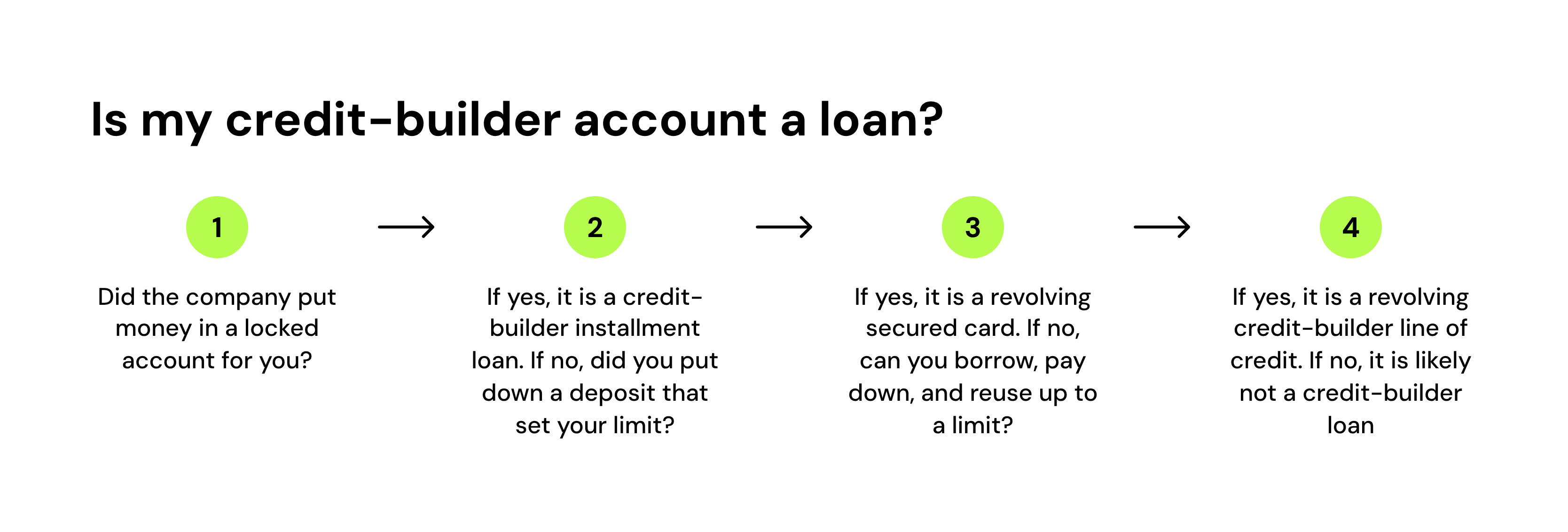
“Credit-builder account” is what companies call their product, and the account behind the name could be a loan, a secured credit card, or a revolving line of credit. Many of the best-known ones are credit-builder loans. With those, the lender keeps the money in a locked savings account until you've paid it off.
Either way, you'll be taking on a small amount of debt, and that's by design. Credit bureaus can only track how you handle money you owe, so every credit builder gives you a balance to pay down on time. The products differ in three ways: the type of account, what it costs, and what you get back when you're done.
What “credit-builder account” can mean
Companies don't all mean the same thing by it. Before you sign up for anything, it helps to know which of these three you're actually getting.
Read more >> Credit builder loan vs. credit account
How a credit-builder loan works
With most loans, you get the money up front and pay it back over time. With a credit-builder loan, the lender holds on to the money until you've made your payments.
- The lender sets the money aside. Loan amounts are typically between $300 to $1,000, according to the Federal Reserve. That amount goes into a locked account you can't touch yet.
- You make monthly payments. Each payment covers part of the loan plus any interest and fees, usually over six to 24 months.
- Your payments get reported. The lender sends each one to Equifax, Experian, and TransUnion as an installment loan.
- You get the money. Some lenders release it after each payment. Others hand it over once you've paid in full.
Say you open a $480 credit-builder loan with a 12-month term. The lender sets the $480 aside, and you pay $43 a month: $40 toward the loan and $3 in interest. After a year, you've paid $516 in total, and the $480 comes back to you.
That means you paid $36 to build a year of payment history. Keep in mind you're paying to borrow money you can't use yet, and the savings you get back is your own payments returning to you, minus what the loan cost. That can still be worth it for building on-time payment history. Just compare offers before you pick one.
Is a credit-builder loan debt?
Yes. You've agreed to pay it back, and it's reported like any other loan. While every on-time payment adds positive history, a late payment can hurt your credit.
The money in the locked account serves as collateral for the loan. If you stop paying, the lender can use the locked funds to pay off the loan. Any late payments before that still stay on your report.
Two questions are worth asking before you sign anything:
- Will a lender count it? A credit-builder loan has a monthly payment, so a mortgage or auto lender may include it when they calculate your debt-to-income ratio. If you're applying for a big loan soon, check with that lender before opening any new account.
- Will it check my credit? Some credit-builder lenders run a credit check and some don't. Ask whether it requires a hard check or soft check before you apply. A hard inquiry can show up on your report. A soft one won't affect your credit.
Who credit-builder loans work best for
The CFPB tested a credit-builder loan at a credit union and tracked how borrowers did for about 18 months. Overall, the loan worked as expected for people without existing debt, but not for people who already had debt.
People with no existing loans were more likely to end the study with a credit score. People who were already paying other loans saw their scores dip slightly on average. And 39% of all borrowers made at least one late payment on the credit-builder loan. The loan was also linked to more late payments on borrowers' other loans.
Based on those results, the CFPB said a credit-builder loan may be a good fit if you have no credit score or no current debt. If you're already paying down other loans, it suggested paying those down first or choosing a different way to build credit.
Read more >> Are Credit Builder Loans Good for Building Credit?
If you're already juggling payments, adding one more monthly bill can make the others harder to keep up with. Before you open any new account, it may help to map out what you owe and when. The National Foundation for Credit Counseling (NFCC) can connect you with free or low-cost debt counseling at 800-388-2227.
How to tell what kind of account you have
It takes only a few minutes to find out:
- Read the agreement. Look for words like loan, term, installment, and APR. Those mean you're looking at a credit-builder loan. Credit limit, line of credit, and revolving point to a credit line or card.
- Ask the company. If the agreement isn't clear, ask whether it's a loan, a secured card, or a line of credit before you apply. Also confirm which bureaus it reports to, whether a deposit is required, and what you get back at the end or if you cancel early. Write down the answers to compare against other options.
- Check your credit report. You can get your reports from all three bureaus free every week at AnnualCreditReport.com. Checking your own report doesn't affect your credit, so there's no downside to looking. Each account lists an account type, and the entry might look something like this:
What if you see an account you don't recognize? If a credit-builder loan or any other account on your report isn't yours, you can dispute it with the credit bureau that shows it for free. If you think someone opened it in your name, report it at IdentityTheft.gov, which can help you make a recovery plan.
How each type counts toward your credit
Both installment loans and revolving accounts can build your payment history, which carries the most weight in your score. They just count your balance differently.
A revolving balance counts toward your credit utilization, or how much of your available credit you're using. An installment loan's balance doesn't. So a credit-builder loan adds payment history without changing your utilization, and a revolving line adds both.
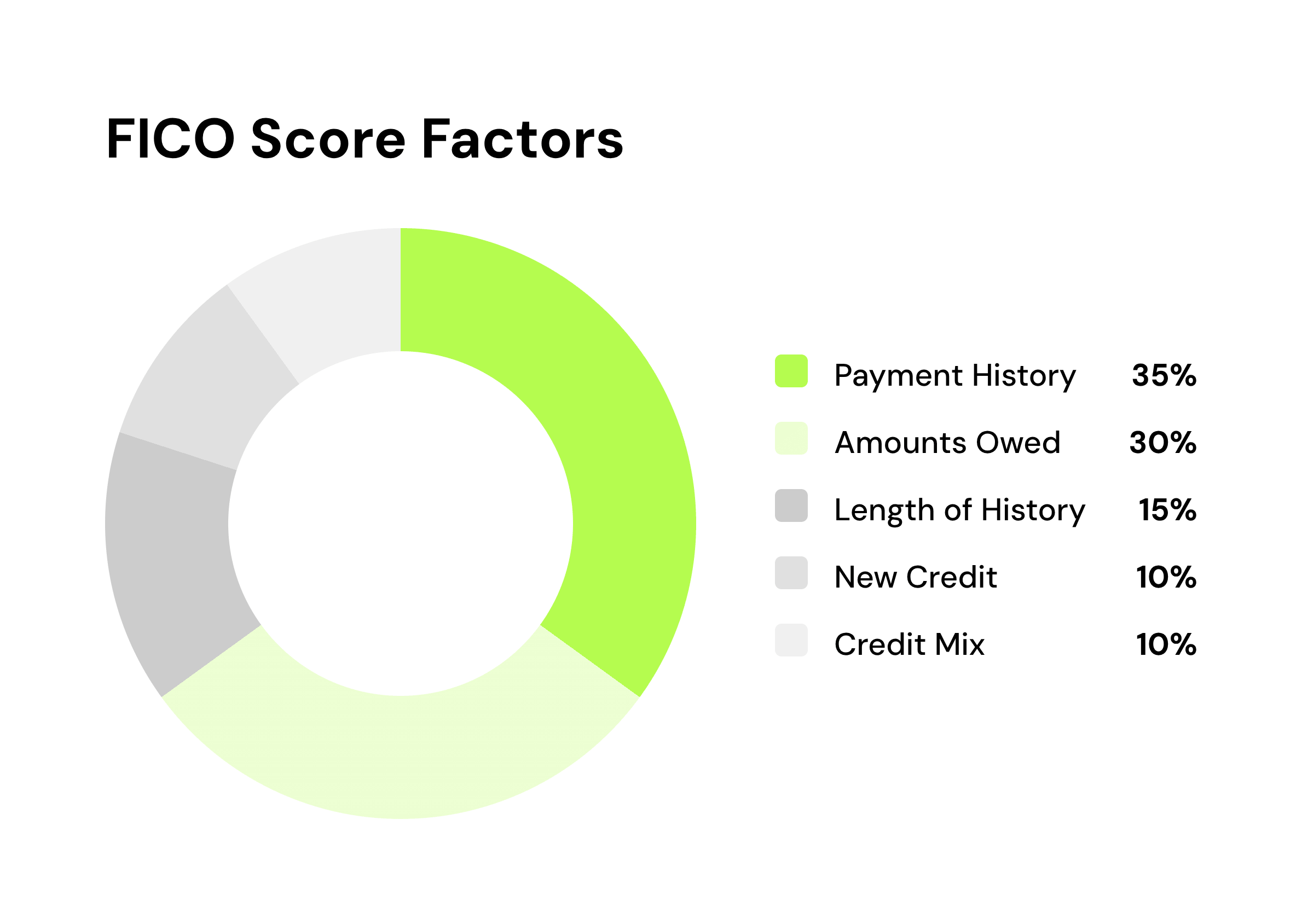
You may have heard that you need both kinds of credit. Credit mix is 10% of your FICO Score, and FICO says you don't need one of each. That's not a great reason to take out a loan you don't otherwise need.
Read more >> How Credit-Builder Loans Affect Credit Utilization?
Is Kikoff's Credit Account a loan?
No. Kikoff is a fintech company, not a bank, and the Kikoff Credit Account is a revolving line of credit you can only use in the Kikoff Store. It isn't a credit-builder loan or a secured card, so you don't put down a deposit up front, and there's no money paid back at the end. There's also no credit check to sign up, and you can use an ITIN or a Social Security number.
The Kikoff Credit Account is a real credit building tradeline, even though you can only use it in the Kikoff Store. It shows up on your credit report like any other credit account. On-time payments build your payment history, and missed payments can hurt it.
Three things to keep in mind before you sign up:
- Your plan is your first purchase. When you sign up, you buy your Kikoff plan from our in-app Kikoff Store using your Credit Account. A Kikoff Basic plan costs $60 for the year, so $60 becomes the balance on your account.
- Your monthly payment pays down that balance. The $5 you pay each month goes toward that $60, the same way a payment on a credit card goes toward what you buy. We report each on-time payment to Equifax, Experian, and TransUnion as positive payment history.
- If a payment is missed, we report that too. We report your whole payment history, not just the good months.
Because your plan sits on your Credit Account as a balance, it also counts toward your credit utilization. It works like a small balance on a credit card. As you make payments, that balance gets smaller, and so does the percentage of this credit line you're using.
Read more >> 6 Best Credit Building Apps for Those With No Credit History in 2026
Bottom line
A credit-builder account may or may not be a loan. A credit-builder loan is an installment loan that keeps your money locked in savings until you've paid it off. Other credit builders are secured cards or revolving lines. Your agreement or your credit report will tell you which one you have.
Knowing the type also tells you what you're paying for. With a credit-builder loan, you pay interest to borrow money you can't touch until the end. If you'd rather not set money aside first, Kikoff's Credit Account reports your on-time payments to Equifax, Experian, and TransUnion as revolving credit, with no deposit and no credit check to sign up. Plans start at $5 a month.
Frequently Asked Questions
Article Sources
Disclaimer: The information provided in this blog post is meant for informational purposes only and does not constitute financial advice.