.jpg)
.jpg)



When your rent due date is approaching and you realize you are short on cash, it can be incredibly stressful. The most important first steps are to contact your landlord, apply for local assistance, and understand any notice or deadline you receive.
How you handle the shortage depends on whether you are missing a small amount for one month or facing a longer-term loss of income. Start with options that do not create another bill next month.
What to do when you can't afford rent
Act before the due date if you can. Assistance applications and payment negotiations take time, and waiting may reduce your options.
Read more >> How to Get Emergency Money
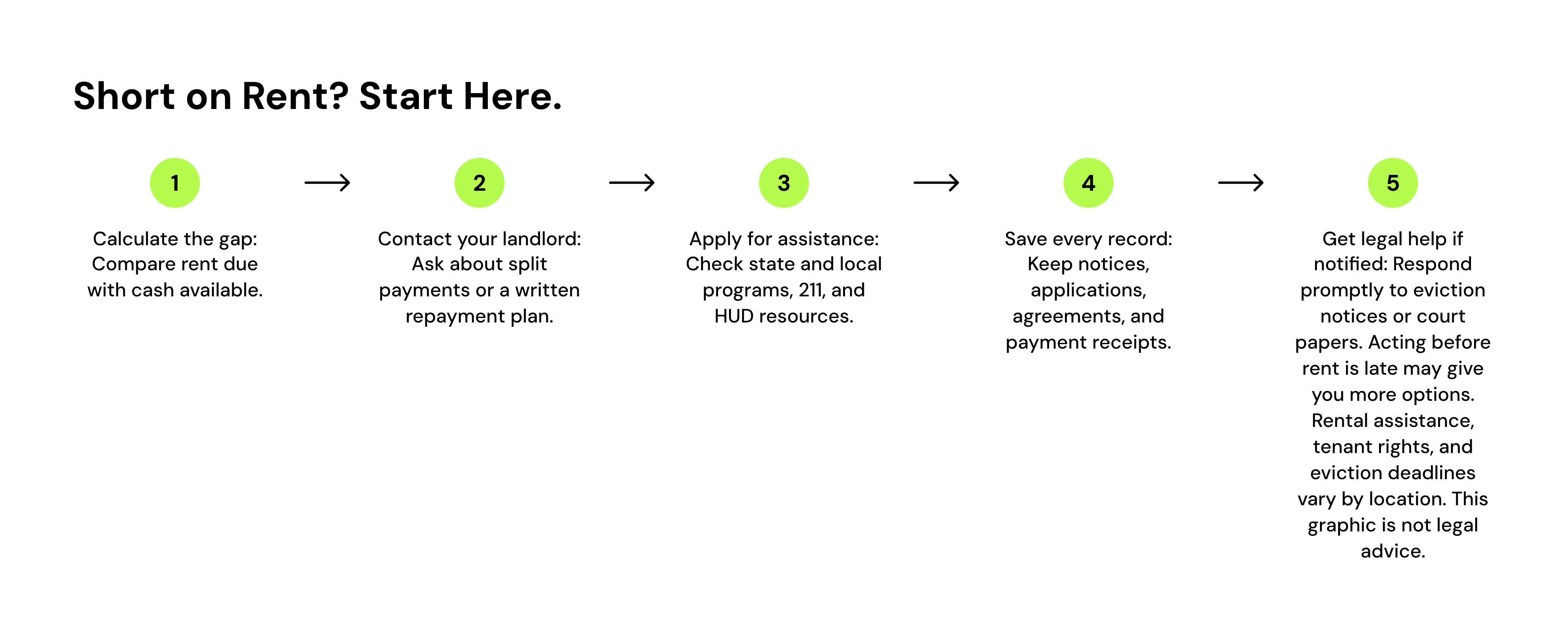
Contact your landlord before you miss the payment
Tell your landlord or property manager how much you can pay, when you expect to have the rest, and whether the problem is temporary. Ask about options such as:
- Moving the due date
- Splitting the rent into two payments
- Creating a written repayment plan
- Waiving or reducing a late fee
- Accepting a partial payment while an assistance application is pending
The Consumer Financial Protection Bureau recommends discussing repayment options early. Do not promise a payment date you are unlikely to meet, and get any agreement in writing.
Before making a partial payment, ask how it will be applied and whether accepting it changes either party's rights under local law. If you have already received a formal notice, consider speaking with legal aid before signing a new agreement.
Apply for emergency rent assistance
State and local programs may help eligible renters cover current rent, past-due rent, or other housing costs. Availability, eligibility rules, funding, and processing times vary.
USA.gov's emergency rent assistance page can direct you to state and local programs. You can also call 211 or search 211.org for rental assistance and other services in your area.
Apply as soon as possible and save confirmation numbers, emails, and copies of every document you submit. Ask whether your landlord must complete part of the application.
Watch for scams: Do not pay someone to secure government rental assistance or share sensitive information with an organization you cannot verify. Start with government agencies, 211, HUD, or an established local nonprofit.
Contact local housing and community organizations
Community action agencies, housing nonprofits, legal aid organizations, and faith-based groups may offer rent help or connect you with another program. Some organizations cannot pay rent directly but may help with food, utilities, or transportation, freeing up money for housing.
If you are at risk of losing your housing, use HUD's Find Shelter tool to locate rental assistance, housing counseling, shelters, food pantries, and other local resources.
Check whether subsidized-housing hardship rules apply
If you live in public housing or use a Housing Choice Voucher, report a drop in income to your public housing agency promptly. Your portion of the rent may need to be recalculated.
HUD also explains that some voucher and public-housing tenants facing financial hardship may request a minimum-rent hardship exemption. Follow your housing agency's documentation and deadline requirements.
Ask family or friends only with a clear plan
If someone you trust can help, agree on the amount, repayment dates, and what happens if you need more time. Put the terms in writing even when the arrangement is informal.
Do not promise repayment from money already needed for next month's rent. A realistic plan protects both your budget and the relationship.
Treat borrowing as a last-resort bridge
A small-dollar loan or cash advance may cover a one-time gap, but repayment can reduce your next paycheck and create another rent shortage. Before borrowing, compare the APR, fees, repayment date, automatic-withdrawal terms, and total amount due.
Avoid assuming that an advance is free because it does not charge interest. Express-delivery fees, subscriptions, tips, and overdraft fees can still increase the cost. If the shortage is likely to continue, borrowing is unlikely to solve the underlying problem.
What happens if you don't pay rent on time?
The consequences depend on your lease and state or local law. A late payment may lead to a fee, a written demand for payment, an eviction filing, or collection activity, but the sequence and deadlines are not the same everywhere.
Read more >> How to Pay Bills With No Money
Late fees depend on your lease and local law
Do not assume that every lease includes a grace period. Review the due date, late-fee clause, notice requirements, and accepted payment methods in your rental agreement.
A landlord generally cannot demand a fee that is not authorized by your agreement or that is prohibited by state or local law. If a charge seems incorrect, request an itemized ledger and consider asking a tenant-rights organization or attorney to review it.
A landlord may send a notice before filing a case
Depending on local law, a landlord may need to give you a written notice and time to pay or respond before filing an eviction lawsuit. A landlord's notice is not necessarily the same as a court order requiring you to leave.
Read every notice immediately. Record when and how you received it, keep a copy, and follow the stated response deadlines. Do not ignore court papers even if you are applying for assistance or negotiating with the landlord.
Eviction requires a legal process
Eviction procedures and timelines vary, but a landlord generally must use the applicable court process rather than removing you personally. The CFPB states that a landlord cannot force you out by changing the locks without a court order.
If an eviction case has been filed, respond by the deadline and attend every required hearing. The CFPB's eviction guidance explains that you may qualify for free legal aid and may be able to raise defenses or tell the court about a pending assistance application.
Get legal help quickly: If you receive a demand for payment, termination notice, or court papers, contact a local legal aid organization or tenant lawyer. Deadlines can be short, and your rights depend on where you live.
Unpaid rent may continue to affect you
Moving out does not necessarily erase unpaid rent. A landlord may seek the balance, send it to a collector, or report information used in tenant screening, subject to applicable law.
Ask for an itemized statement of what you owe and keep records of payments and communications. If a debt collector contacts you, you have rights under federal debt collection law, including protections against deceptive, unfair, or abusive practices.
How to reduce the chance of another rent shortage
Not every rent problem can be prevented. A job loss, medical expense, family emergency, or rent increase can overwhelm even a careful budget. Once the immediate crisis is under control, focus on the changes that are realistic for your situation.
Read more >> How to Save Money Fast on a Low Income
Build the budget around housing first
List your rent, utilities, food, transportation, insurance, minimum debt payments, and other essentials. Compare that total with your reliable take-home income.
If your normal income does not cover essential expenses, small spending cuts alone may not close the gap. Look for benefits, income changes, debt-payment assistance, or longer-term housing options rather than blaming the shortage on minor purchases.
Start a small rent buffer
You do not need to save a full month of rent immediately. A smaller first goal, such as part of one paycheck or one common late fee, can still create breathing room.
Keep the money separate from everyday spending if possible. Add to it after each payday, even if the amount changes from month to month.
Align due dates with your income
Ask whether your landlord or other bill providers will move a due date or allow split payments. Aligning large bills with paydays can make cash flow easier to manage even when monthly income stays the same.
Review housing affordability without rushing to move
If rent repeatedly consumes more than your budget can support, explore roommate arrangements, subsidized housing, lease-renewal negotiations, or a less expensive home. Moving also has costs, including deposits, application fees, transportation, and time away from work, so compare the full transition cost.
Bottom line
If you cannot afford rent, contact your landlord and apply for assistance as early as possible. Keep written records, read every notice, and get legal help quickly if an eviction case is threatened or filed.
Borrowing may cover a small one-time gap, but it can also reduce the money available for next month's rent. Compare the full cost and repayment timing before accepting any loan or advance.
Once the immediate problem is under control, building a positive credit history may support future housing and borrowing options. Kikoff's free Credit Account reports on-time payments to Equifax, Experian, and TransUnion with no hard credit check. It is not emergency rent assistance, and results vary.
Frequently Asked Questions
Article Sources
Disclaimer: The information provided in this blog post is meant for informational purposes only and does not constitute financial advice.