.jpg)



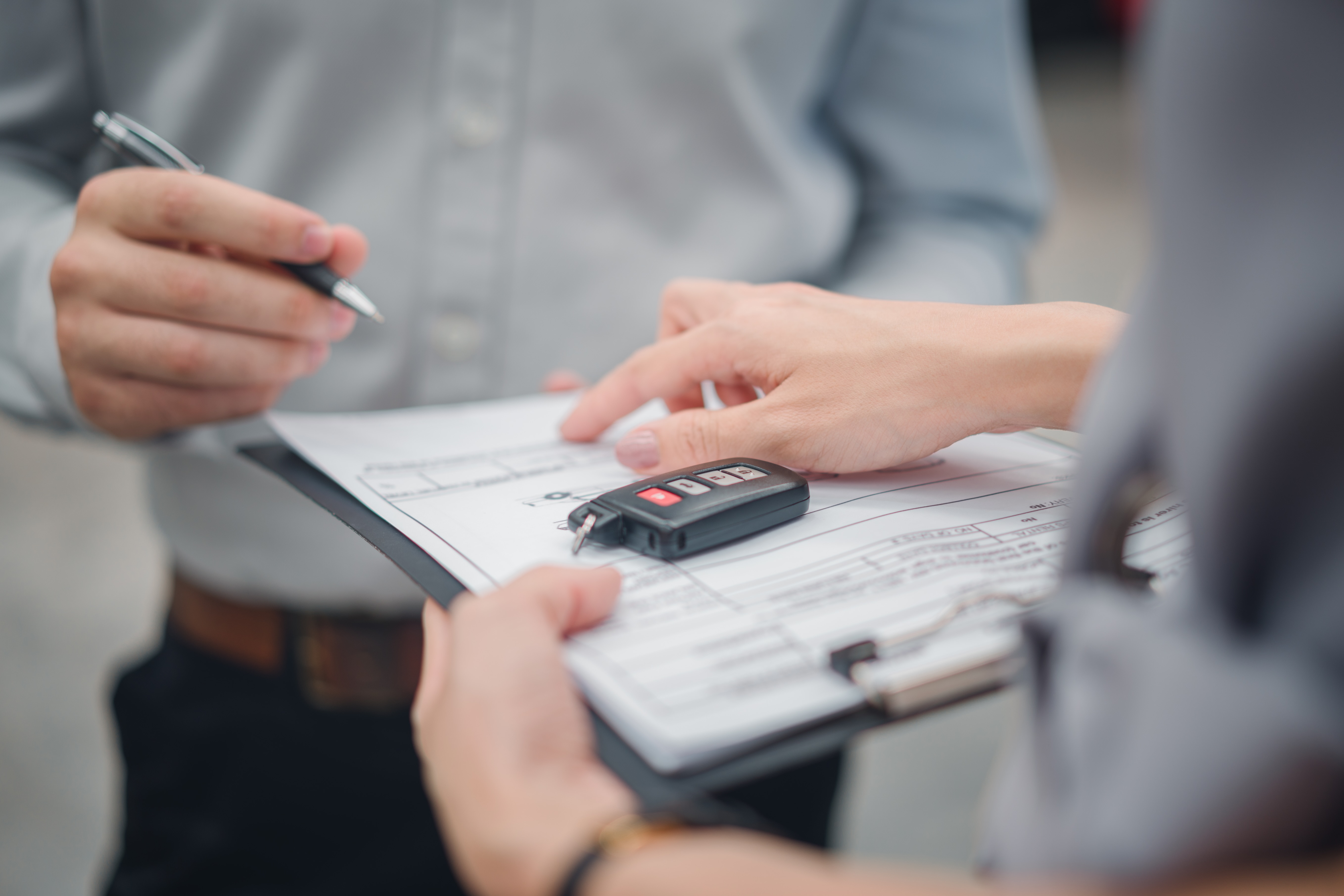
If you like your leased car, you may not want to give it back when the lease ends. A lease buyout lets you purchase the vehicle instead of returning it to the dealer.
While that sounds simple, whether it's a good deal comes down to three numbers: the buyout price in your contract, what the car is actually worth, and the rate you'd qualify for based on your credit. Get those details together, and you'll have a clearer picture of whether buying makes sense or whether you're better off looking elsewhere.
What is a car lease buyout?
A car lease buyout is when you purchase the vehicle you're currently leasing from the dealership you're leasing it from. Most lease agreements list a residual value, which represents the vehicle’s estimated value at the end of the contract.
When you opt for a car lease buyout, you pay the amount required under your agreement, plus any fees, taxes, or other charges. You can pay cash or finance the buyout, if you qualify.
Read more >> How Your Credit Score Affects Car Loans
5 steps to buying out your car lease
Most car lease buyouts follow four general steps, with some variation depending on your specific loan and dealer.

Step 1: Find your residual value and buyout price
Look for a residual value or purchase price option in your lease agreement. If you can't find it, call your leasing company directly and ask.
If you aren't interested in waiting out the end of your lease to buy the car, ask your leasing company for a current buyout quote. This is an itemized figure that includes taxes, fees, and any other charges.
Don't assume the residual value represents your exact final cost. Depending on the agreement and how early in the lease you exercise your buyout option, the final price could be higher than the residual value estimate.
Step 2: Compare the buyout price to market value
Research what similar vehicles sell for in your area using your vehicle’s make, model, year, trim, and mileage.
If your total buyout price is significantly less than what similar vehicles sell for, buying out your lease could be a smart move. But if the buyout price is more costly than purchasing a similar used vehicle, it may not be worth buying out your lease with the dealer.
Step 3: Decide between an early buyout or end-of-lease buyout
You often have two options for purchasing your leased vehicle:
- Wait until the lease ends to buy the car from your dealer
- Buy out your lease contract early, if it's allowed
Depending on your agreement's terms, an early buyout could require paying your remaining lease obligations as a down payment.
If both options are available, ask the leasing company for exact figures to compare, especially if you have only a few months left on your lease.
Step 4: Secure financing if needed
If you don't want to pay cash, learn whether you can finance the buyout.
Shop around before accepting the first loan offer. Compare the annual percentage rate (APR), loan terms, monthly payments, and total interest paid over the life of the loan.
Taking a longer loan term can reduce your monthly payment, but you'll pay more interest over time. A shorter term typically increases your monthly payment but can save you hundreds or thousands of dollars in interest over the life of the loan.
Step 5: Contact your leasing company and complete the purchase
If you decide to move forward with the buyout, let your leasing company know whether you plan to finance. The lender you choose typically coordinates payment with the leasing company.
Keep copies of all purchase documents and confirm that the title and registration are transferred correctly.
Run the numbers >> Use Kikoff's auto loan refinance calculator to see how a lower rate could reduce your monthly payment and what you'd save over the remaining term.
When a lease buyout makes sense
A lease buyout can be a good fit if the purchase price plus fees compares favorably with the car's current market value. That's the first thing to check, looking up what similar vehicles are selling for and comparing it against your own.
Beyond the math, it helps that you know this car and its history. You know how it drives and what maintenance it's had, which removes the guesswork that comes with buying from a stranger.
A buyout can also be the cheaper path if you've gone well over your mileage allowance or expect significant wear-and-tear charges.
Read more >> What is a Good Credit Score?
When a lease buyout doesn’t make sense
Skip the lease buyout if you'd be overpaying compared to similar used vehicles. In that case, let the lease end and buy something comparable on the open market.
Think twice if the car has had mechanical problems or you simply never loved it. Starting fresh with a different model could be the wiser move.
Most importantly, weigh whether you can comfortably afford it. If the payments would leave your budget in a tight spot, look at other options before committing.
How your credit score affects lease buyout financing
A buyout is an auto loan, and like any other loan, your credit score sets your rate, with that rate applying to the whole residual value.
That spread can add up. On a $22,000 buyout over five years, a borrower with good credit might pay around 5.5%, while someone with a limited credit history might pay closer to 13.5%. That's a difference of about $86 a month and roughly $5,000 in interest over the life of the loan.
Check your score before you apply. You can see it for free through most banking apps, your card issuer, or your Kikoff account, and knowing where you land tells you whether to shop rates widely or wait a few months before committing.
| Loan detail | Good credit (5.5% APR) | Poor credit (13.5% APR) |
|---|---|---|
| Amount financed | $22,000 | $22,000 |
| Loan term | 60 months | 60 months |
| Monthly payment | $420.23 | $506.22 |
| Total interest paid | $3,213.53 | $8,373.00 |
| Total cost of loan | $25,213.53 | $30,373.00 |
| Extra paid due to credit | — | $5,159.47 ($85.99/mo) |
Bottom line
A lease buyout usually means financing the residual value, and that loan is priced on your credit. A stronger score typically means a lower rate on the amount you're borrowing, which can save you thousands over the life of the loan.
If your lease still has a few months on it, that's time you can use to build your credit. Kikoff's Credit Account reports your on-time payments to all three credit bureaus, with no hard credit check required and plans starting at $5 a month.
Frequently Asked Questions
Disclaimer: The information provided in this blog post is meant for informational purposes only and does not constitute financial advice.