.jpg)



Gross income and net income both tell you how much money you earn, but they measure your earnings at different points.
Gross income is what you earn before taxes and other deductions. Net income is what’s left after them, the amount that actually lands in your bank account. Budget with the gross number and you’ll come up short every month. But lenders and the IRS both start from gross, so you need to know both.
What is gross income?
Gross income is your pay before anything comes out. It includes wages, salary, commissions, tips, and bonuses. For taxes, the IRS says you generally must include in gross income everything you receive in payment for personal services.
Say you earn $60,000 a year. That’s your gross income before your employer takes out federal income tax, Social Security and Medicare taxes, health insurance premiums, and retirement contributions.
Your pay stub shows your gross pay for each pay period. If you have other income, such as rental income, investment earnings, retirement income, or self-employment earnings, add it to your gross income too.
Gross isn’t what lands in your account
On a $4,500 monthly paycheck, Social Security, Medicare, federal and state tax, health insurance, and a 5% retirement contribution take about $1,500. That's roughly a third, before the money reaches you.
Find the net pay line at the bottom of your pay stub. That’s the number to budget from. If your hours vary, use the lowest month from the last six.
What is net income?
Net income is what’s deposited in your bank account after all deductions. If you earn $5,000 a month and your employer deducts $1,200, your net income is $3,800.
Your net pay can change from one paycheck to the next. Bonuses, commissions, and overtime change how much is withheld, and so do changes to your benefits.
At a glance: Gross vs. net income
The difference comes down to when your earnings are measured: before deductions or after.
For example, someone earning $72,000 a year has a gross monthly income of $6,000. If $1,500 a month goes to taxes, insurance, and retirement, their net monthly income is $4,500.
Why the difference matters for your finances
Budgeting and spending
Use your net income to build a budget, because that’s the money you actually have. Start with your average monthly take-home pay, then subtract fixed expenses, variable expenses, debt payments, and savings. If your income changes from month to month, budget from a lower month rather than an average one.
Loan and credit applications
Lenders usually ask for your gross income. One reason is your debt-to-income ratio (DTI), a simple calculation that divides your monthly debt payments by your gross monthly income. Lenders use it to judge whether you can afford a new payment, such as a mortgage or car loan.
Income is only half of the application. Lenders also check your credit, and a higher score makes it easier to qualify for a loan and low interest rates.
Tax planning
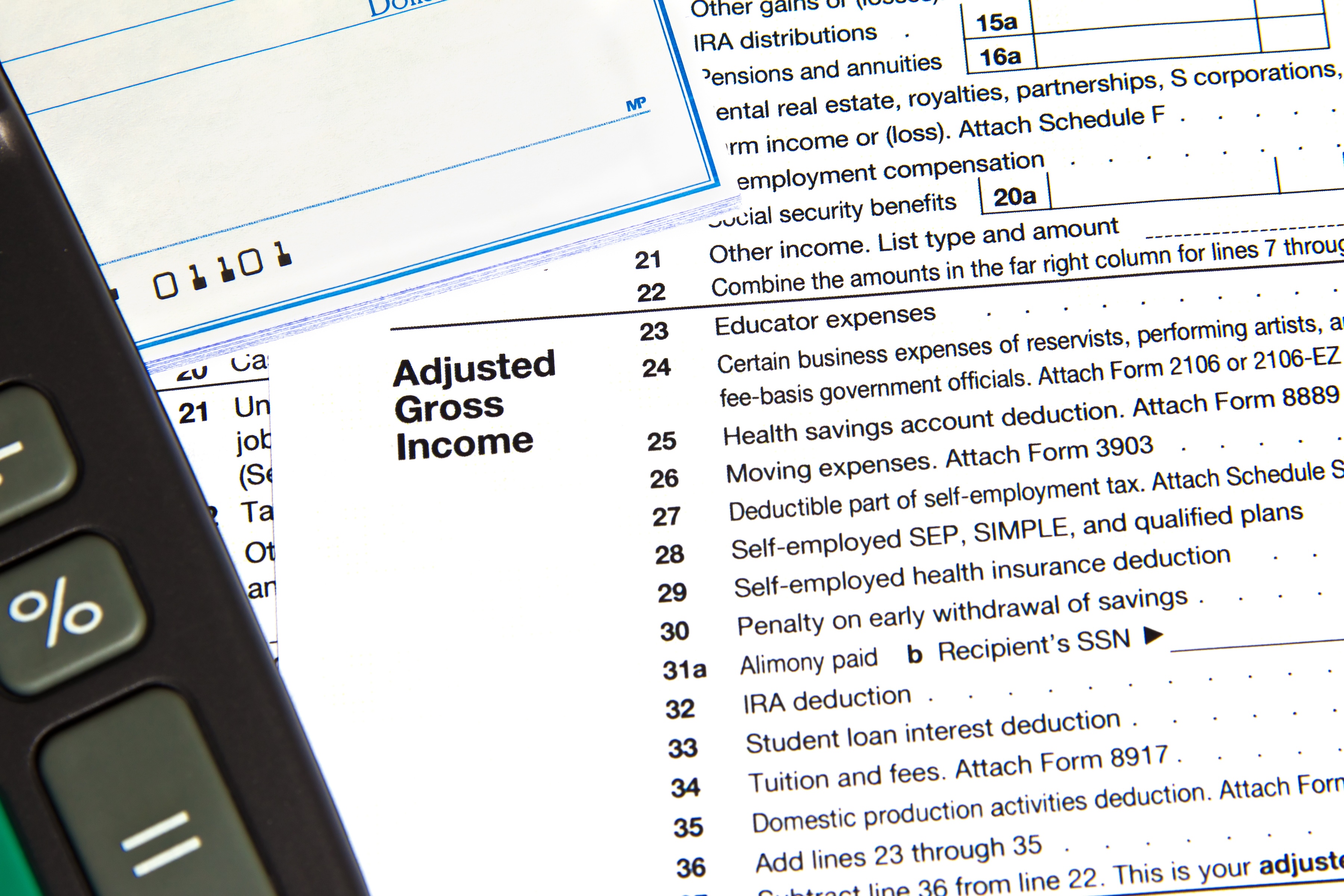
Your taxes also start from gross income. Adjusted gross income (AGI) is your total income for the year after a few specific deductions you can take without itemizing, like student loan interest and traditional IRA contributions. Your taxable income is then your AGI minus the standard deduction or your itemized deductions.
If your pay changes a lot, through a raise, a new job, or a second job, check whether you’re still having the right amount withheld. The IRS Tax Withholding Estimator shows whether you’re on track, and you can give your employer a new Form W-4 to change it.
Read more >> What Is a Good Debt-to-Income Ratio?
How to calculate your gross and net income
Bottom line
Plan your spending around your net income, the money that actually reaches you. Keep your gross handy for loan applications.
A steady paycheck shows a lender you can afford a payment, but it won’t raise your credit score, and your score helps set your rate. On-time payments do raise it. A Kikoff Credit Account reports yours to all three credit bureaus, so they count before you apply. Plans start at $5 a month with no credit check to sign up.
Frequently Asked Questions
Article Sources
Disclaimer: The information provided in this blog post is meant for informational purposes only and does not constitute financial advice.