


.jpg)



If you rent and are looking for ways to improve your credit profile, you're probably wondering, "Does paying rent build credit?" Not usually, but there are some workarounds that you can take advantage of.
But how does renting affect credit scores exactly, if at all? With the right tools, you can report your rent payments to one or more of the credit bureaus, which can have long-term benefits on your score. Here's everything you need to know.
Does renting affect credit scores?
No, not unless you opt-in for reporting. You can rent for years and make every payment on time, but you won't get credit benefits for your diligence unless you use a reporting tool. Take a closer look at why:
Renting does not automatically affect your credit score
Credit scoring models consider on-time payment history as the most heavily weighted factor when calculating your score.[1] Rent payments aren't automatically reported, though, which means you could be missing out on some huge credit score perks.
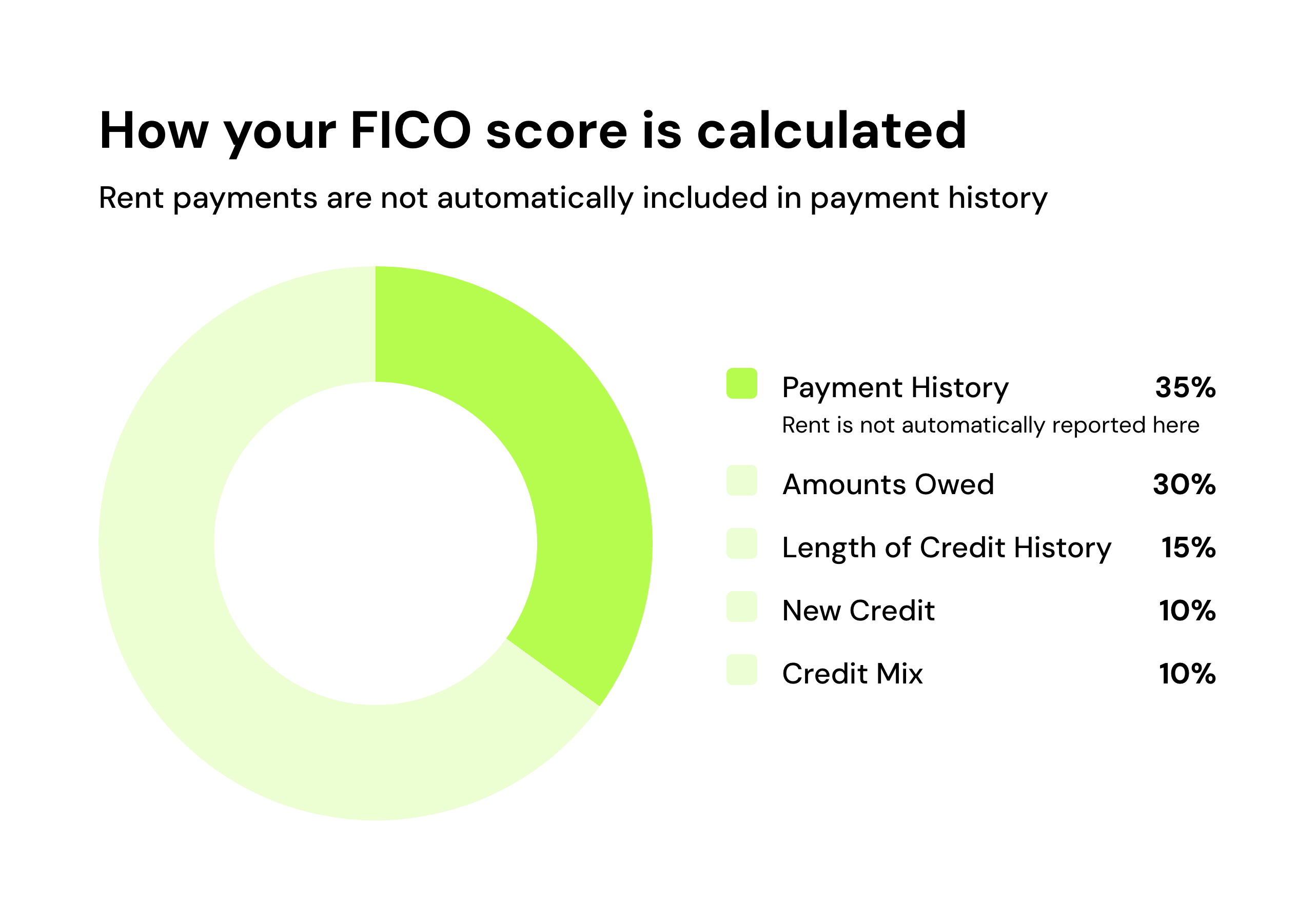
The lack of reporting can be especially frustrating for individuals who are building credit for the first time, or rebuilding after a financial rough patch.
Why rent payments are not reported by default
Reporting rent payments represents an extra step for property managers and landlords. Since these entities aren't lending you money, they usually decide that self-reporting isn't worth the hassle.
How landlords and property managers handle credit reporting
Unfortunately, most landlords and property managers will only self-report negative rent-related behavior, such as if you miss enough payments to result in eviction. Many don't report a single missed payment.
So does renting affect credit scores? Not automatically. You'll need to use a third-party reporting service that verifies your rent payments so you can unlock score benefits.
How renting can help your credit score
Paying your rent on time can benefit your credit profile and help improve your score over time. You can take advantage of the positive financial behavior you are already engaging in when you take these steps:
Rent reporting services
A rent reporting service reports verified rent payments to one or more of the credit bureaus, which are Equifax, Experian, and TransUnion.[2] Some of these services are free, while others charge a fee. In most cases, you'll have to grant some level of access to your bank account so that the reporting service can verify your rent payments.
When comparing rent reporting services, you should consider the cost, what other features they offer, and which bureaus they report to. You may decide to use more than one reporting tool so that you can improve your profile with all three bureaus.
How Kikoff reports rent to Equifax and TransUnion
Kikoff is a credit-building platform that offers a variety of tools to help you improve your financial profile. All subscription tiers include rent reporting. Higher-tiered plans allow you to report past rent payments as well, which can give your score a boost. Payments are reported to Equifax and TransUnion.
Additionally, Kikoff offers a free credit account, an annual subscription option, and a secured credit card. Our platform includes free dispute tools and free debt negotiation, too.
How renting can hurt your credit score
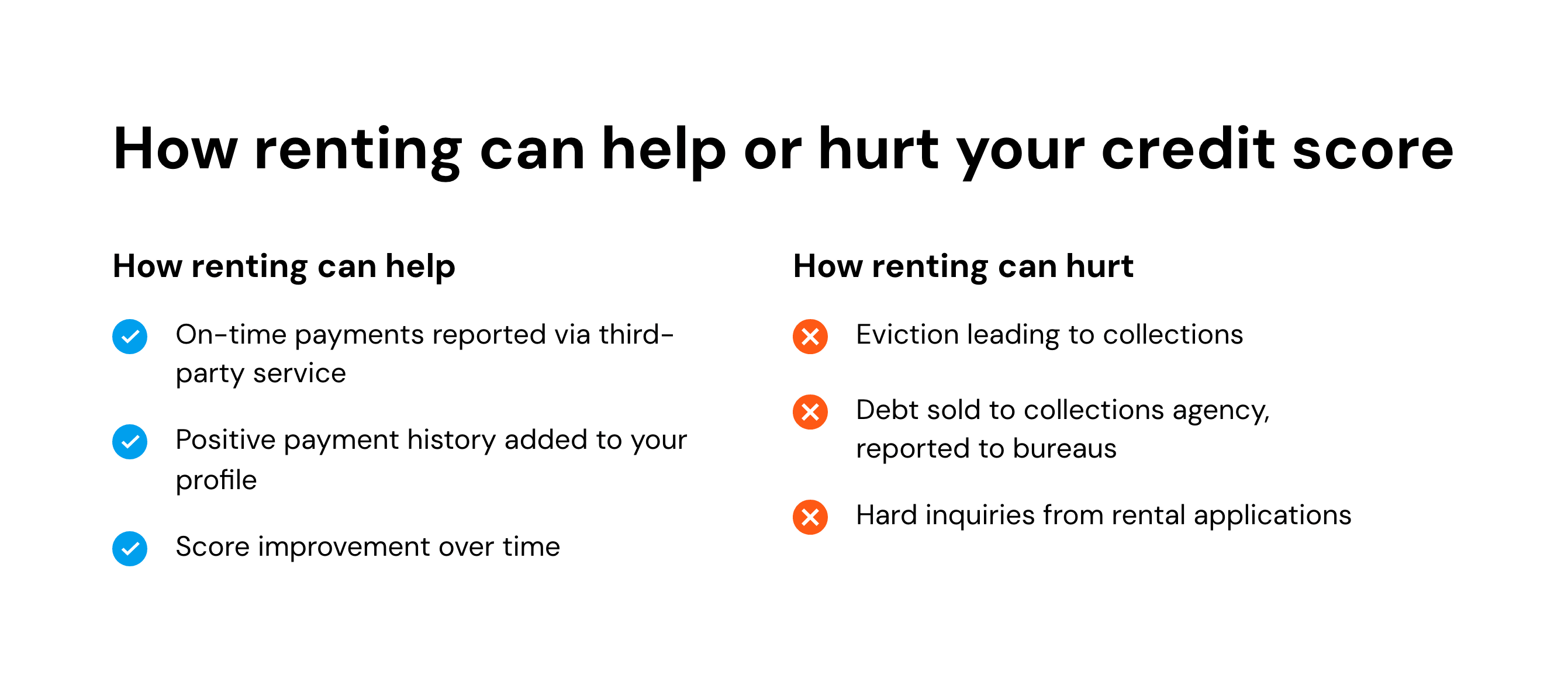
Being a tenant can occasionally damage your score, but only in specific scenarios.
Evictions and collections
Landlords and property managers don't typically make the effort to report on-time rent payments. Most of them won't report a single late payment, either.
However, if you are evicted from the property, the landlord will likely sell off your debt to a collections agency. Your delinquency will also be reported to one or more of the credit bureaus, which can have a serious negative impact on your score.[4]
If you rent, strive to make all payments on time. Falling behind can lead to an eviction. Breaking your lease and failing to pay termination fees could also result in your account being sent to collections.
Hard inquiries from rental applications
Many property managers run credit checks on potential tenants. When filling out a rental application, find out whether it includes a soft or hard credit check.
A soft credit check won't hurt your score. A hard inquiry may drop your score by a few points, but your score should bounce back in a few months, especially if you take advantage of rent reporting.[3]
How to make your rent payments work for your credit
Claiming your rent payments is easier than ever, thanks to all of the different rent reporting tools out there. It's important to find one or two tools that report verified rent payments so you can add positive history to your profile. Over time, you should experience improvements to your score, especially if you are managing your credit utilization well and making all other payments on time.[1]
Kikoff reports to Equifax and offers other credit-building tools, making it a great place to start, no matter where you are in your financial journey. If you want your rent payments reported to the other bureaus, consider complementary tools that report to Experian and TransUnion.
Start reporting your rent today
Want to start getting credit for your on-time rent payments and build credit with a user-friendly platform? Take a step toward stronger credit habits with Kikoff.
Frequently Asked Questions
About the editor

Article Sources
Disclaimer: The information provided in this blog post is meant for informational purposes only and does not constitute financial advice.