


.jpg)
.jpg)



An approved student loan deferment generally does not hurt your credit by itself. Deferment temporarily postpones required payments when you meet specific eligibility rules, and your loan should remain in good standing while the deferment is active.
However, deferment does not erase missed payments that occurred before approval. Interest may also continue to accrue, and the growing balance can make repayment harder later. That is why it is important to apply before you miss a payment and confirm that your servicer has approved the request.
Does deferring student loans hurt your credit?
Federal student loan deferment is an authorized pause in required payments. Federal loan servicers report account information to the credit bureaus, but an approved deferment should not be reported as a missed payment or delinquency.
The loan still appears on your credit reports, including its balance and payment status. Future lenders may consider that debt when reviewing an application, even though you are not currently required to make payments.
Deferment also does not remove accurate late payments that were reported before the pause began. If your account was already past due, bringing it into deferment may prevent additional required payments during the approved period, but it does not automatically undo the earlier credit history.
Who may qualify for federal student loan deferment?
Eligibility depends on your loan type, when the loan was made, and your circumstances. Common deferment categories can include:
- Enrollment at least half time at an eligible school
- Unemployment
- Economic hardship
- Certain periods of active-duty military service and the period immediately afterward
- Cancer treatment
- Participation in an approved graduate fellowship program
- Participation in an approved rehabilitation training program
Each category has its own documentation and time limits. Use the Federal Student Aid temporary-relief guidance and contact your loan servicer to confirm whether your loans qualify.
Important 2027 change: Under current Department of Education rules, unemployment and economic-hardship deferments will no longer be available for Direct Loans disbursed on or after July 1, 2027. Other deferment and forbearance changes also take effect that day. Check current Department of Education updates before applying.
Private student loans do not follow the same federal deferment rules. Review your promissory note or contact the private lender to learn whether a payment pause is available and how interest and credit reporting will work.
Deferment versus delinquency
Deferment and delinquency are not the same.
- Deferment is an authorized temporary pause in required payments.
- Delinquency begins when you fail to make a required payment by its due date.
- Default occurs later if a federal loan remains delinquent long enough.
According to Federal Student Aid, a federal loan becomes delinquent the first day after a missed payment. Servicers report the delinquency to the three major credit bureaus once it reaches 90 days, and most federal loans enter default after 270 days without payment.
A late payment does not cause the same score change for every borrower. Its effect depends on the scoring model and the rest of the person’s credit profile. The practical point is simpler: Apply for relief before missing a required payment whenever possible.
When can credit problems occur around a deferment?
You missed payments before the deferment was approved
Submitting an application does not necessarily stop your current payment obligation. Continue making required payments until your servicer confirms that the deferment is active, unless the servicer gives you different instructions.
If your account was already delinquent, ask whether the approved deferment covers any earlier period. Do not assume that it will remove negative information already reported.
The deferment ends and payments resume
Missing the first payment after deferment can make the account delinquent. Check your end date, update your contact information, and confirm your next payment amount before repayment resumes.
If your income or family size has changed, review your repayment-plan options before the pause expires. Your available plans depend on your loan type and disbursement date.
Accrued interest increases your balance
The federal government generally pays the interest on qualifying subsidized loans during eligible deferment periods. Interest usually continues to accrue on unsubsidized loans and PLUS loans.
When unpaid interest capitalizes, it is added to the principal balance. Future interest is then calculated using that higher balance. Capitalization does not function like a missed payment, but the higher balance and future payment can create additional financial pressure.
If interest is accruing, you may make voluntary interest payments during deferment. Ask your servicer which loans are accruing interest and whether unpaid interest will capitalize when the deferment ends.
Deferment versus forbearance
Deferment and forbearance both provide temporary relief, but they have different eligibility rules and interest treatment.
With deferment, the government may pay the interest on certain subsidized federal loans. During forbearance, interest generally accrues on subsidized, unsubsidized, and PLUS loans.
Neither approved status should be reported as a missed payment. However, both can increase the amount you owe, and time in deferment or forbearance can affect progress toward benefits such as Public Service Loan Forgiveness or income-driven repayment discharge.
Federal Student Aid recommends exploring repayment plans before using temporary relief as a last resort. Depending on your loans, an income-driven option such as the Repayment Assistance Plan may offer a lower required payment while keeping you in repayment. Compare your current options with the Federal Student Aid Repayment Calculator.
What to do before requesting deferment
Take these steps before pausing payments:
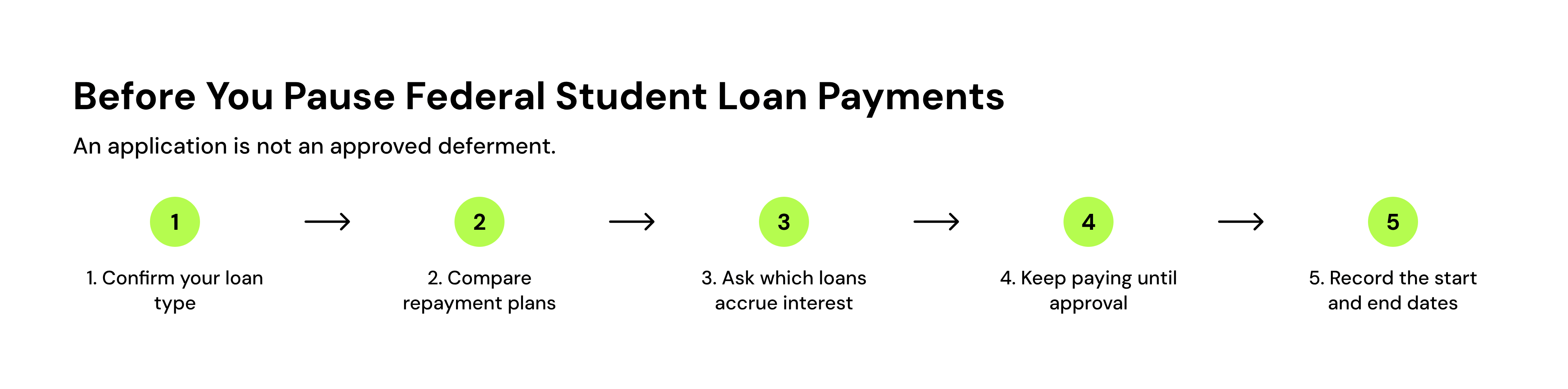
- Confirm your loan type. Log in to StudentAid.gov to identify your federal loans and servicer.
- Review repayment plans first. A lower payment may fit better than a temporary pause, especially if you are pursuing forgiveness or discharge.
- Ask about interest. Confirm which loans will accrue interest and whether that interest may capitalize.
- Keep paying until approval. Do not stop required payments based only on submitting an application.
- Save the approval notice. Record the deferment’s effective date and end date.
- Monitor your account and credit reports. Contact your servicer promptly if the status or balance appears incorrect.
Bottom line
An approved student loan deferment generally does not hurt your credit by itself. Credit problems are more likely when payments were missed before approval, payments resume without notice, or the higher balance after accrued interest makes repayment harder.
Contact your loan servicer before missing a payment, compare current repayment plans, and understand how interest will be handled. If you use deferment, keep records and check your account before the pause ends.
If you are also working to establish positive payment history, Kikoff’s free Credit Account reports your on-time payments to all three major credit bureaus, with no hard credit check to sign up. It can help you build credit, but it does not change your student loan balance, deferment eligibility, or repayment obligations.
Frequently Asked Questions
Article Sources
Disclaimer: The information provided in this blog post is meant for informational purposes only and does not constitute financial advice.