

.jpg)



If you're thinking about financing a vehicle, you're probably wondering, "Does buying a car build credit?" Yes, if you take out a auto loan to buy it. Here's what you need to know.
Does financing a car build credit?
Taking out a loan to purchase a vehicle will build your credit score by adding positive payment history to your financial profile. Here's how it helps and how you can make the most of your car purchase.
Auto loans are installment accounts reported to the bureaus
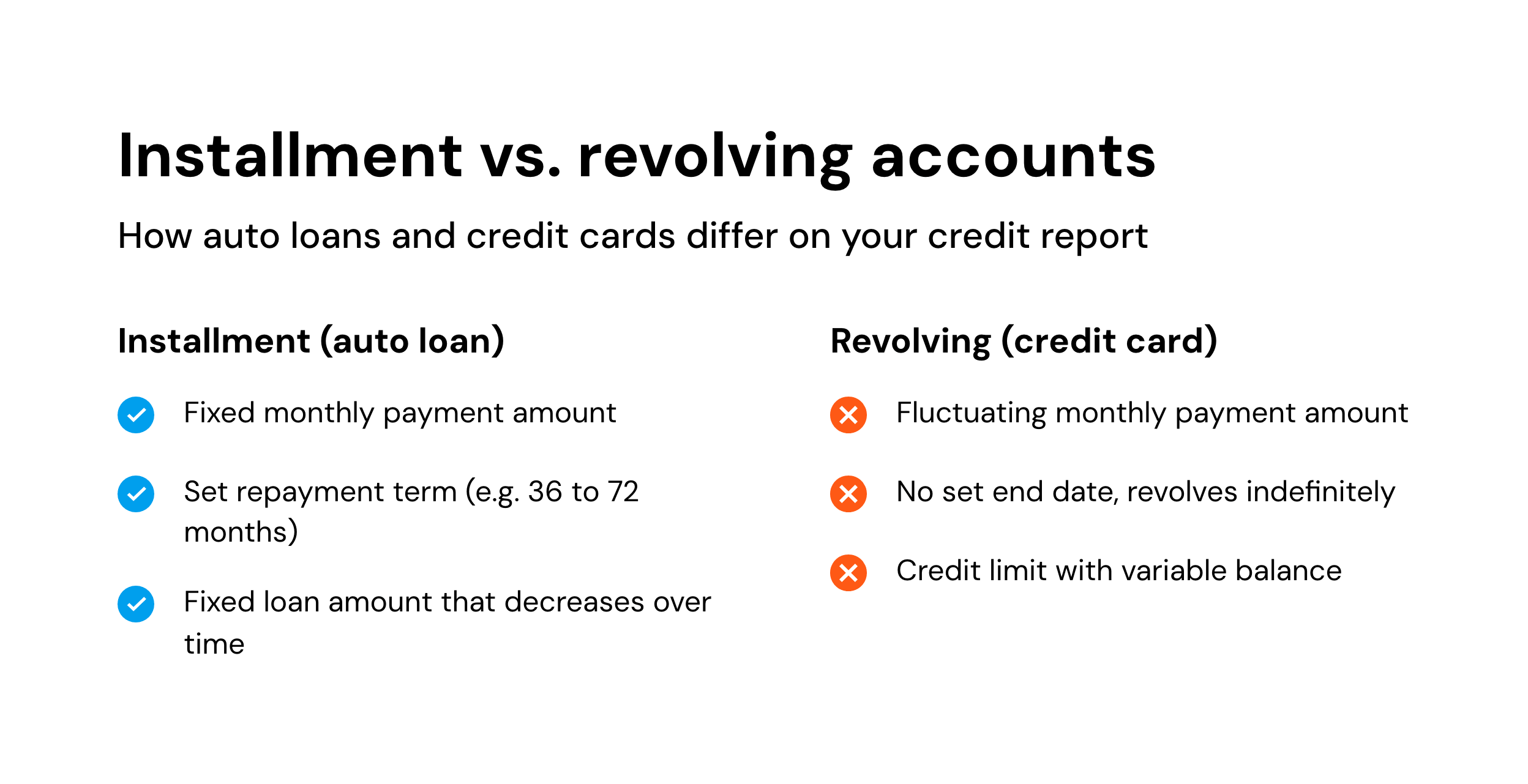
When you finance a car, you're taking out an auto loan, which is considered an installment account because you repay the debt in fixed monthly payments over a set period. For comparison, credit cards are revolving accounts with fluctuating payments and no set repayment term.
Most auto lenders report your loan activity to the three major credit bureaus, which are Equifax, Experian, and TransUnion. That means your payment behavior becomes part of your credit report.
However, some buy-here, pay-here dealerships don't report your payments, which means your credit won't improve from your car purchase.[2]
On-time payments add positive history to your credit file
Does financing a car build credit? If you are making your payments on time, yes. However, your auto loan can work against you if you miss payments and those late payments are reported to the credit bureaus.
The good news is that lenders typically offer a grace period. If you are past your due date but pay before the grace period ends, the negative activity won't be reported to the credit bureaus. You could still be charged a late fee, though.
How an auto loan can help your credit score
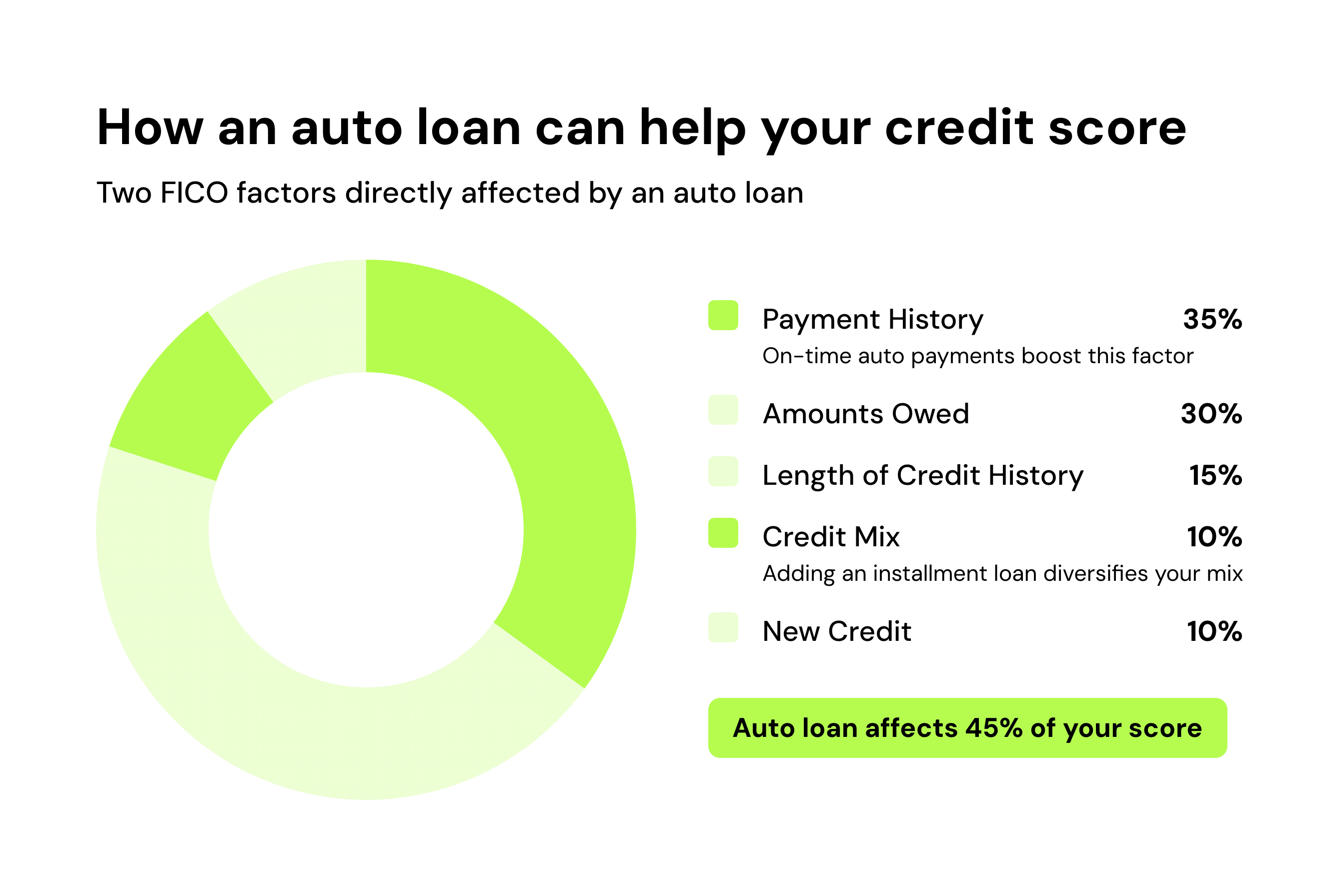
Financing a car can improve your score over time in a couple of ways.
Payment history
Your payment history is the most heavily weighted factor used to calculate your credit score.[1] If you make your vehicle payments on time, it will strengthen your score over time. But if you miss just one payment, your score will drop.
Credit mix
Credit scoring models also evaluate your credit mix, which is the various types of accounts you have.[1] If you have a healthy mix of installment loans and revolving credit, your credit profile will become more diverse, which can strengthen your score.
When buying a car can hurt your credit
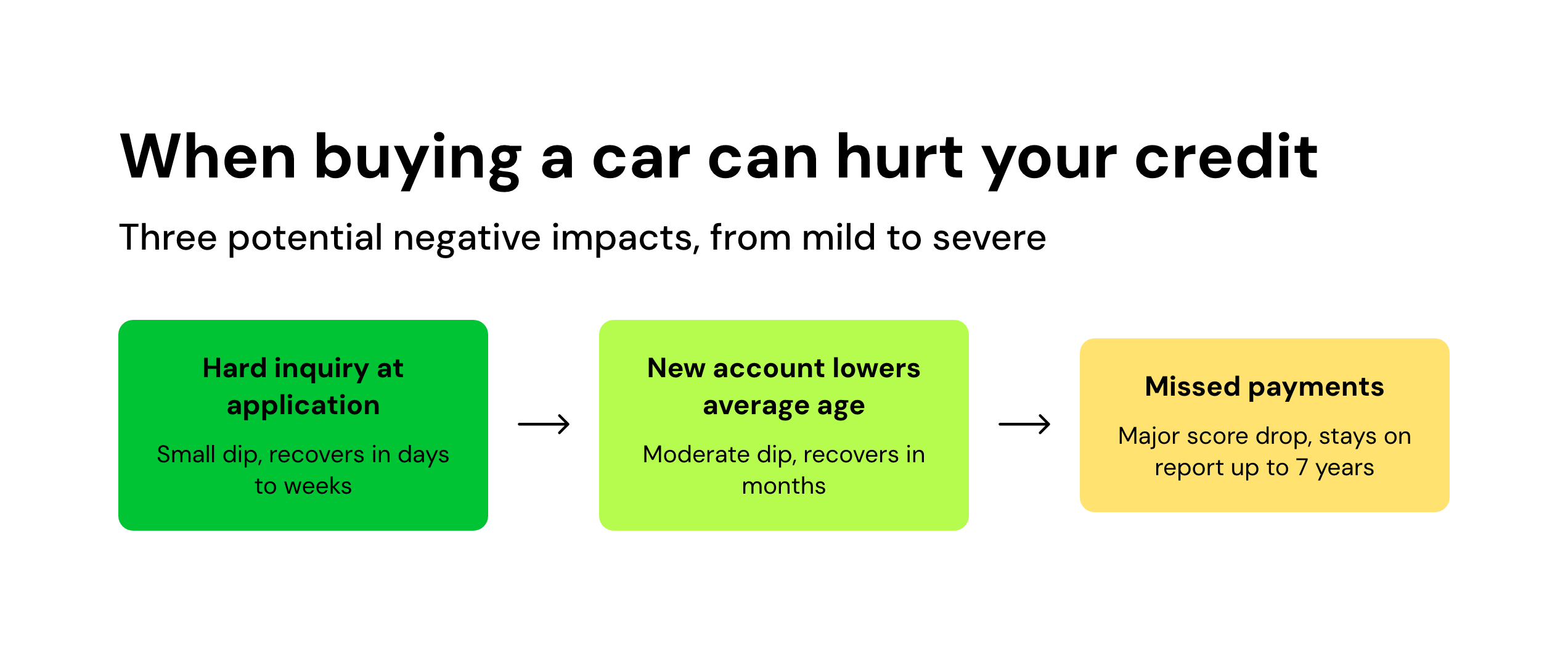
Purchasing a vehicle can have some negative impacts on your credit score and financial profile. Most of these consequences are negligible in the long-term, but you should understand what they are and why they happen.
Hard inquiry at application
Lenders will conduct a hard credit check when reviewing your auto loan application. Typically, your score will drop a few points when you authorize a hard inquiry. After your credit is run, there is a grace period that allows you to compare options from multiple lenders without additional score impact.[3]
For example, you can apply for an auto loan with your local bank or credit union and then see what rates the dealer's lenders can offer you.
There is no way around the hard inquiry when applying for auto financing. However, the drop in your score is negligible.
New account lowering your average age of credit
Credit scoring models account for the average age of your credit accounts when calculating your score. When you open a new auto loan, it lowers the average age of your accounts. While this change can temporarily drop your score, the effects should be minor. After a few months of on-time payments, your score should rebound.
Missing payments
The biggest risk to your score comes from late payments. If you miss a single payment and it is reported to the credit bureaus, the negative mark can stay on your report for seven years.[4] Your score will drop from just one missed payment.
Before taking on an auto loan, make sure the monthly payment amount is manageable. You don't want your new vehicle to be burdensome. If you think you are going to miss a payment, reach out to your lender to make arrangements or find out whether you have a grace period.
What if you pay cash for a car?
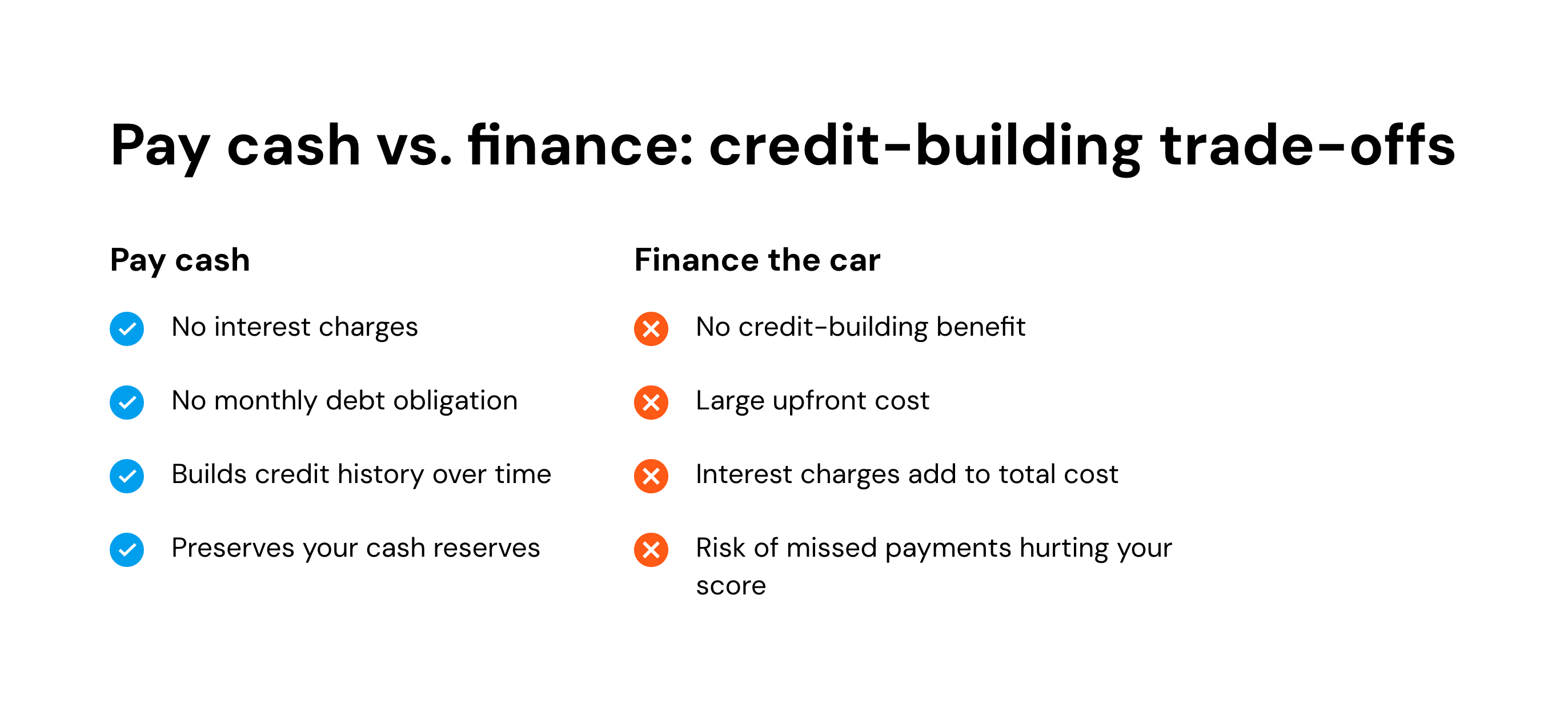
Does buying a car build credit? It only does if you finance it, not if you pay cash for the vehicle. That's because dealers don't report cash purchases to the credit bureaus. While paying cash can save you money on interest and eliminate debt, it won't help you build credit.
If you want to build credit and keep your payments low, consider putting down a larger down payment but financing part of the car purchase.
How to build your credit further
If you have a higher credit score before financing a vehicle, you may be eligible for better interest rates, which could lower your down payment. How do you build credit if you aren't financing a vehicle?
Kikoff is the answer. Our credit-building platform offers several ways for building a positive financial profile, including verified rent reporting, a credit-builder loan (invite only), and a free credit account.
Frequently Asked Questions
About the editor

Article Sources
Disclaimer: The information provided in this blog post is meant for informational purposes only and does not constitute financial advice.